
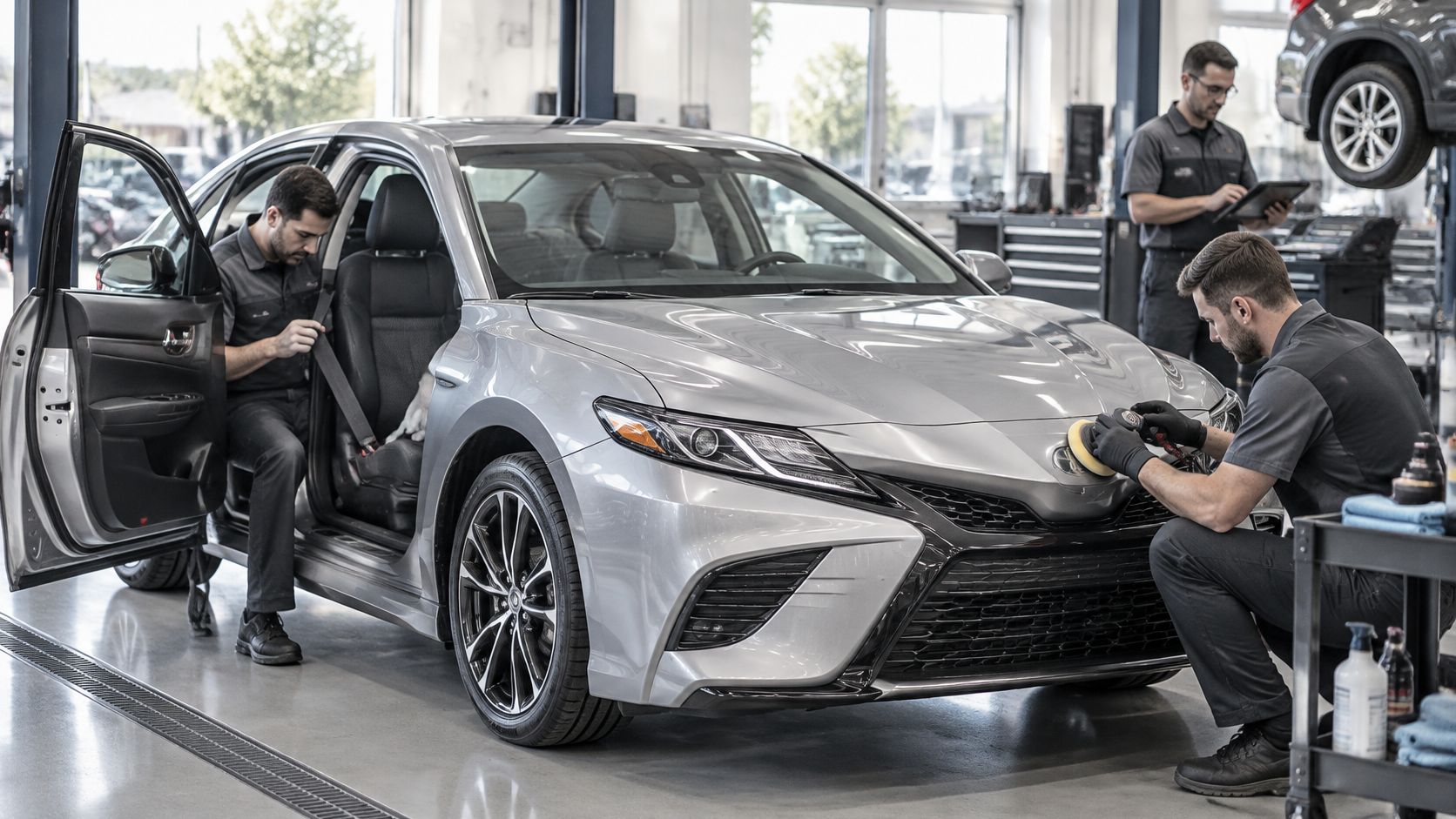
A front-hit sedan arrives from an auction under its own power. The airbags have deployed, both front belts are locked, and the cabin still smells of the collision. The paint may be the first thing a buyer notices, but it's the restraint system that decides whether this car is ready to return to the road.
Auto reconditioning is the planned work that makes a used or repaired vehicle presentable, dependable, and safe to sell or return to its owner. It can include cosmetic repairs, mechanical service, cleaning, and post-crash safety repairs. It isn't a full restoration, and it isn't just a wash and wax.
Dealers use reconditioning to prepare inventory for retail. Rebuilders use it to move auction purchases toward a rebuilt title and a return to the road. Body shops use it to prepare repaired cars for their owners. Each wants a vehicle that starts cleanly, drives without unresolved warning lights, and holds up to a buyer's walkaround or an inspection.
Think of a house flip. Fresh paint may help sell the showing, but it can't make a bad roof or a jammed exit door acceptable. On a car, polished paint doesn't make locked belts or an unresolved airbag warning safe.
A useful approach starts with the car's full scope of work, sets the repair order to avoid rework, and makes honest repair-or-replace decisions before parts are ordered. That's how a shop gets a car ready without spending on shine while a safety problem still blocks the sale.
Table of Contents
- What Auto Reconditioning Means for a Resale Car
- The Work That Belongs in a Reconditioning Plan
- Safety Systems That Decide Road Readiness
- How a Vehicle Moves from Intake to the Lot
- Cosmetic Work Buyers Notice First
- Two Cars and How the Plan Changes
- Decide the Car Is Ready to List
What Auto Reconditioning Means for a Resale Car
The intake ticket on a rebuilt car runs longer than the damage a buyer can see. Between "blend left fender" and "replace headlamp" sit line items that never appear in listing photos: resolve the airbag light, rebuild both front belts, pull the stored crash codes. Straight panels plus one open line still add up to a car that cannot be listed.
The word means roughly the same thing to three different customers. A dealer wants retail inventory that looks cared for and holds up on a test drive. A rebuilder wants a salvage purchase that can meet the requirements for returning to the road. A body shop wants to hand an owner a car whose systems work, with the repair going past the panels that took the hit.
Detailing is where the confusion usually starts. Detailing cleans and improves appearance, while reconditioning also asks whether the car can do its job. Shampooed carpet does nothing for wet electrical connectors, and a buffed dash does nothing for an airbag fault. One makes a car look finished. The other decides whether it is.
On a walkaround, a buyer shrugs at a door ding. An airbag light that stays lit through the test drive, or a passenger belt that will not pull out, ends the visit.
That is why a reconditioning plan treats restraint repairs as a gate rather than a line item. Paint correction can wait for a quiet week. A locked belt or a module still holding crash data decides whether the car can be listed at all, so those jobs get scheduled and closed out before the car earns a place on the lot.
The Work That Belongs in a Reconditioning Plan
| Work area | Typical tasks | Recondition when | Replace when |
|---|---|---|---|
| Exterior body and paint | Dent repair, panel blend, color match, wheels | Damage is cosmetic and structure is straight | Rust-through, bent structure, or mismatched prior repair |
| Glass, lamps, and trim | Chips, cracked lenses, broken clips, cloudy headlights | Lens can be restored and fitment is OEM | Cracked safety glass or a lamp that will not aim or seal |
| Interior presentation | Odor, stains, headliner, plastics, carpet | Soil is surface-level and foam is dry | Flood saturation, mold, or burned or torn structure |
| Seat belt webbing | Frayed, faded, cut, or chewed belts on good hardware | Retractor and anchors test normal | Webbing is heat-damaged or stitching and labels cannot be matched |
| Mechanical service | Fluids, filters, belts, battery, scan for lights | Wear is within service limits and no hard faults remain | Internal engine, transmission, or electrical faults exceed retail margin |
| Brakes, tires, suspension | Pads, rotors, tires, bushings, alignment | Components meet safe thickness and tread | Below spec, pulled from a crash, or noisy under a test drive |
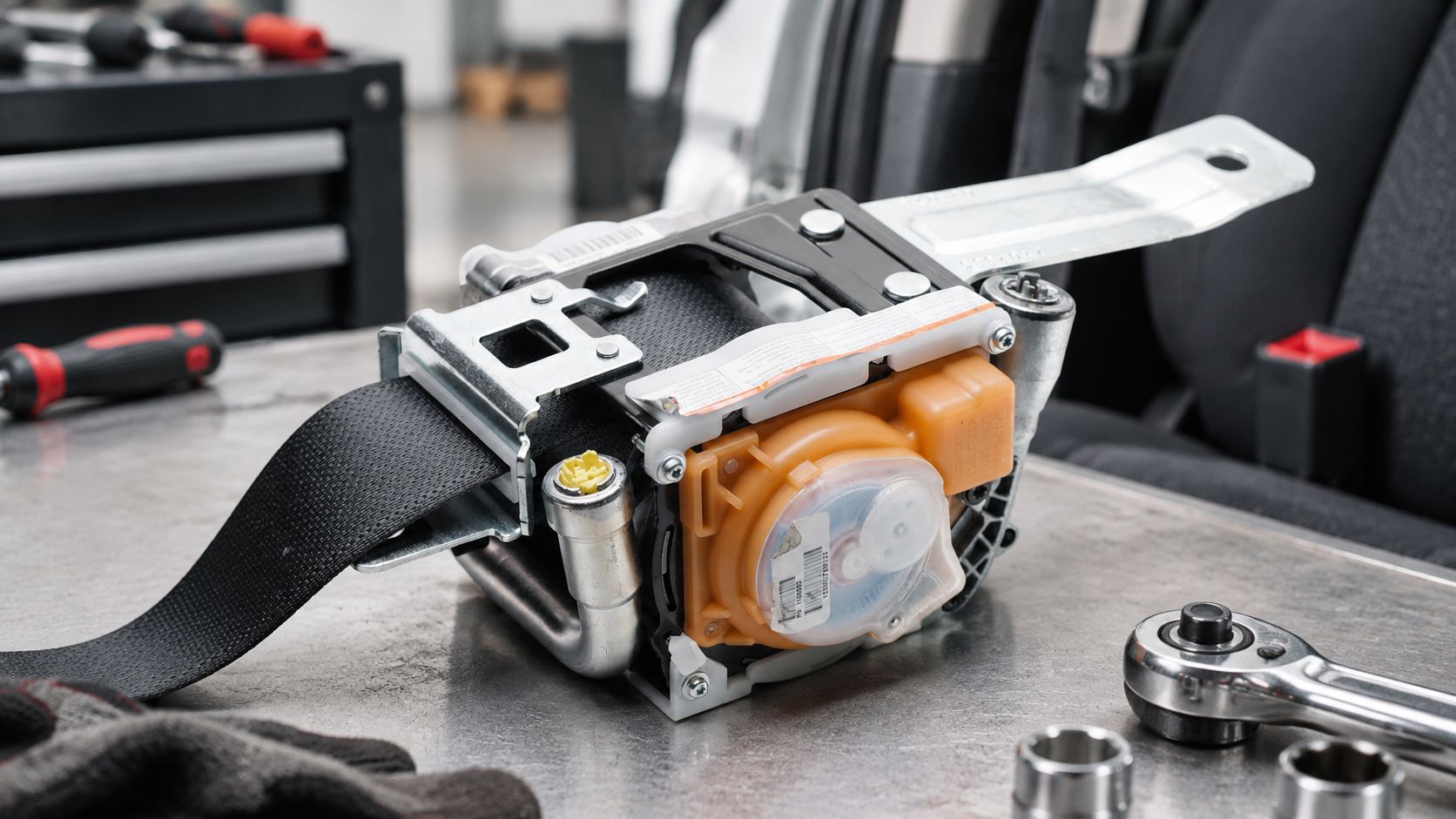
| Seat belt mechanisms | Locked retractor, deployed or blown pretensioner | Housing and anchors are intact and the belt can be rebuilt to OEM spec | Housing is crushed, anchors are bent, or the belt cannot be removed safely |
| Airbag control module | Crash data, hard fault codes, airbag light after repair | Module has no unrepairable hardware fault and the rest of the SRS is fixed | Module is water-damaged, cracked, or the vehicle still needs unrepaired SRS parts |
Before ordering parts, mark each row keep, repair, or replace. Keep means the part is sound and doesn't need work. Repair means the original part can be restored to safe, proper function. Replace means repairing it won't bring it back to the right condition, fit, or function.
For example, a small cosmetic dent on a straight panel might be repaired and blended. A belt with worn webbing may be a candidate for seat belt webbing replacement if its hardware works normally and the replacement can be matched appropriately. For locked or blown pretensioners, Seat Belt Repair After Accident describes a repair service for the original belt mechanism.
A clean exterior doesn't make a warning light a minor cosmetic flaw. If the airbag light stays on after a crash, the vehicle is unfinished until the fault is diagnosed and the restraint system works properly.
Mark the work before ordering parts. Otherwise, a shop can pay for labor twice when a repair plan changes halfway through reassembly.
Repair decisions depend on the damage, the vehicle, and local labor. The table uses decision rules rather than pretending one price fits every car.
Safety Systems That Decide Road Readiness
A sedan can leave the paint booth looking finished while its restraint system still can't protect anyone. After a crash, the belts may lock, pretensioners may deploy, and the airbag control module may store crash data and hard fault codes. Those parts work together as an inspection gate, so repairing one component leaves the others unresolved.
Safety Restore notes that many dealers, shops, and individuals rebuild cars bought from salvage auctions such as Copart and IAAI, and that most of these vehicles require safety salvage inspections before returning to the road. On a rebuilt salvage car, a persistent airbag light is more than a dashboard annoyance. It can be the unresolved fault that keeps the vehicle from passing its required inspection.
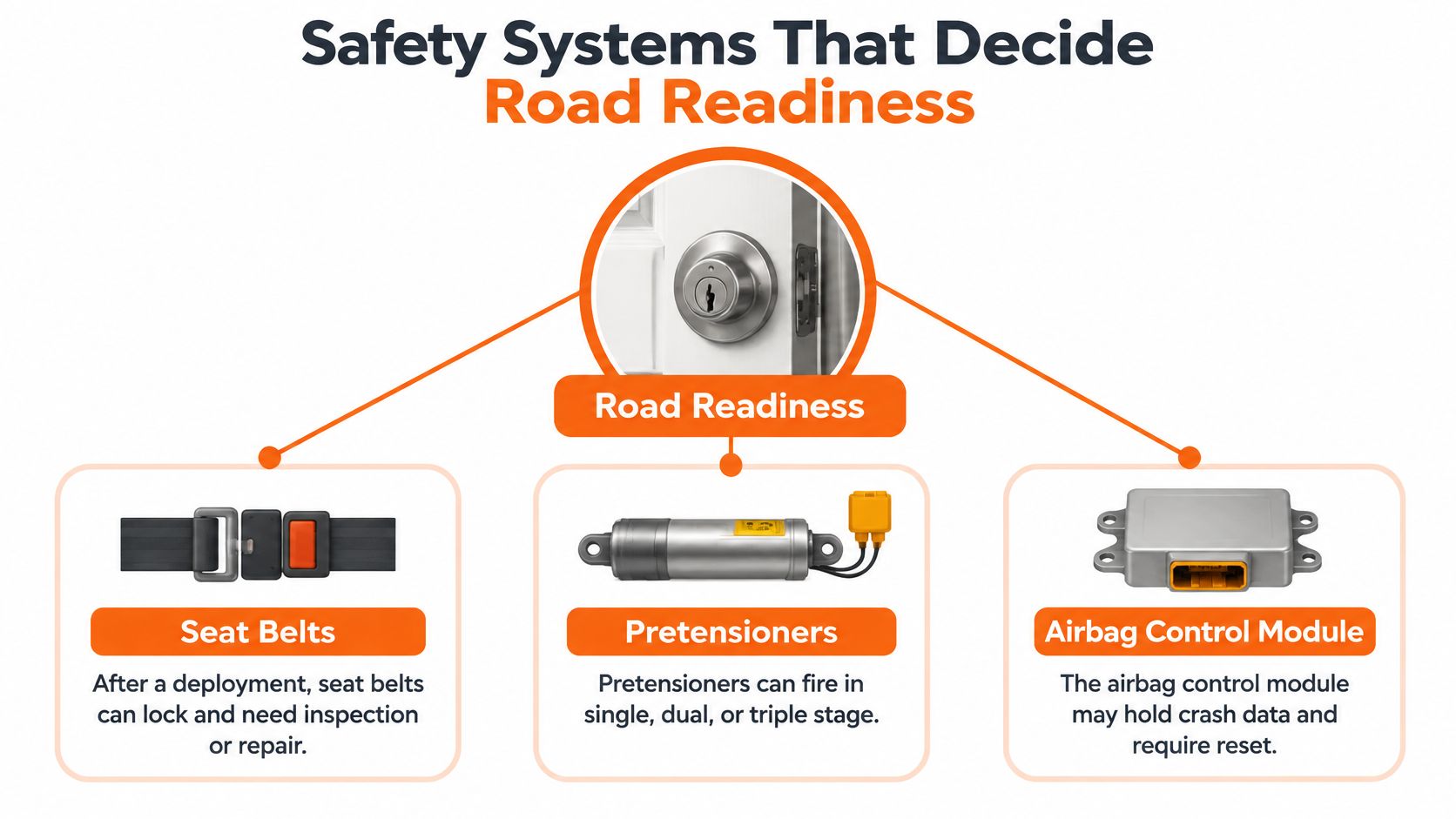
Start by separating the kinds of belt damage. Frayed or chewed webbing on a working mechanism is a different job from a locked retractor or a fired pretensioner. A shop must inspect the belt, its hardware, and its anchors to determine what failed and what can be repaired safely.
A belt can also fail without obvious warning. Consider a retractor that returns the webbing only halfway: the tongue still clicks into the buckle, yet the belt hangs loose across the occupant instead of lying snug. In a crash, that slack lets the body travel before the belt can do its job, so the belt fails the test the same way a locked one would.
The module needs its own diagnosis. A scan tool can read airbag-system codes and help identify faults. Clearing stored crash data is a separate step, and a generic scan tool may not be able to erase that stored information. A new airbag or a straight dashboard panel leaves the data where it sits.
Once the airbags, belts, wiring, and other required restraint components have been repaired, the original module may need its stored crash data cleared before the SRS can operate normally. Airbag module reset service covers resetting a module after an accident, and SRS Airbag Module Reset describes clearing crash data and hard codes that dealers and OBD airbag scan tools cannot reset. After the reset, the serviced module comes back ready to install without further programming.
Safety Restore describes what came before this kind of service: a deployed airbag once meant buying a new module and spending hundreds of dollars at the dealer, and thousands of SRS units went to the trash.
A reset clears data. It doesn't rebuild a crushed belt, replace a deployed airbag, or repair damaged wiring. Don't reset a module to hide a fault or make an unrepaired car look ready. The car becomes roadworthy when the restraints work again.
How a Vehicle Moves from Intake to the Lot
The best workflow follows the order that prevents finished work from being damaged or repeated. Photograph the car and record the safety issues before washing, painting, or pulling apart trim.
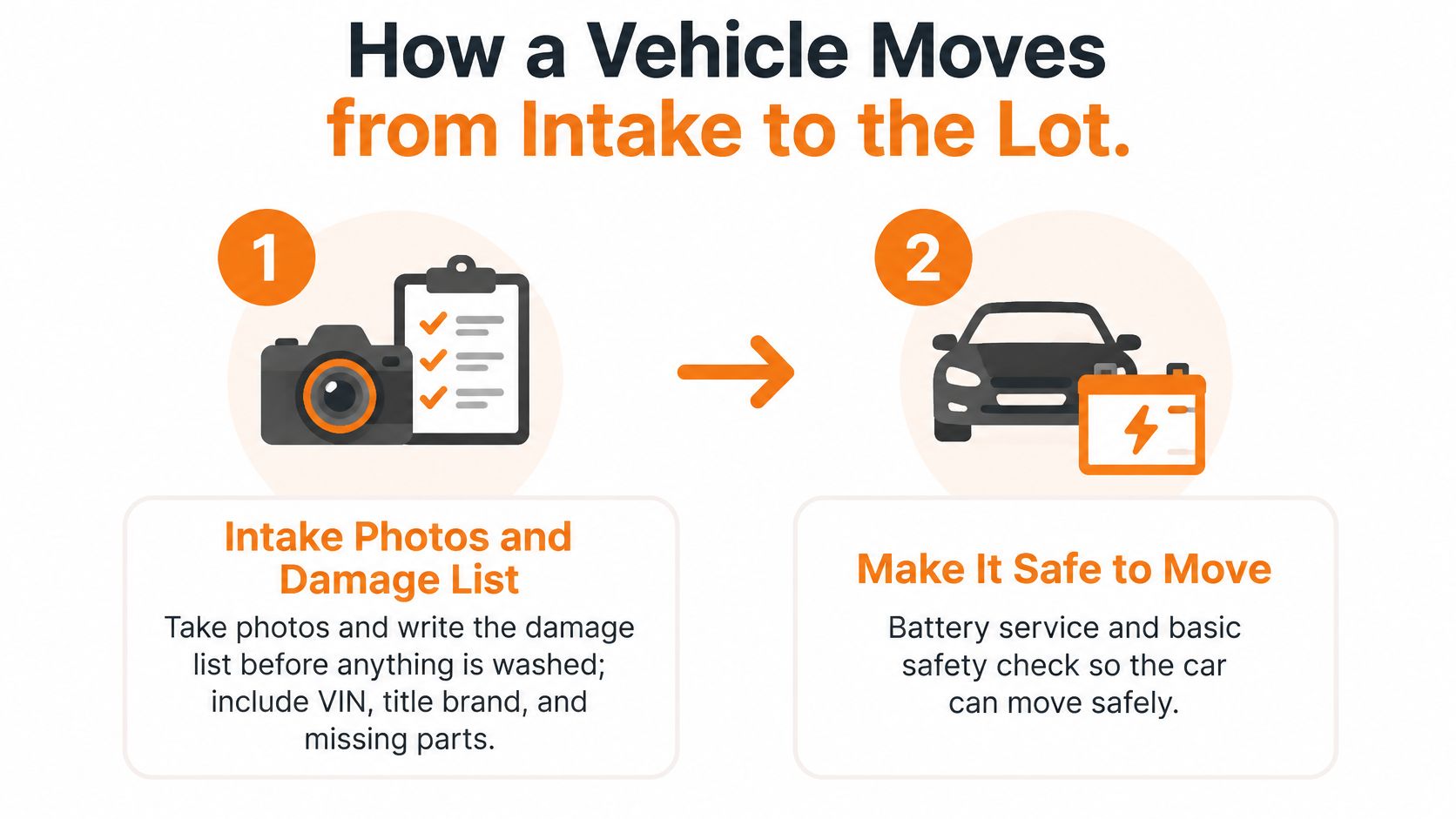
Record the car as it arrives. Photograph every side, the cabin, the dash, and visible damage. Write down the VIN, title brand, missing parts, and obvious prior repairs. Washing first can remove clues about where fluids came from or how the damage lines up.
Make it safe to move. Check the battery, look for leaks, and see whether the wheels turn freely. Don't start or roll the car until the brakes and basic movement are safe. A car that can't be moved safely shouldn't be driven into another bay.
Scan the systems. Record the warning lights and scan for codes, including SRS faults. If a crash light is unresolved, the parts list and inspection path can change. Understanding that early prevents a shop from finishing paint only to discover the car still needs major restraint work.
Check the mechanical basics. Inspect tires, brakes, fluids, and suspension, and listen for noises that could show up on a test drive. A clean trade-in that needs no bodywork still needs this check.
Separate structural work from appearance work. Confirm that the structure is sound before planning cosmetic panel repairs and paint blends. Painting before deciding whether a panel or mounting point needs more work risks redoing the finish.
Repair the interior and safety components. Remove belts or the airbag module that need service, and keep trim off until the safety work is complete. Reassembling too early can mean pulling it apart again.
For help understanding the immediate steps after a collision, drivers can consult a crash guide for South Florida drivers from The Law Office of John P. Sherman, PLLC. It addresses the driver's post-accident situation, while the shop's job is to assess the vehicle's repair needs.
Reassemble, scan again, and road-test. Confirm that repaired components are installed correctly, warning lights stay out, and the vehicle behaves normally. The second scan checks whether unresolved faults remain.
Detail only after the work is done. Polishing before technicians finish with tools risks new marks and dust on clean surfaces. Wash and detail at the end.
Compare the finished car with intake notes. Check that listed damage was addressed, safety work is complete, and the photos for the listing show the actual car. A salvage vehicle may still need a state safety or rebuilt-title inspection before retail.
Cosmetic Work Buyers Notice First
A buyer's walkaround starts with what's easy to see: glass, lamps, tires, wheels, paint, and the driver's seat. Fix obvious defects before spending time on details a buyer won't notice in the first look.
A practical order is to clean the windshield and confirm every lamp works, then make sure the tires and wheels present well. Clean the driver's seat and belt, remove cabin odors, and address paint damage on the panels visible from the curb. These jobs improve the car's presentation without confusing cosmetic improvement with structural or safety repair.
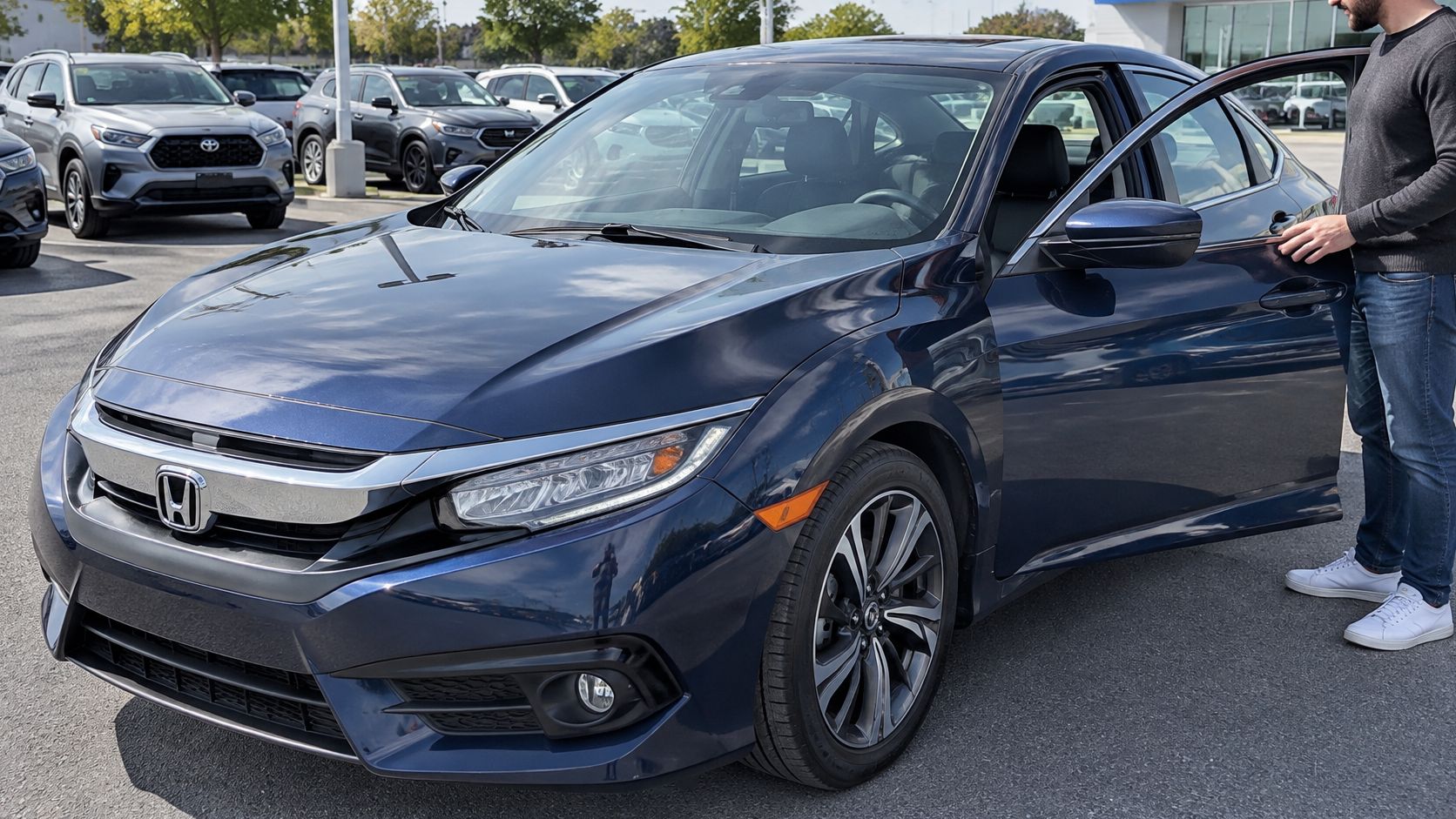
Take a silver sedan with door rash and a stained driver's seat. A careful fender blend, a proper seat clean, and clean floor mats may make the car present well. If the hood has a wavy finish or the paint doesn't match, a cheap respray can make the overall job look worse than the original scuffs.
A full repaint rarely makes sense when a targeted repair will look consistent and the vehicle won't gain enough value to justify the extra work. Before repairing collision damage, an owner can use Bell Law on Oregon car claims to learn about diminished-value claims in Oregon.
Treat smoke or wet-carpet odor as a reason to investigate, not a cue to spray air freshener. Lift the carpet where practical and check whether the padding is damp or contaminated. Masking a deep odor leaves the buyer with the same problem and may conceal moisture that needs attention.
A belt can also look worn even when its mechanism still works. If the hardware and anchors are sound, replacing the fabric can improve its appearance while retaining the original belt assembly. Custom Color Seat Belt Webbing Replacement describes a webbing replacement option with multiple color choices.
Avoid polishing over rust, dyeing cracked leather that will still look cracked in listing photos, or dressing the engine bay while the cabin remains visibly dirty. Ask a simple question before spending: Will a buyer notice this in the photos or walkaround? If yes, address it before listing; if not, handle it after the more visible problems.
Two Cars and How the Plan Changes
A commuter sedan comes in on trade with parking-lot scrapes, a stained driver's seat, bald front tires, and no crash history. The scan is clean and the road test is quiet, so the plan stays mechanical and cosmetic: photograph the car, replace the tires, align the wheels, blend the fender, clean the cabin, and detail it. The original belts stay unless the webbing is frayed or a mechanism fails, and a full respray stays off the order if blending already makes the fender match its neighboring panels.
The second car announces itself through paperwork before anyone opens a door. It's a salvage sedan bought at auction, and the damage report lists a front-end hit. The body shop has already repaired the metal and lamps, yet the driver's belt still refuses to retract. That single symptom moves restraint work to the front of the order: diagnose and repair the belt mechanism, check the rest of the SRS, and address the original module only after the vehicle's restraint components and wiring are repaired.
Then the shop scans the car again and confirms which salvage inspection the rebuilt-title process requires. A skipped module leaves a car that photographs well and still fails. Denis's Honda shows what the finished version looks like: Safety Restore reset the SRS module, cleared the crash data and hard codes, and repaired the locked belts. The airbag light went off, the belts work like new, and he saved over $500.
The dividing line between these two plans is the restraint system. Was there a deployment, a locked belt, or a warning that won't clear? If not, the commuter's cosmetic and maintenance list fits. If yes, the safety gate closes first, and paint money waits until the car can pass inspection.
Decide the Car Is Ready to List
A car is ready to list when the inspection evidence and the work order tell the same story. Before photos get taken, walk the car through four checks:
- The road test adds no new noise, vibration, or pull.
- Every warning light, including the airbag light, stays off after a fresh scan.
- Each belt latches, releases, and retracts correctly on every seat.
- The listing photos show the car a buyer will see, repaired panels included.
If any safety item remains open, don't write around it in the ad and don't pull a bulb to make the dash look clear. Find the cause, repair the system, and verify that the warning stays off. A car that looks finished but still carries an unresolved restraint fault isn't ready for an honest sale.
When an original belt is locked, won't retract, or has a blown pretensioner, repair rebuilds the mechanism to OEM specification and keeps the original assembly in the car. A failed buckle pretensioner calls for different work than damaged webbing: Seat Belt Buckle Pretensioner Repair After Accident covers that component-level repair, while frayed or cut webbing is a replacement job.
An original airbag module holding crash data or hard codes gets its reset only after the airbags, wiring, and other SRS components are repaired, the same sequence the safety section lays out. The payoff is keeping the original unit in service: Safety Restore notes that before this kind of reset existed, the only fix after deployment was a new module and hundreds of dollars at the dealer, and thousands of SRS units went to the trash. The reset module comes back ready to install with no additional programming needed. Scan the car once more after reinstallation and confirm the light stays off before it goes to photography.
For a belt or module headed to mail-in service, confirm the diagnosis and complete the scope table before removing and shipping the part. Safety Restore's process lets customers select the quantity, place a $99-per-item repair order, ship the removable belt or module, and receive it back after repair. If a vehicle isn't listed, Safety Restore states there is a 99% chance it can still reset the module. The car itself still needs its repairs and final checks before the part goes back in.
Safety Restore repairs mail-in seat belt mechanisms and resets original SRS airbag modules after the vehicle's underlying repairs are complete. If a locked belt or crash-data fault is holding up your reconditioning work, visit Safety Restore to review the service options.
