
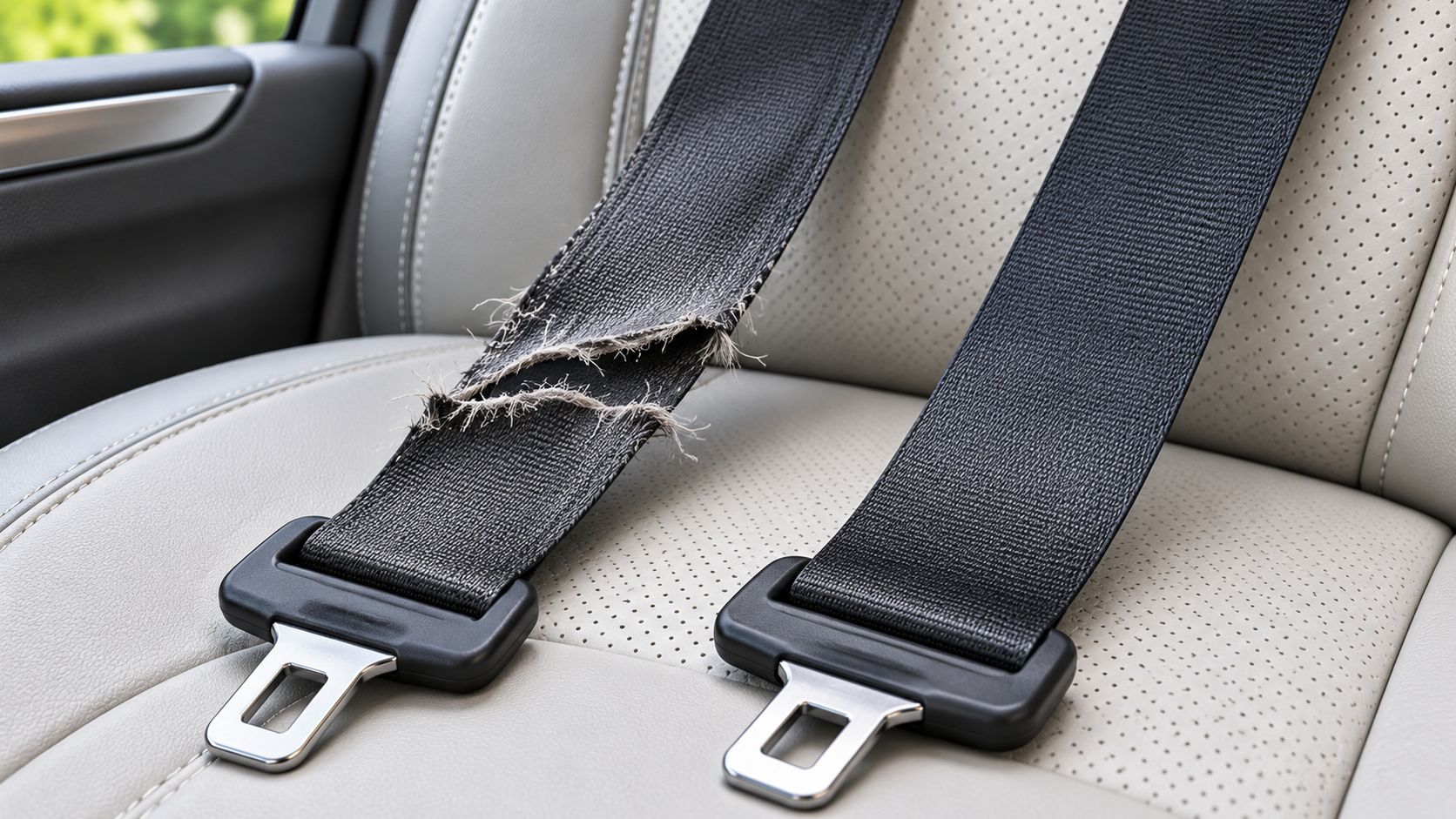
A cut seat belt can't be taped, glued, or hand-stitched back to a safe load rating. If the hardware still works and hasn't deployed, the safe repair is full-length webbing replacement on sound original hardware; a locked or deployed unit needs mechanism service or a new assembly.
Maybe you spotted a slice after loading cargo, or found tooth marks when your dog climbed into the car. The belt may still click and retract, which can make the damage look harmless. Don't use that seating position until the webbing and hardware have been checked: a belt can move normally and still have damaged fibers that won't hold properly in a crash.
Table of Contents
- Which Cut Seat Belts Can Be Repaired
- Why a Cut in Webbing Cannot Be Patched
- How Professional Webbing Replacement Works
- When the Whole Seat Belt Must Be Replaced
- Will a Re-Webbed Belt Pass Inspection
- Get a Cut Belt Re-Webbed or Replaced
Which Cut Seat Belts Can Be Repaired
A seat belt is part of the restraint system's load path, not a fabric strap you can patch. A clean slice, a nick at the edge, a tear, heavy fraying, dog-chewed fibers, or webbing weakened by sun or chemicals makes the belt unsafe to use as-is. Tape, glue, zip ties, and home sewing don't restore its designed strength.
The important distinction is whether the damage is limited to the webbing or also involves the mechanism. If the retractor operates normally, the latch clicks and releases, and the belt wasn't involved in a crash deployment, a professional may be able to replace the webbing while retaining sound original hardware. If the belt is locked after a crash, the pretensioner has fired, the buckle is damaged, or an anchor is bent, replacing the webbing alone won't fix the problem.
| Damage | Drive that seat | Safe path | Why |
|---|---|---|---|
| Clean cut or slice through webbing | No | Professional webbing replacement | A cut fiber row can unzip under crash load |
| Nick, fray, or torn edge | No | Professional webbing replacement | Edge damage spreads across the weave |
| Dog chew or animal damage | No | Professional webbing replacement | Teeth crush and sever yarns across a wider patch |
| Faded, stiff, or chemically stained webbing | No if fibers are weak | Professional webbing replacement | UV and chemicals can weaken polyester even when it looks intact |
| Webbing fine but retractor locked after a crash | No | Retractor or pretensioner repair, or new assembly | The lock is in the mechanism, not the fabric |
| Pretensioner fired or buckle damaged | No | Mechanism service if serviceable, otherwise full assembly | Fired hardware won't reset by replacing webbing |
| Minor surface scuff with no cut yarns | Yes after close inspection | Monitor; don't stitch it | Cosmetic rubbing isn't the same as a severed load path |
A rear belt sliced by a cargo hook is a webbing problem if its buckle and retractor remain sound. A dog-chewed driver's belt may also be a webbing-only job, even if the chewed area looks mashed or furry, provided the buckle still latches and the mechanism works. For that kind of damage, dog-chewed seat belt webbing replacement is an example of a service that replaces damaged webbing rather than patching the bite marks.
Fading needs attention too. A pale, stiff belt may have weakened fibers without an obvious slice, so don't treat appearance alone as proof that it's sound.
Before using that seat, check the complete belt. With the vehicle parked, inspect both webbing edges along the accessible length. Pull the belt out gently, confirm it retracts, latch and release it, and check whether the retractor locks on a firm pull. These checks can reveal a problem, but they don't certify a damaged belt as safe. If you find cut or frayed yarns, or the mechanism doesn't work properly, keep that seating position out of use.
Why a Cut in Webbing Cannot Be Patched
Think of seat belt webbing like a climbing rope made from many fibers sharing a load. Cut some of those fibers and the others must carry more force. The damage can spread sideways through the weave rather than staying neatly inside the visible mark.
In a crash, the belt has to restrain the occupant as part of a system designed to manage serious forces. Tape and fabric glue can cover a cut, but they don't reconnect the load-bearing yarns. A patch or a few hand stitches can also create a stiff spot that changes how the webbing bends and may damage nearby fibers.
If you can see cut yarns, the belt has already lost its designed strength. Don't try to sew the cut closed.
A belt that locked correctly yesterday can still be unsafe today if its yarns have been cut. A gentle pull tests movement, not crash performance. The weakness may matter only when the belt is suddenly loaded.
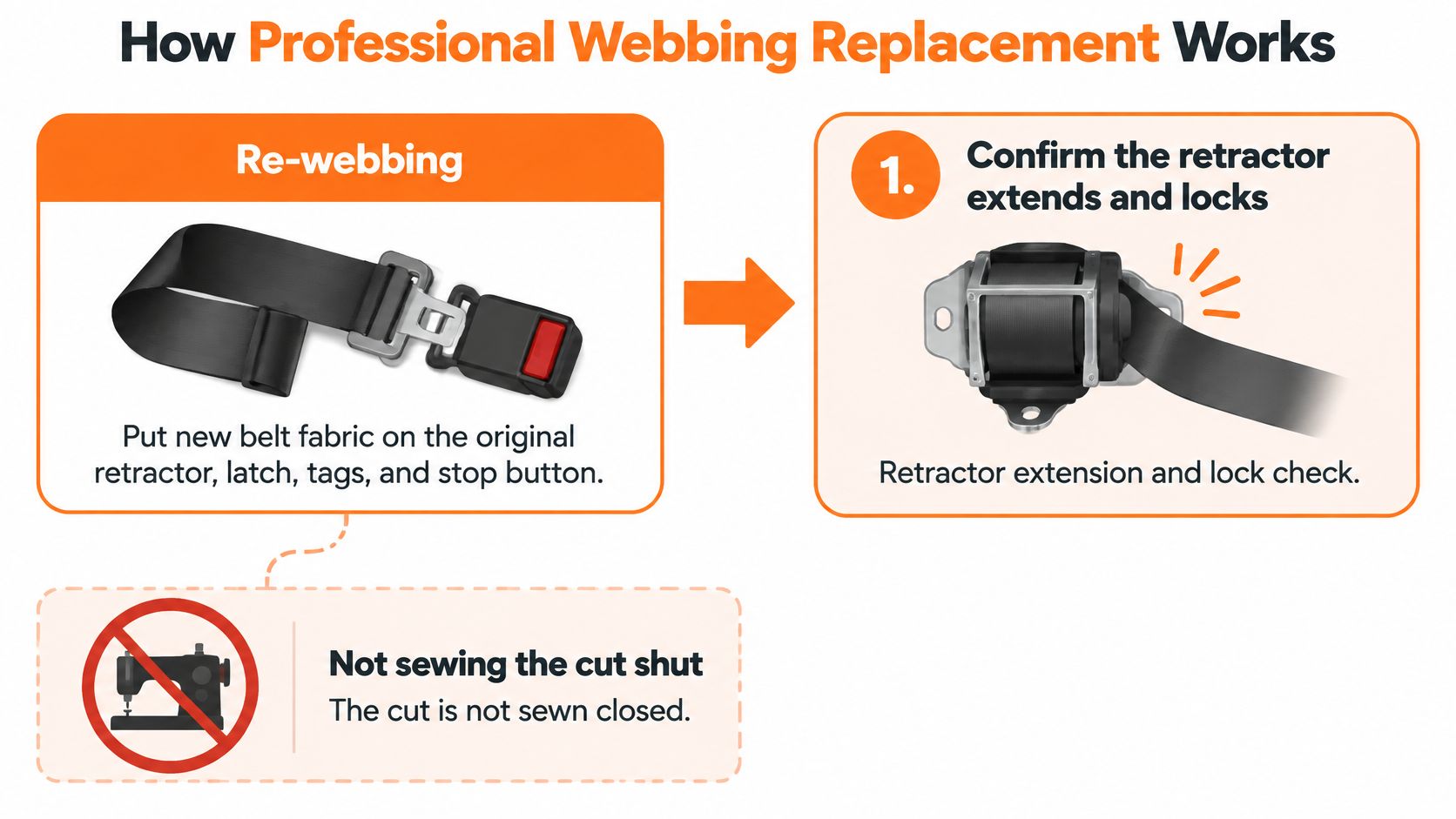
The repair is not an overlap seam that joins the damaged ends. A professional webbing replacement uses a full length of new webbing for the loaded run between the retractor and latch plate, with the necessary attachments made to the original hardware. That avoids leaving a repaired joint across the part of the belt that carries the occupant's load.
That's a different job from fixing a belt that locked because its pretensioner fired. New fabric can address damaged webbing; it can't make spent crash hardware work again. If you're already checking your car before a trip, include visibility in that routine and check wiper blades before driving.
How Professional Webbing Replacement Works
Re-webbing means putting new belt fabric on the original retractor and other serviceable hardware. It doesn't mean sewing a cut shut. The owner's role is to send the complete assembly and describe the damage; the shop's role is to assess the mechanism, replace the webbing correctly, and check its operation.
Start with the mechanism
- Confirm what failed. A technician checks whether the retractor extends and locks and whether the belt shows signs of deployment. New webbing can't fix a spent pretensioner or a damaged retractor.
- Remove the assembly safely. If the vehicle has pretensioners, follow its specific SRS service procedure, including any required power-down steps. Note the belt's routing, bolt locations, and electrical connections. Don't open or handle a pyrotechnic unit at home.
- Send the complete belt. Include the retractor, latch plate, and any attached parts needed for the repair. A loose scrap of cut fabric doesn't let the shop check the assembly or restore it as a complete unit.
Replace, attach, and test
- Fit full-length replacement webbing. The shop opens and cleans the retractor mechanism, then installs new webbing in place of the damaged length. A matching color can help the finished belt look right, but a decorative seam across a cut is not the repair.
- Reattach original components. The latch plate, manufacturer tags, and stop button are attached to the replacement webbing using the appropriate industrial or automated stitching. Tags and components should be stitched, not glued onto the belt.
- Check operation. The finished assembly should pay out smoothly, lock when tested, and retract properly. The vehicle's installation procedure still matters when the belt goes back into the car.
The work described for Seat Belt Repair After Accident concerns locked or blown pretensioners after a collision. That's mechanism service, not a webbing replacement, so identify which problem you have before choosing a repair.
When the assembly comes back, look for continuous webbing with no patch, original buckle hardware, and labels restitched in place. The belt should be routed and installed as specified for the vehicle. Don't put it back into service if it binds, fails to retract, or doesn't lock as expected.
When the Whole Seat Belt Must Be Replaced
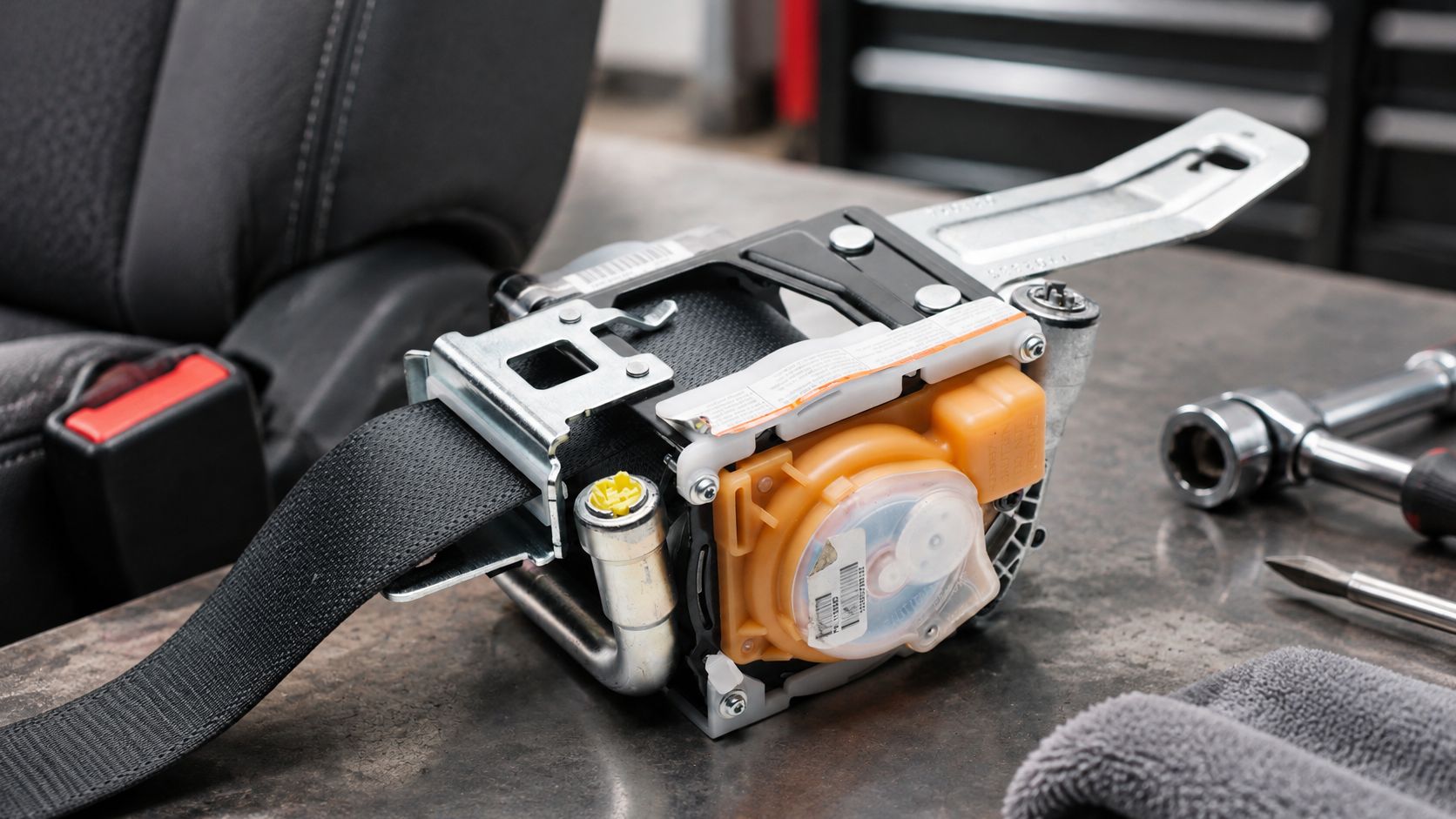
A belt can look intact and still have a failed mechanism. If it stays locked after a collision, won't extend, or is tied to a deployed pretensioner, the problem isn't solved by putting new fabric on it. A pretensioner is designed to act during a crash; once fired, it may leave the belt locked or otherwise unfit for use.
A buckle can also fail independently of the webbing. A broken release, missing latch, or cracked housing calls for hardware service or replacement. A bent anchor or damaged mounting point needs assessment too. Don't treat any of these as sewing problems.
| What's damaged | What the repair must address |
|---|---|
| Webbing cut, frayed, chewed, or weakened, with sound hardware | Full-length webbing replacement on the original assembly |
| Retractor locked after a crash or pretensioner fired | Diagnosis and mechanism service if the unit is serviceable, otherwise a suitable replacement assembly |
| Buckle or anchor damaged | Repair or replacement of the affected hardware, with the assembly checked |
| Airbag warning light after a crash | Separate SRS diagnosis; changing webbing doesn't resolve it |
Used belts from a wreck can be a poor shortcut because you may not know whether the pretensioner fired or whether the mechanism was damaged. An assembly that looks clean isn't automatically a verified assembly. Likewise, an airbag light is an SRS fault to diagnose, not proof that webbing work will clear the problem.
For a collision-related lock or deployment, the Seat Belt Repair After Accident service is relevant to the mechanism problem, rather than a cut in otherwise serviceable webbing. A broader routine of checking safety-critical parts can help you spot other faults too; see Lendrum's Driving School safety checks.
Decision rule: sound, functioning hardware with damaged webbing calls for re-webbing; fired, locked, or broken hardware calls for mechanism service if it can be rebuilt, or a verified replacement assembly if it can't. A safety inspection will typically reject cut or frayed webbing, an inoperative latch, or a belt that fails to lock.
Will a Re-Webbed Belt Pass Inspection
A patched belt is still a damaged belt. Tape, glue, zip ties, iron-on material, and hand stitches don't turn a severed load path into a continuous length of serviceable webbing. If an inspector finds damage, a cosmetic cover won't change what the belt is.
A professional re-web is different because it replaces the damaged loaded run rather than joining the cut. The inspector can check that the webbing is continuous and that the belt functions in the car. No single inspection approach should be assumed to cover every vehicle or location, so don't rely on appearance alone.
What the inspection can check
The basic questions are practical: does the latch engage and release, does the belt extend and retract, and does the retractor lock when tested? The webbing should be free of cuts, frays, or other damage. The belt should also be installed and routed correctly, with its hardware intact.
Labels and stitching should look properly attached rather than glued on. Color and neatness affect appearance, but they don't replace a functional check. A newly re-webbed belt can still fail if its retractor remains locked, a pretensioner has fired, or the buckle or anchor is damaged.
If the retractor is the part that won't extend or lock, seat belt retractor repair addresses a different issue from replacing damaged fabric. Don't pay for webbing work alone until the mechanism problem has been identified. An inspection is about whether the belt and hardware work together, not whether a repair merely looks tidy.
Get a Cut Belt Re-Webbed or Replaced
A cut belt comes down to one decision: new webbing on your original hardware, or a whole new assembly. When the cut is the only damage, re-webbing restores the load path at a fraction of replacement cost. Keep that seating position out of use until the repaired belt is back and installed.
Mail-in checklist
- Place the order online and tuck the receipt in with the shipment.
- Ship the complete belt assembly, labeled with its vehicle and seat position.
- Belts are repaired within 24 hours of receipt and shipped back.
The harness repair itself replaces the shoulder webbing with OEM webbing and restitches the original manufacturer tags and components like the latch using an automated sewing machine. Pricing is a flat $99 per item, and every repair carries a lifetime warranty. Standard webbing comes in black, gray, tan, and beige, with red, orange, and blue among the options if you want a color change while the belt is already apart.
One caution protects your budget: match the service to the part that failed. A belt that locked in a crash, or a pretensioner that fired, needs mechanism repair rather than webbing. Ordering webbing alone for a locked retractor leaves the fault untouched and the seat still unsafe. After reinstalling the belt with the vehicle's own procedure, seat any electrical connector firmly; an airbag warning light points to a separate SRS issue, not a webbing problem.
Safety Restore services cut, torn, frayed, faded, and dog-chewed webbing as well as locked or deployed mechanisms for any make and model. Visit Safety Restore to choose the repair that matches the part that failed.