
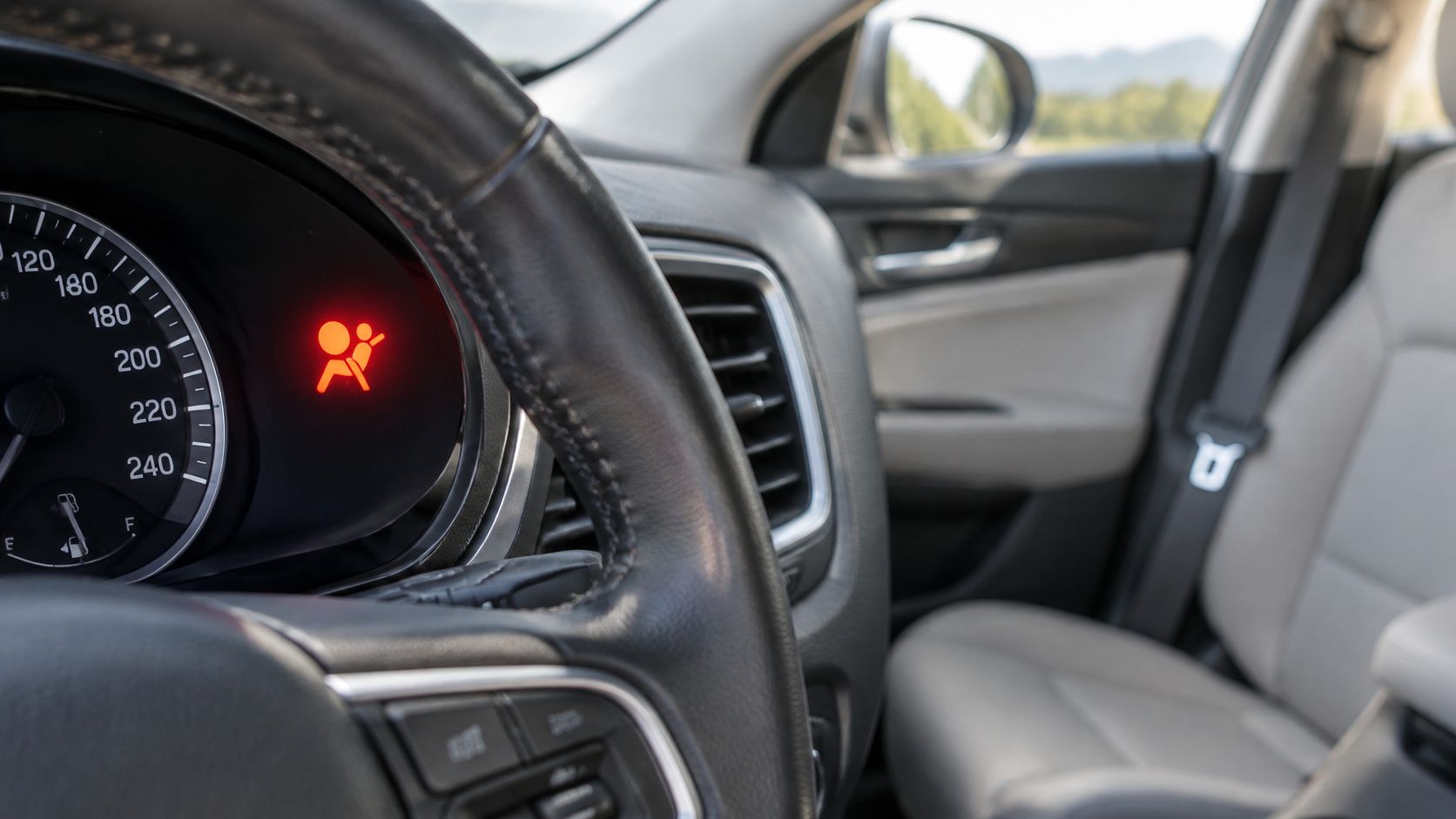
The SRS light warns you about the vehicle's Supplemental Restraint System, which includes airbags and seat-belt pretensioners. It should illuminate for about 3–8 seconds at startup and then go out; if it stays on, flashes, or appears while you're driving, the system needs diagnosis.
You may have noticed it while starting the car, or seen it appear partway through a trip. The vehicle may feel completely normal, which can make the warning easy to dismiss. But the light is telling you that the system hasn't confirmed it's ready to protect occupants as intended. It doesn't identify the failed part, so the next step is diagnosis, not guessing or clearing the warning.
Table of Contents
- What the SRS Light Means on Your Dashboard
- What Each SRS Light Pattern Indicates
- Parts of the SRS That the Light Monitors
- Why an Illuminated SRS Light Is a Safety Warning
- Common Causes Behind a Light That Stays On
- What to Do When the SRS Light Stays On
What the SRS Light Means on Your Dashboard
A driver starts the car, sees the SRS lamp come on, then watches it go out. That brief check shows the vehicle is testing the Supplemental Restraint System, which works alongside seat belts. Depending on the model, the system can include frontal, side, and curtain airbags, impact sensors, a restraint control module, wiring, and seat-belt pretensioners that tighten belts during a crash. Seat belts remain a key part of occupant protection.
At startup, the vehicle checks whether SRS components are communicating and ready. The lamp commonly stays on for about 3–6 seconds, though some vehicles take closer to 8 seconds. Check the owner's manual for the expected behavior in your vehicle. Hyundai's owner guidance says a lamp that stays on, flashes, appears while the vehicle is moving, or fails to illuminate at startup may indicate a malfunction.
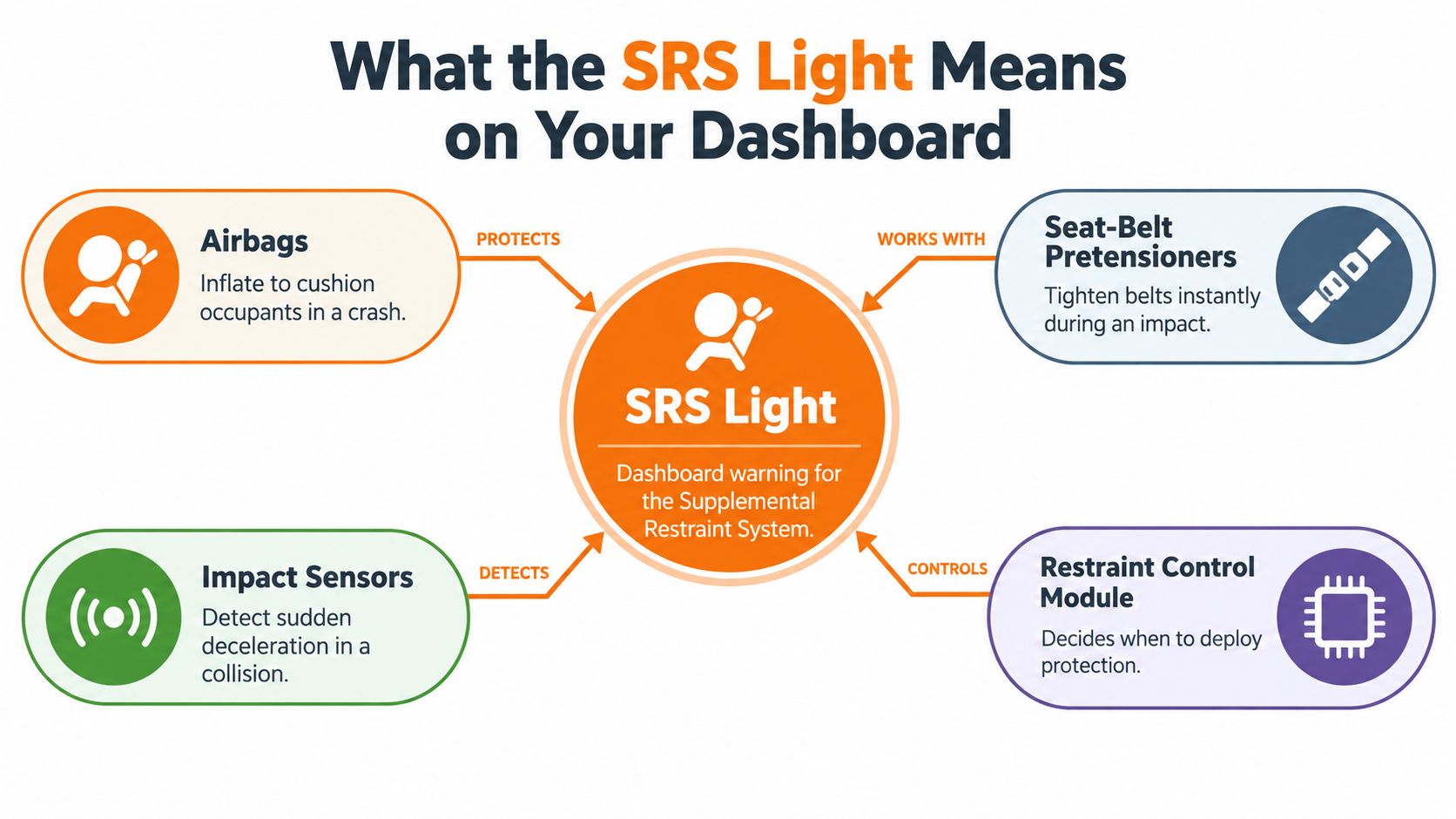
If the warning remains on, the system has not confirmed that all monitored parts are ready to operate correctly. The warning signals a readiness problem; an SRS-capable scan and inspection are needed to identify the fault. A scan tool may show a stored fault code, helping a technician narrow down which circuit or component needs checking.
Watch for four signs: the lamp stays on after startup, flashes, comes on while driving, or never lights during the startup check. The last can be easy to overlook. A lamp that fails to illuminate may point to a warning-circuit problem, leaving you without a clear alert if another SRS fault is present.
What Each SRS Light Pattern Indicates
The lamp's behavior helps narrow down the next step, but it does not identify the faulty part by itself. Match the pattern to the guidance below, and arrange a diagnosis where indicated.
| Light behavior | Usual meaning | Urgency | Next step |
|---|---|---|---|
| Lights briefly at startup, then goes out | Normal self-test passed | Low | Drive normally; no action needed |
| Stays on after the engine starts | Stored fault or unresolved system condition | Medium | Book an SRS scan within a few days |
| Flashes or blinks | Controller reports an active malfunction | High | Treat it as urgent; arrange inspection before driving far |
| Does not light at startup | Bulb or circuit fault may hide a real SRS fault | Medium | Have the lamp circuit and system scanned |
| Comes on while driving | New fault, sometimes intermittent, such as a loose connector, sensor, or wiring issue | Medium | Schedule diagnosis and note the conditions when it appeared |
| Stays on after a collision or battery work | Stored crash data or a disturbed connector | Medium to high | Scan for stored crash data and verify repairs |
A flashing lamp is a warning pattern tied to an active malfunction, so treat it as urgent. A lamp that never illuminates also needs attention: a failed lamp or circuit could hide an SRS warning.
For a startup light that stays on, arrange an SRS scan within a few days. If the lamp appears while driving, schedule diagnosis and note the conditions when it came on. After a collision or battery work, ask for stored crash data to be checked and repairs verified. These steps help you act on the warning without trying to clear the code first.
Parts of the SRS That the Light Monitors
When a collision occurs, impact sensors detect sudden deceleration and send information to the restraint control module. The module processes those signals and manages responses, such as deploying an airbag or tightening a seat belt with its pretensioner. It may also store crash-related information for a technician to inspect.
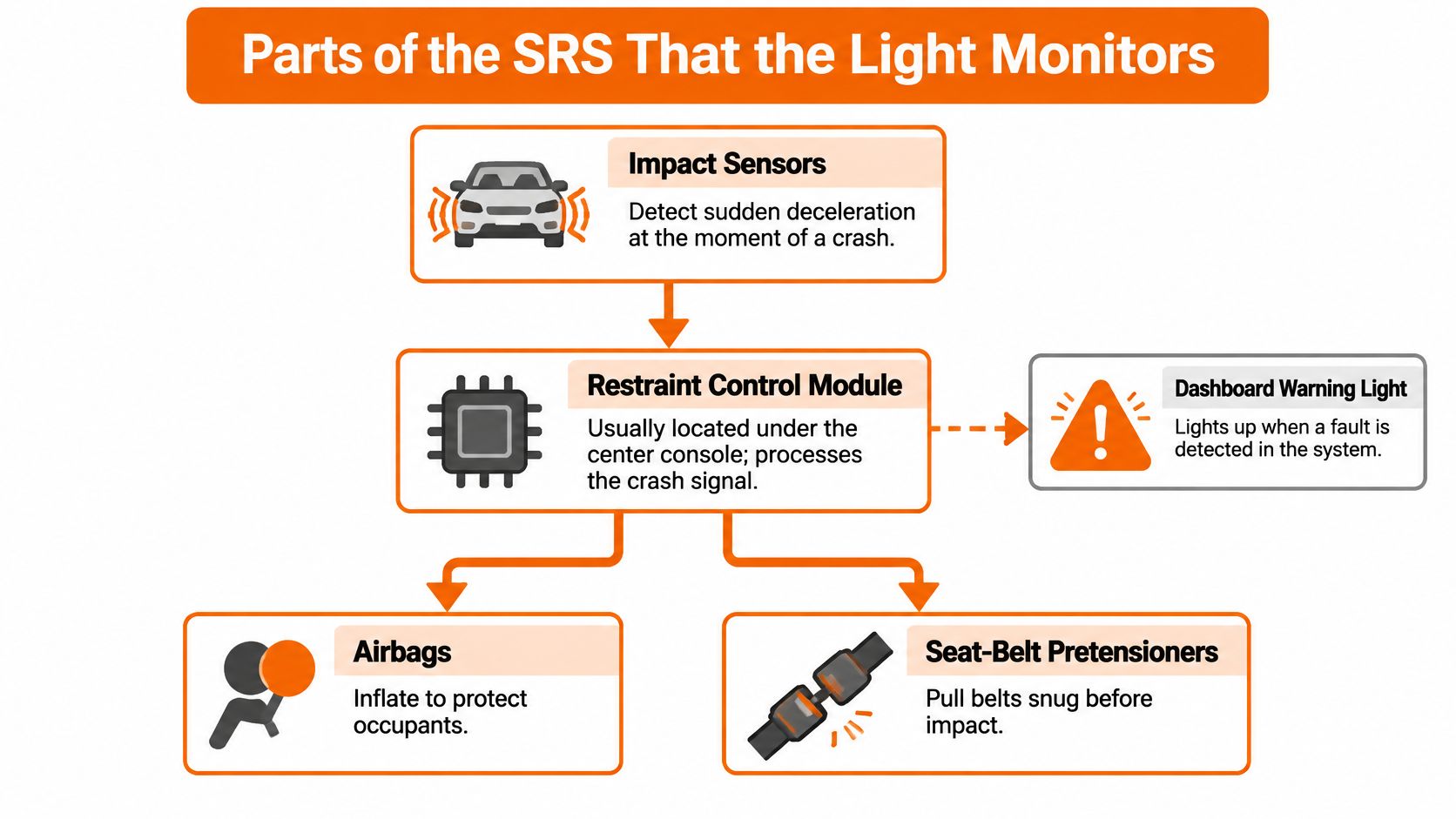
The SRS monitors connected components, so a fault in one part or its wiring can trigger the warning:
- Restraint control module: This unit receives sensor information and manages system responses. A module fault or stored crash data can turn on the warning.
- Impact sensors: These detect collision forces. Damage to a sensor or its wiring can interrupt the signals the module needs.
- Airbags: Depending on the vehicle, the system may include frontal, side, curtain, or knee airbags. A fault in an airbag circuit can trigger the SRS warning.
- Seat-belt pretensioners: These tighten seat belts during a crash. A fault in a pretensioner can be reported by the system. Learn about seat-belt buckle pretensioner repair.
- Occupant classification sensor: Often fitted to the front passenger seat, this sensor helps determine passenger-airbag operation. If the passenger airbag warning appears after the seat has been removed, the sensor or its connection may need inspection.
- Clock spring: Behind the steering wheel, this component maintains the electrical connection to wheel-mounted controls and the driver-airbag circuit as the wheel turns. If it is damaged, the driver-airbag connection may be interrupted.
- Wiring and connectors: These carry signals between the sensors, module, airbags, and pretensioners. A damaged wire or loose connector can cause a fault even if the connected component looks intact.
The control module coordinates the parts much like a dispatcher relaying messages. If one component stops responding, the module may flag a problem, but the dashboard light alone cannot identify which part needs attention. A diagnostic scan can help pinpoint the source without merely clearing the warning.
Why an Illuminated SRS Light Is a Safety Warning
You start the car, and the SRS light stays on. The vehicle may drive normally, but that lamp means the restraint system has detected a fault that could affect its operation.
The airbag effectiveness analysis reports that airbags reduce fatality risk for drivers, with different results depending on seat-belt use. It also estimates that frontal airbags saved lives in 2014. These findings show why a warning tied to the restraint system deserves attention.
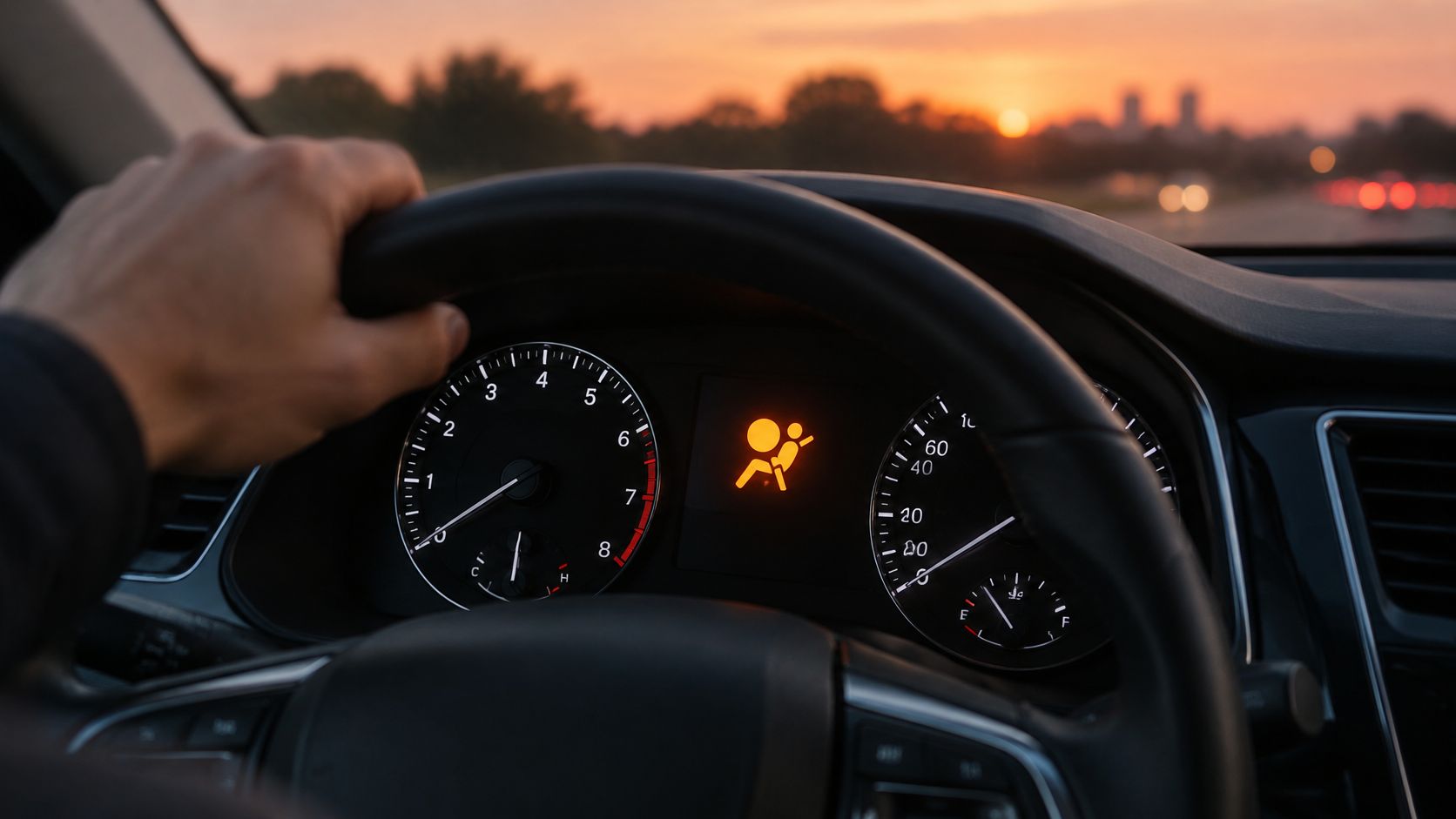
The light does not identify which restraint may be affected. Treat it like a smoke alarm: it signals a problem that needs checking, but it cannot tell you the exact cause. Avoid assuming that every airbag is unavailable, or that all restraints will work as expected.
A recall example shows how a fault can affect protection: a malfunctioning SRS control unit could turn on the warning and prevent multiple airbags from deploying in a crash. Clearing the light alone would not confirm that the fault had been repaired. After a collision, crash information may also remain stored in the module even after visibly damaged parts are replaced.
Two cars may look and drive the same while having different restraint-system readiness. One may have passed its system checks; the other may still have an unresolved fault. Smooth driving cannot confirm that the second car's restraints are ready.
The video below offers another look at an illuminated SRS warning and why it warrants attention.
Arrange diagnosis within days, and treat the lamp as a safety item.
Common Causes Behind a Light That Stays On
After a collision, a steady SRS light may point to stored crash data, a damaged part, or a separate electrical fault. The warning can look the same in each case, so match the next check to the symptoms rather than clearing the code first.
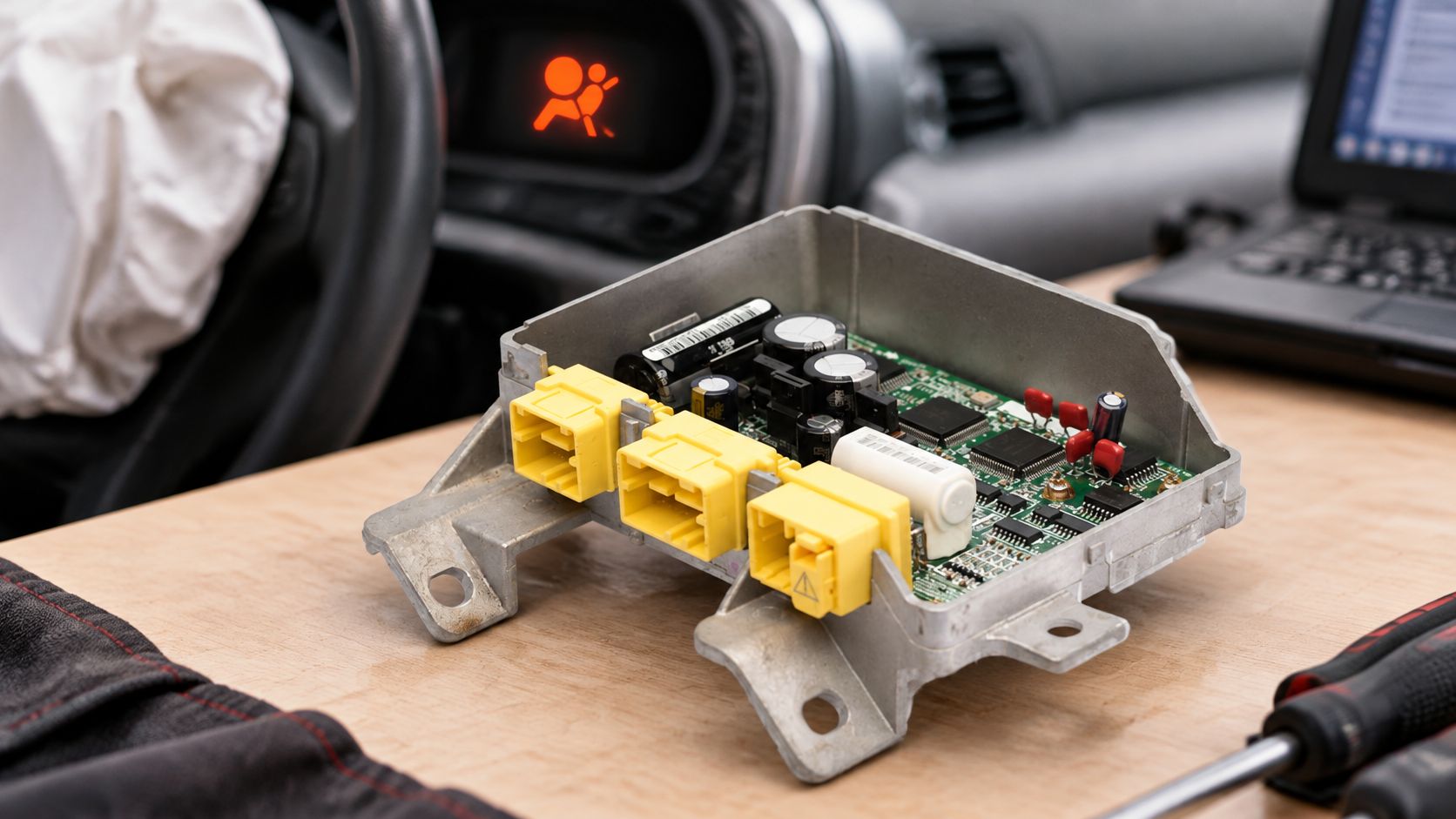
| Cause | Typical signs | Usual fix | Check first |
|---|---|---|---|
| Crash data stored after deployment | Light came on after a collision; airbags or belts have already been replaced | Have the module scanned for stored crash data. Reset it only after checking damaged restraint components | Collision repair records and SRS codes |
| Damaged wiring, connector, or clock spring | Light returns after bumps, turns, or exposure to humidity | Inspect wiring and connectors for looseness, corrosion, or damage. A fault that changes as the steering wheel turns may point to the clock spring | Harness and connector inspection, including a continuity test where specified |
| Occupant sensor or seat-related fault | Light appeared after seat removal, reupholstery, or replacement | Check that the seat connector is fully seated and inspect the sensor circuit; recalibrate the sensor if required | Recent seat work and SRS codes |
| Faulty pretensioner or airbag | Locked belt or an airbag-related fault code | Use the code and the vehicle's service procedure to identify the faulty part, then replace it | Stored diagnostic trouble codes |
| Recall-linked control module defect | Warning matches an open recall campaign | Contact the manufacturer about the recall remedy, which may be free | VIN search in the national recall database |
| Water intrusion | Light appeared after flooding or wet carpets | Inspect connectors and wiring for moisture or corrosion, then repair affected parts | Floor pan and connectors |
Check the vehicle identification number (VIN) against the relevant national recall database before paying for repairs. A recall remedy may be free. The NHTSA's recall notice illustrates how a control-module electrical defect can differ from collision damage or a recurring wiring fault.
A locked belt after a collision can involve the belt mechanism as well as crash data stored in the module. Review how to fix a locked seat belt after an accident to understand what may need inspection. Once the vehicle and affected components have been assessed, SRS Airbag Module Reset can reset a module with crash data after an accident. The reset does not repair damaged vehicle components or replace diagnosis.
What to Do When the SRS Light Stays On
The SRS light remains on after startup, or begins flashing on the road. Either pattern calls for attention, but what the system does during a fault varies by vehicle. A Ford technical bulletin describes one model that defaults to stage-one passenger-airbag deployment and another that disables the passenger airbag when a restraint fault is present. The light alone cannot confirm which components remain active, so a vehicle-specific scan matters. The Ford bulletin filed with NHTSA illustrates why.
Start by noting whether the light is steady or flashing, when it appeared, and whether there was a recent collision, battery disconnection, seat removal, or water in the footwell. Also consider who regularly rides in the vehicle, especially whether children or other passengers depend on front-airbag protection. This information helps a technician assess the situation.
Take these steps in order
Record what happened. Write down when the light appeared and what was happening at the time. Like a timeline in a repair history, these details can help identify an intermittent fault.
Adjust your driving plans. If the light stays steadily on, limit unnecessary trips and book an inspection promptly. If it flashes, arrange inspection before driving further rather than relying on the SRS to respond normally.
Don't erase the code before diagnosis. The stored trouble code is a clue to what the controller detected. Clearing it first can remove useful information without addressing the fault. If a recall may apply, refer to the recall information in the previous section.
Book an SRS-capable scan. A qualified shop or dealer can read restraint-system trouble codes and check for stored crash data. Bring collision repair records and mention recent seat or battery work.
Repair the cause using the manufacturer's procedure. Before working on SRS components, disconnect and isolate the battery ground cable, then wait for the capacitors to discharge. Follow the procedure for the specific vehicle, rather than relying on a generic reset instruction. The NHTSA service procedure demonstrates these precautions.
Verify the repair. After the fault has been diagnosed and repaired, the light should complete its normal startup check and switch off. If it remains on, the system needs more troubleshooting.
Remember: Clearing a warning does not establish that the fault has been repaired. Have the cause identified and corrected, then check that the system passes its startup check.
After a collision, the repair may also involve resetting the module, once damaged restraint components have been assessed and addressed. Safety Restore's SRS airbag module reset service is for vehicles involved in an accident or crash, or purchased from a salvage yard with deployed airbags or blown or locked seat belts. Customers remove and mail in the module. The service clears crash data and hard codes that dealers and OBD airbag scan tools cannot reset. Ask the dealer for the stored code and whether crash data is present before deciding on the next repair.
Safety Restore repairs customer-supplied seat-belt mechanisms and SRS airbag control modules, including module resets after a collision when vehicle repairs are complete. If diagnosis points to a removable module or seat belt needing service, review Safety Restore's mail-in repair process.
