- What SRS Stands For
- What the SRS System Includes
- What the SRS Warning Light Means
- Why the SRS Light Stays On After a Crash
- SRS vs. Airbag Light: Is There a Difference?
- What Happens If You Ignore the SRS Light
- How to Fix an SRS Warning After a Collision
- Common Misconceptions About the SRS System
- FAQs
You glance at your dashboard and see a light labeled “SRS.” Maybe it came on after a fender bender. Maybe it’s been there since you bought the car used. Either way, you want to know what it means — and whether you need to worry about it.
The short answer: yes, take it seriously. Here’s what the SRS system actually does and what that warning light is trying to tell you.
What SRS Stands For
SRS stands for Supplemental Restraint System. The word “supplemental” is the key. This system is designed to work alongside your seat belts, not replace them. Seat belts are your primary restraint. The SRS components — mainly airbags and seat belt pretensioners — are there to supplement that protection when a crash happens.
You’ll sometimes see it written as SRS/airbag on the dashboard indicator. Both terms point to the same system.
What the SRS System Includes
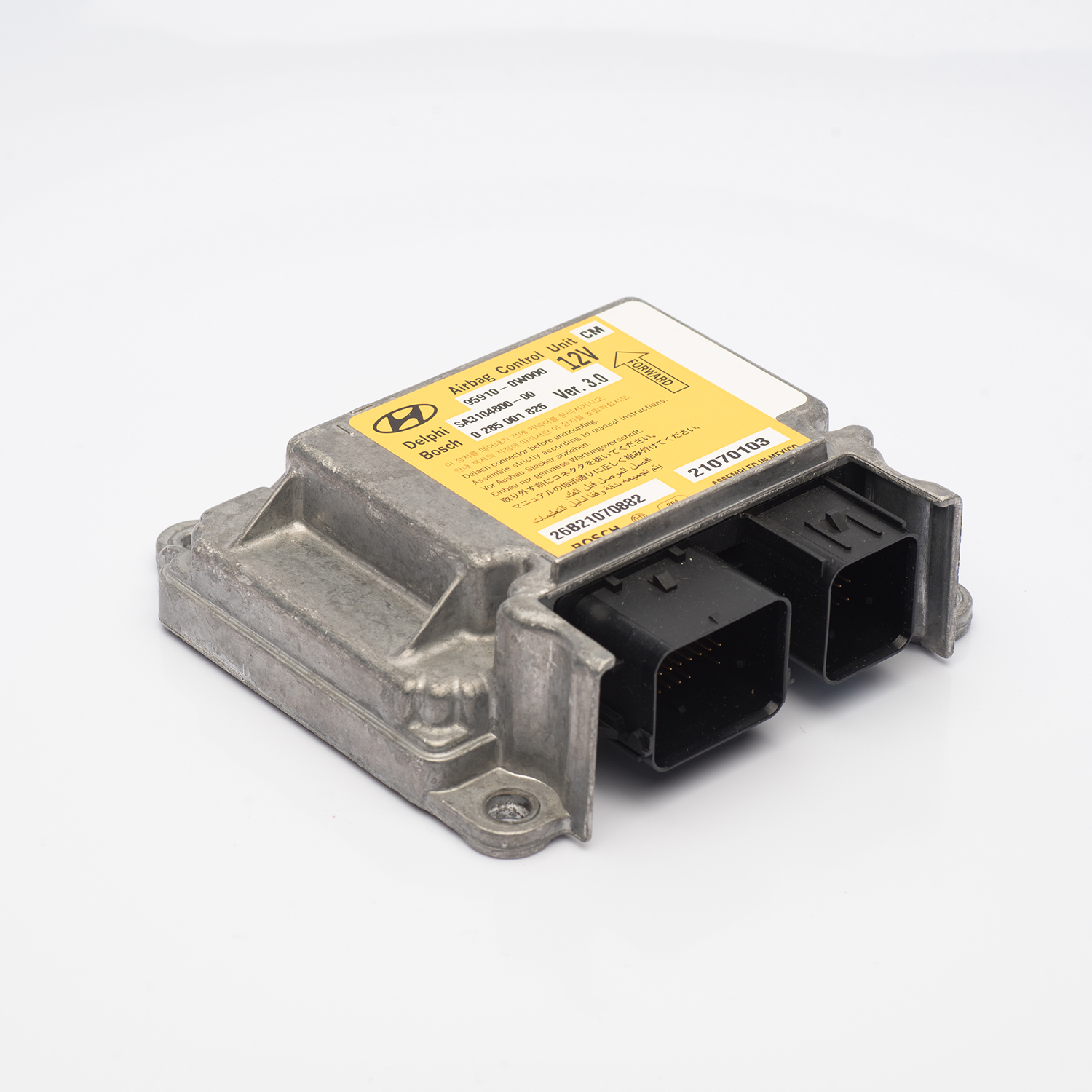
The SRS system is more than just airbags. It’s a network of interconnected components that all have to work together in the fraction of a second a crash actually takes.
Airbags
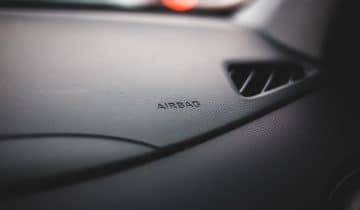
Most vehicles have at least a driver-side and passenger-side frontal airbag. Depending on the vehicle, you may also have side curtain airbags, knee airbags, and seat-mounted side airbags. Each one connects to the SRS control module, which decides when and which bags deploy based on live sensor data.
Seat Belt Pretensioners
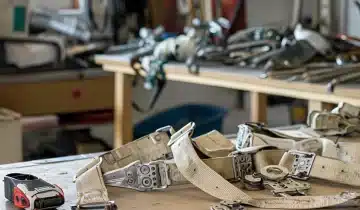
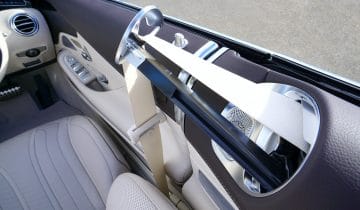
Pretensioners are built into the seat belt retractor. During a collision, they fire almost instantly — pulling the belt tight against your body before you lurch forward. That reduces the distance you travel before the belt fully engages, which limits injury from that initial forward movement.
After a crash, pretensioners are typically destroyed by the firing charge. The belt may still physically retract and feel normal, but the pretensioner mechanism no longer works. A locked or stiff seat belt after an accident is often a sign the pretensioner has blown.
The SRS Control Module
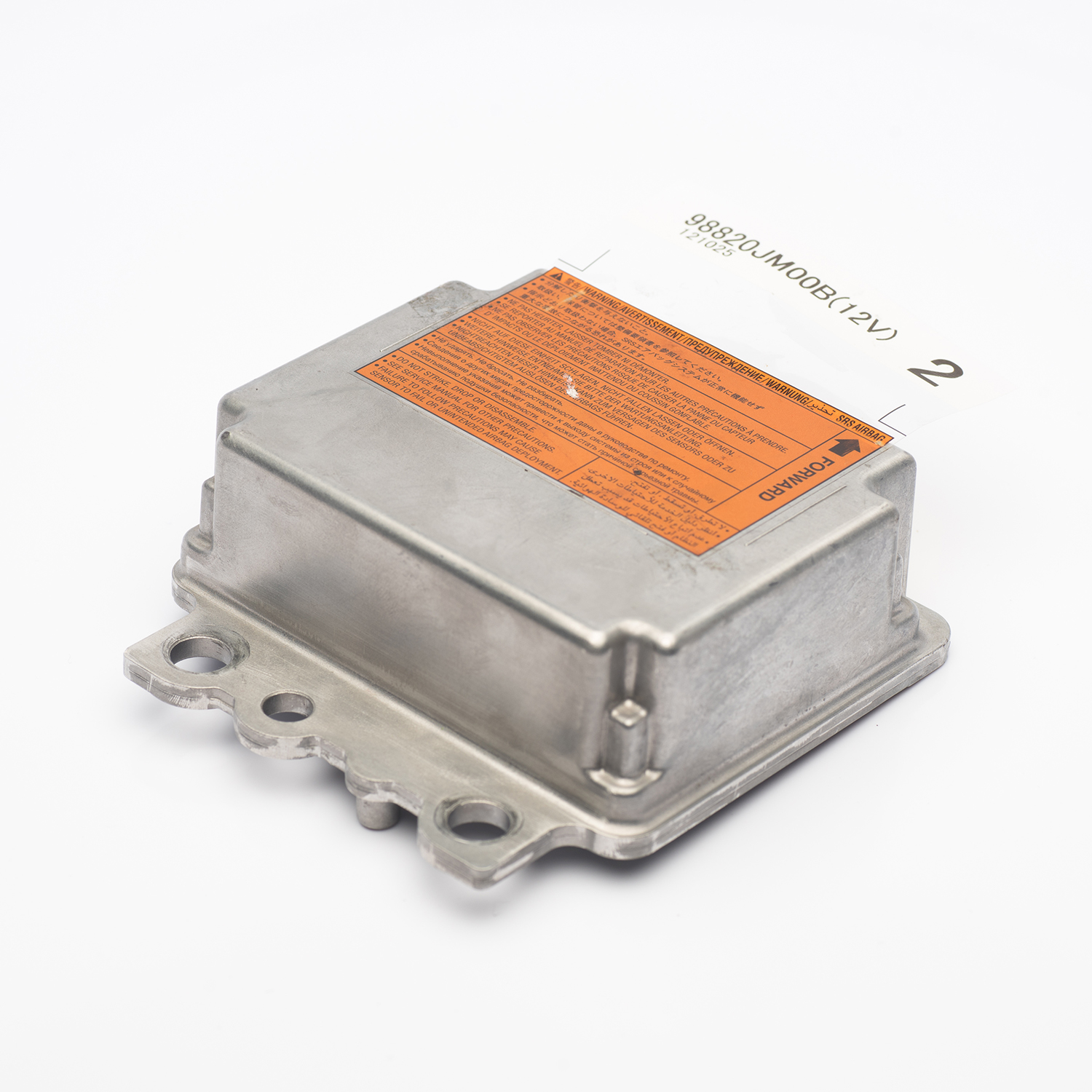
The SRS airbag module — also called the SRS control module or SDM — is the brain of the system. It receives signals from crash sensors throughout the vehicle, processes them in milliseconds, and triggers the appropriate airbag deployments and pretensioner activations.
After a crash, this module stores crash data and fault codes. Even if the airbags are replaced and the pretensioners are repaired, that data stays in the module. Until it’s cleared, the SRS warning light stays on and the system won’t function properly in a future collision.
Crash Sensors and Seat Occupancy Sensors
Impact sensors sit at the front, sides, and sometimes rear of the vehicle, detecting the force and direction of a collision. Seat occupancy sensors determine whether a seat is occupied and whether a passenger airbag should deploy. All of that feeds back into the SRS module.
What the SRS Warning Light Means
When the SRS light comes on, the system has detected a fault. That fault could be anything — a deployed airbag, a blown pretensioner, stored crash codes in the module, a faulty sensor, or a wiring issue.
Here’s what matters: if the SRS light is on, the system may not function in a future crash. The airbags might not deploy. The pretensioners might not fire. You’d be driving with safety equipment that looks intact but isn’t actually active.
The light doesn’t always mean something catastrophic happened. Sometimes it’s a sensor glitch or a wiring fault. But after a collision, it almost always means at least one component needs attention.
Why the SRS Light Stays On After a Crash
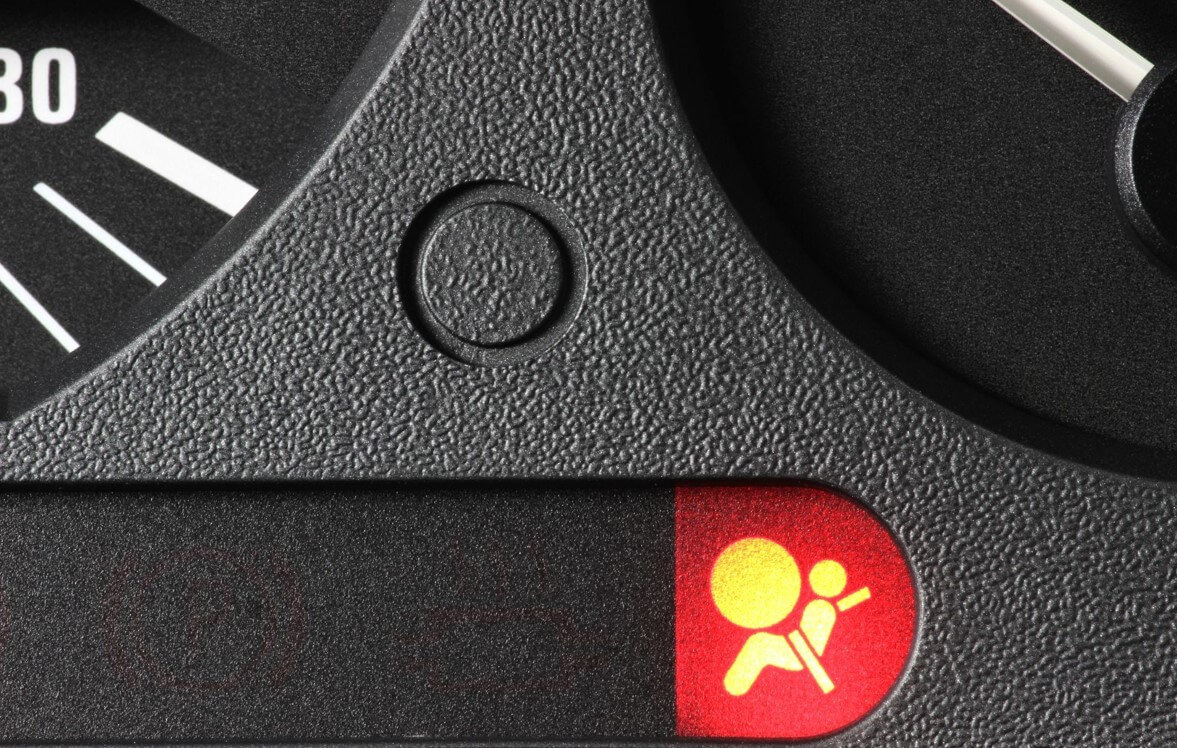
This is one of the most common questions people have after an accident. They replace the airbags, repair the physical damage, and the SRS light is still on. Why?
Because the SRS control module stores crash data internally — and that data doesn’t clear on its own. It needs to be reset using OEM-level programming that overwrites the stored fault codes and restores the module to its pre-crash state.
Replacing the module through a dealer is one option, but it’s expensive. Dealers typically charge $1,000 or more for the module alone, before labor. A more practical route is having the existing module reset by a specialist using OEM programming to clear the crash data and hard codes.
Safety Restore offers a mail-in SRS airbag module reset for $54.97. You remove the module, ship it in, and it comes back reset and ready to reinstall — typically within 24 hours. The service covers all vehicle makes and models and carries a lifetime warranty.
SRS vs. Airbag Light: Is There a Difference?
Some dashboards show “AIRBAG” instead of “SRS.” Others show both. Functionally, they refer to the same warning system. The SRS light is the broader system indicator; the airbag light is sometimes a subset of that. If either one is on, the same diagnostic logic applies.
What Happens If You Ignore the SRS Light
Driving with an active SRS warning light is a genuine risk. In a subsequent collision, the airbags may not deploy at all — or may deploy at the wrong time. Pretensioners that have already fired won’t retract the belt. The system that’s supposed to protect you in a second impact simply won’t work as designed.
Beyond safety, an active SRS light will cause a vehicle to fail inspection in many states. If you’re trying to register a salvage or rebuilt-title vehicle, that lit warning light is a direct barrier to getting back on the road legally.
How to Fix an SRS Warning After a Collision

The repair path depends on which components were affected.
If the pretensioner fired: The seat belt pretensioner needs to be repaired or replaced. Single-stage pretensioners are the most common. Dual-stage and triple-stage versions are found in newer vehicles with more advanced restraint systems. After repair, the pretensioner functions exactly as it did originally.
If airbags deployed: The physical airbag and housing need to be replaced, and the SRS control module needs to be reset to clear the stored crash data.
If the light is on but there’s no visible damage: The SRS module likely has stored fault codes from the collision. A module reset clears those codes and restores normal system operation.
All three services are available through Safety Restore at flat-rate pricing, with no appointment needed and free return shipping included.
Common Misconceptions About the SRS System
“My seat belt still works, so the pretensioner is fine.” Not necessarily. A belt can physically retract and feel completely normal while the pretensioner mechanism is no longer functional. The only way to know for certain is to have it inspected or check whether the SRS light is on.
“I can reset the SRS module with an OBD scanner.” Standard OBD-II scanners read engine codes — not SRS crash data. Clearing the SRS module requires dedicated OEM-level programming, not a generic code reader.
“The airbag light went off on its own, so it’s fine.” An SRS light that turns off after a crash doesn’t mean the system reset itself. It may mean a sensor fault cleared temporarily. The underlying crash data in the module is still there.
FAQs
What does SRS mean in a car?
SRS stands for Supplemental Restraint System — the collection of safety components, including airbags, seat belt pretensioners, and the control module, that work together to protect occupants during a collision. It supplements seat belts rather than replacing them.
Is it safe to drive with the SRS light on?
It’s not advisable. When the SRS light is on, the system has detected a fault and may not function correctly in a crash. Airbags might not deploy and pretensioners might not fire, leaving you without the protection those components are designed to provide.
Why is my SRS light on after an accident?
After a collision, the SRS control module stores crash data and fault codes that don’t clear automatically. The light will stay on until the module is reset using OEM-level programming — even if all physical components have already been repaired or replaced.
Can I reset the SRS airbag module myself?
Not with a standard OBD-II scanner. The SRS module requires dedicated OEM programming to clear crash data and hard codes. It’s a different process from clearing a check engine light and requires specialized equipment.
What is a seat belt pretensioner and how does it relate to SRS?
A seat belt pretensioner is part of the SRS system. It’s a pyrotechnic device inside the seat belt retractor that fires during a collision to pull the belt tight against your body. Once it fires, it needs to be repaired before the seat belt can provide full protection again.
How much does it cost to fix an SRS warning light?
It depends on what triggered it. An SRS airbag module reset costs $54.97 at Safety Restore. Seat belt pretensioner repair starts at $69.97 for single-stage. Dealers typically charge $300 to $1,000 or more for the same services, not counting labor.
Does a lit SRS light affect vehicle inspection?
In many states, yes. An active SRS warning light can cause a vehicle to fail a safety inspection and affects the roadworthiness of salvage and rebuilt-title vehicles that need to pass inspection before registration.
The SRS system is one of the most critical safety systems in your vehicle, and that warning light exists for a reason. If it’s on, something in the system needs attention before you can trust it to protect you in another collision. The good news is that most post-accident SRS repairs — whether it’s a module reset, a pretensioner repair, or both — are straightforward and far less expensive than a dealer quote would suggest.