- What a Seat Belt Buckle Actually Does
- The Four Most Common Seat Belt Buckle Problems
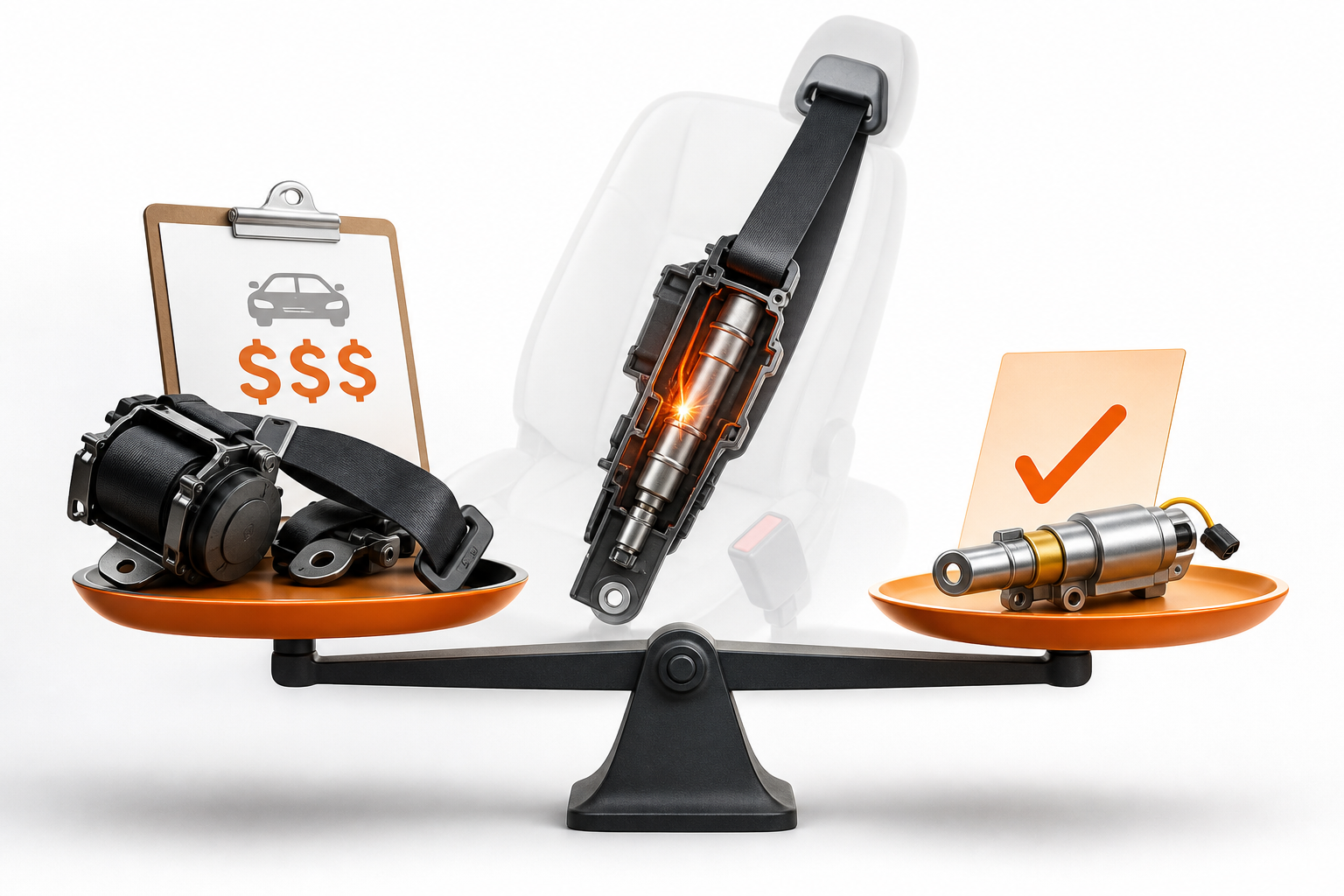
- Replacement vs. Repair: The Core Difference
- Why a Used Buckle Often Doesn’t Solve the Problem
- What Seat Belt Buckle Replacement Actually Costs
- When Repair Is the Right Answer
- How to Diagnose Your Specific Situation
- The Salvage and Rebuilt-Title Vehicle Scenario
- Buckle Pretensioner vs. Retractor Pretensioner: Does It Matter for Repair?
- A Note on DIY Buckle Replacement
- Summary: Which One Do You Need?
- Frequently Asked Questions
When a seat belt buckle won’t click, won’t release, or locked up after a collision, the first question is usually the same: do you need a full replacement, or will a repair do the job? The answer depends on what’s actually wrong — and getting that diagnosis right can save you real money and time.
Here’s how to tell the difference, what each path costs, and when repair is the smarter call.
What a Seat Belt Buckle Actually Does
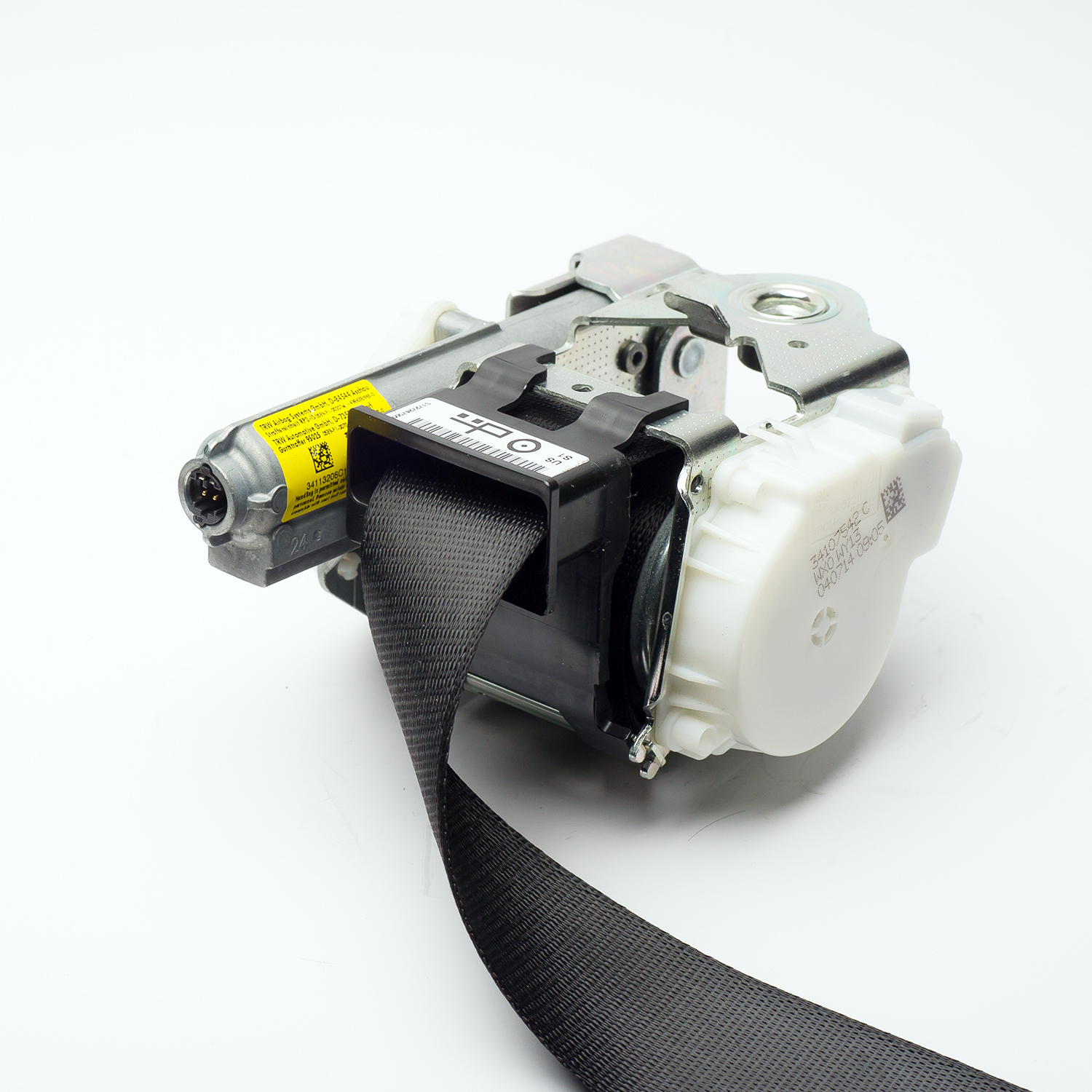
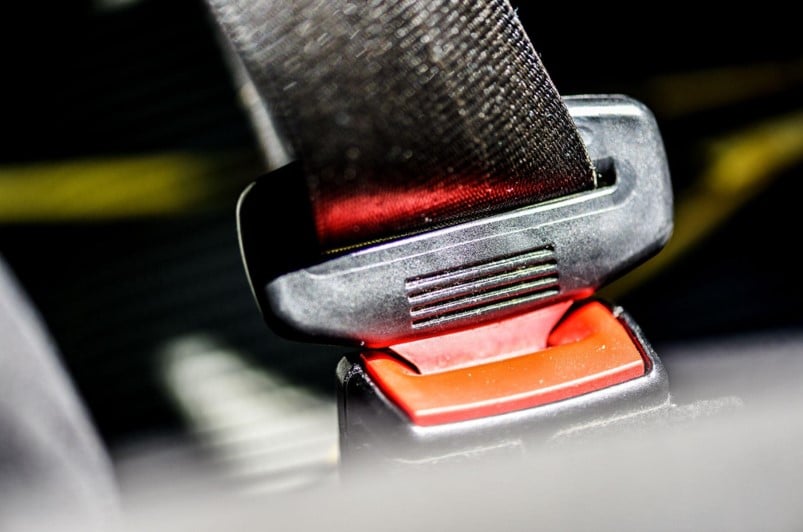
The buckle is the latching mechanism the tongue clicks into. It holds the belt in place during normal driving and, in a crash, works alongside the pretensioner — a pyrotechnic device built into the belt assembly that fires on impact to pull the belt tight against your body.
That’s the part most people miss: the buckle and the pretensioner are part of the same system. When a collision happens, the pretensioner fires, and the gas charge that powers it leaves residue and physical changes inside the assembly. After that, the belt is locked. It won’t retract. It won’t feed. The buckle may feel completely normal, but the pretensioner has done its job and can’t do it again.
That distinction matters because it determines whether you need a buckle-level fix or a pretensioner repair.
The Four Most Common Seat Belt Buckle Problems
Not every buckle problem points to the same solution.
1. The Buckle Won’t Click or Latch
If the tongue slides in but doesn’t lock, the latch mechanism inside the buckle is worn or broken — a mechanical failure with no crash involvement. Debris or a fatigued spring is often the cause. This is one of the few situations where replacing just the buckle hardware might be appropriate, but only if the pretensioner is confirmed intact.
2. The Buckle Won’t Release
A stuck release button is usually a buckle-specific issue. Dirt, worn plastic, or a weak spring can all cause it to stick. If no crash was involved, the pretensioner is likely fine and the fix stays at the buckle level.
3. The Belt Is Locked and Won’t Retract After a Crash
This is the most common scenario. The belt locks up, won’t retract, and the whole assembly feels stiff. This is not a buckle problem — it’s a pretensioner problem. The pretensioner has deployed and needs to be repaired. Swapping the buckle alone does nothing here.
4. The Buckle Pretensioner Deployed
Some vehicles have a buckle pretensioner rather than a retractor pretensioner, or they have both. When that’s the case, the pretensioner is built directly into the buckle assembly. After a crash, the entire buckle unit locks up — and that’s a pretensioner repair job, not a simple buckle swap.
Replacement vs. Repair: The Core Difference
Full seat belt buckle replacement means installing a new or used buckle assembly. It makes sense when:
- The buckle has a purely mechanical failure with no crash involvement
- The pretensioner is confirmed undeployed
- The vehicle is older and a salvage-yard buckle is a cost-effective option
Pretensioner repair is the right path when:
- The belt locked up during or after a collision
- The buckle pretensioner deployed
- The retractor is locked regardless of what the buckle does
The most common mistake is assuming that because the buckle is the part you interact with, it must be the part that needs replacing. In post-crash situations, the buckle is usually fine. The pretensioner is what needs attention.
Why a Used Buckle Often Doesn’t Solve the Problem
A lot of people buy a matching buckle from eBay or a salvage yard, swap it in, and discover the belt still won’t retract. That’s because they fixed the wrong part.
Used buckles also carry their own risk. You don’t know the crash history of a salvage-yard buckle. If it came from a vehicle that was in a collision, its pretensioner may have already deployed — meaning you’d be installing a compromised safety component.
For body shop rebuilders and Copart reconditioning workflows, this is a real operational problem. Sourcing used buckles at scale introduces quality uncertainty that a repair service using OEM parts eliminates entirely.
What Seat Belt Buckle Replacement Actually Costs
A full seat belt assembly replacement at a dealership typically runs $300 to $800-plus depending on the vehicle. That covers parts and labor for a new OEM assembly. For luxury or European vehicles, the number climbs higher.
Independent shops are generally cheaper, but they’re still installing new or aftermarket parts at retail markup plus labor.
That cost difference becomes significant when you’re reconditioning multiple vehicles or trying to keep a single repair bill reasonable after an accident.
When Repair Is the Right Answer
If the belt locked up after a crash and the pretensioner deployed, repair is almost always the right call — both on cost and on outcome.
A pretensioner repaired with OEM parts and OEM programming is restored to factory spec. The belt retracts, the pretensioner is functional again, and the buckle works exactly as it did before the collision. No compromise on safety.
Safety Restore handles exactly this type of repair as a mail-in service. You remove the seat belt assembly, ship it in, and it comes back repaired within 24 hours using 100% OEM parts and OEM programming — backed by a lifetime warranty. The flat rate is $99 for any repair, regardless of make, model, or year. No stages, no tiers, no surprise fees.
For a body shop running ten vehicles through reconditioning in a week, that math is straightforward. For an individual owner facing a $500-plus dealer quote, it’s equally clear.
How to Diagnose Your Specific Situation
Before you order anything, work through this:
Step 1: Was there a collision?
If yes, assume the pretensioner deployed until proven otherwise. A belt locking up after a crash is the pretensioner doing its job. You need a pretensioner repair, not a buckle swap.
Step 2: Is the belt locked and won’t retract at all?
If the webbing is stiff, won’t pull out smoothly, and won’t retract, that’s a pretensioner issue. The buckle is probably fine.
Step 3: Does the buckle click and release normally?
If the buckle mechanism works but the belt is still locked — pretensioner repair.
Step 4: Does the buckle fail to latch or release with no crash history?
This is a mechanical buckle failure. A replacement buckle assembly may be appropriate, but confirm the pretensioner is intact before assuming that’s all you need.
Step 5: Is the airbag light on?
If the SRS warning light is on alongside the seat belt issue, the airbag module may also need to be reset. These two repairs frequently go together after a collision.
The Salvage and Rebuilt-Title Vehicle Scenario
If you bought a salvage-title vehicle or are reconditioning one, the seat belt situation is almost always a pretensioner issue. Salvage vehicles have been in accidents significant enough to total them. The pretensioners have fired. The belts are locked.
Replacing the buckle on a salvage vehicle without addressing the pretensioner wastes time and money — and leaves the vehicle with a safety system that won’t perform in a future collision.
For Copart rebuilders and body shops, the standard workflow is to pull the seat belt assemblies, send them to a repair service, and reinstall the repaired units before inspection. That’s exactly the use case Safety Restore is built for: mail-in, 24-hour turnaround, $99 flat, all makes and models, lifetime warranty.
Buckle Pretensioner vs. Retractor Pretensioner: Does It Matter for Repair?
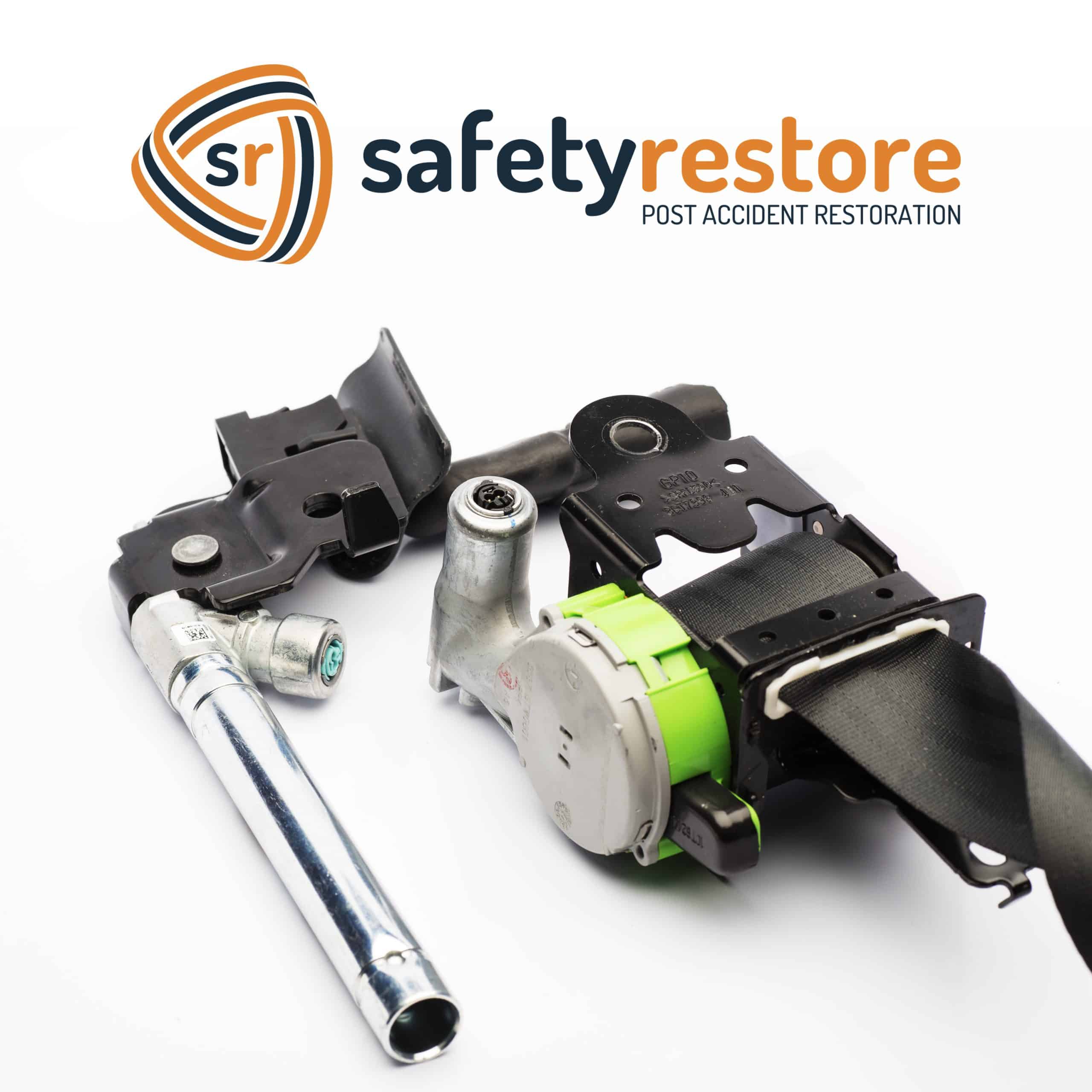
Yes — and it’s worth knowing before you ship anything.
Some vehicles use a retractor pretensioner built into the retractor mechanism at the B-pillar. Others use a buckle pretensioner built into the buckle assembly at the seat. Some vehicles have both.
If your vehicle has a buckle pretensioner and it deployed, the buckle assembly itself contains the fired pretensioner. That whole unit needs to be repaired — not just the buckle mechanism. A standard buckle swap won’t fix it.
Safety Restore’s buckle pretensioner repair service covers this specific scenario. You ship the buckle assembly, it’s repaired with OEM parts, and it comes back ready to install.
A Note on DIY Buckle Replacement
Swapping a buckle on a non-pretensioner vehicle is a straightforward job for anyone comfortable with basic tools. Most buckles bolt directly to the seat frame with a single bolt, and the tongue slides out of the retractor webbing.
But if there’s any chance the pretensioner has deployed — and after any collision, there is — don’t attempt a DIY fix on the pretensioner itself. Pretensioners contain explosive charges. Handling a deployed pretensioner without proper equipment and training is genuinely dangerous. Leave it to a professional repair service.
Summary: Which One Do You Need?
| Situation | What You Need |
|---|---|
| Buckle won’t click, no crash history | Buckle replacement (confirm pretensioner intact) |
| Buckle won’t release, no crash history | Buckle replacement or mechanical repair |
| Belt locked after collision | Pretensioner repair |
| Buckle pretensioner deployed | Buckle pretensioner repair |
| Salvage/rebuilt-title vehicle | Pretensioner repair (assume deployed) |
| Belt locked + airbag light on | Pretensioner repair + SRS module reset |
The short version: if a crash was involved, you almost certainly need a pretensioner repair, not a buckle replacement. If there was no crash and the buckle mechanism itself is failing, a replacement buckle may be the right call.
Getting this right the first time means you’re not paying twice — once for the wrong fix and again for the right one.
For pretensioner repair, Safety Restore at safetyrestore.com offers a mail-in service with 24-hour turnaround, 100% OEM parts, and a lifetime warranty at a flat $99 for any repair on any make or model.
Frequently Asked Questions
Can I replace just the seat belt buckle after an accident?
In most cases, no. After a collision, the pretensioner — not the buckle — is what has deployed and locked the belt. Replacing the buckle won’t restore the belt’s function. The pretensioner needs to be repaired.
How do I know if my buckle pretensioner deployed?
If the belt is locked and won’t retract after a crash, and the buckle assembly feels stiff or the button travel feels off, the buckle pretensioner likely fired. The most reliable way to confirm is to have the assembly inspected by a repair technician.
Is it safe to use a salvage-yard buckle as a replacement?
It carries real risk. You can’t verify the crash history of a used buckle. If it came from a vehicle that was in a collision, its pretensioner may have already deployed — meaning you’d be installing a non-functional safety component.
What’s the difference between a buckle pretensioner and a retractor pretensioner?
A retractor pretensioner is built into the retractor at the B-pillar and pulls the webbing tight on impact. A buckle pretensioner is built into the buckle assembly at the seat and pulls the buckle downward on impact. Some vehicles have both. Either one can deploy in a collision and will need repair afterward.
How much does seat belt buckle replacement cost at a dealership?
A full seat belt assembly replacement typically runs $300 to $800-plus at a dealership, depending on the vehicle make, model, and whether it involves a simple retractor or a more complex assembly with a buckle pretensioner.
Can a repaired pretensioner perform the same as a new one?
Yes — when repaired with OEM parts and OEM programming to factory specifications, a properly repaired pretensioner restores the assembly to the same performance standard as a new unit.
Does Safety Restore repair buckle pretensioners?
Yes. Safety Restore’s mail-in service covers buckle pretensioner repairs at the same flat $99 rate as all other seat belt repairs, for all vehicle makes and models, with a lifetime warranty and 24-hour turnaround.