Seat Belt Locked After Accident? Here’s How to Fix It in 2026
- Why Your Seat Belt Locks After a Crash
- What Happens If You Ignore a Locked Seat Belt
- Your Options for Fixing a Locked Seat Belt
- How the Mail-In Repair Process Works
- What About the Airbag Module?
- What If the Webbing Is Damaged?
- How Much Does Seat Belt Repair Cost in 2026?
- Is It Safe to Drive While You Wait for the Repair?
- Why OEM Parts Matter for Pretensioner Repair
- Frequently Asked Questions
Your seat belt worked perfectly before the crash. Now it won’t pull out, won’t retract, or sits stiff and useless in its housing. You’re not imagining things, and nothing is broken in a mysterious way. This is exactly what seat belts are designed to do after a collision — and there’s a clear, affordable path to fixing it.
This guide explains why your seat belt locked, what happens if you leave it that way, and how to get it repaired quickly without paying dealer prices.
Why Your Seat Belt Locks After a Crash
Modern seat belts contain a component called a pretensioner. During a collision, the pretensioner fires — either through a pyrotechnic charge or a mechanical trigger — to instantly tighten the belt against your body and reduce forward movement. It’s one of the most important safety mechanisms in your vehicle.
The problem is that pretensioners are single-use devices. Once they fire, the internal mechanism locks the belt in place. The webbing won’t retract, the buckle may feel stiff, and the belt is effectively dead until it’s repaired or replaced.
This isn’t a malfunction. It’s the system doing its job. But it does mean your seat belt is no longer functional, and driving without a working belt puts you at serious risk in any future incident.
Single-Stage, Dual-Stage, and Triple-Stage Pretensioners
Not all pretensioners are the same. Depending on your vehicle’s make, model, and year, your seat belt may have:
- Single-stage pretensioners — one firing mechanism, common in older or base-trim vehicles
- Dual-stage pretensioners — two charges that fire in sequence based on crash severity
- Triple-stage pretensioners — three stages, found in newer vehicles with advanced SRS systems
The type matters for repair pricing and complexity, but all three can be repaired using OEM parts and programming.
What Happens If You Ignore a Locked Seat Belt
Driving with a locked or non-functional seat belt isn’t just inconvenient. It creates real problems:
Safety risk. A belt that won’t retract or won’t hold tension offers no meaningful protection in another collision. You’re essentially driving unbelted.
Failed inspection. Most states require functioning seat belts to pass a safety inspection. A locked belt will fail the check and keep you off the road legally.
Insurance complications. If you’re in a second accident with a documented non-functional belt, your insurer may dispute injury claims related to belt performance.
Resale problems. Buyers and dealers inspect safety systems. A locked belt or an airbag warning light will lower your trade-in value or kill a private sale.
The bottom line: a locked seat belt after an accident isn’t something you can defer. It needs to be fixed before you drive the car again.
Your Options for Fixing a Locked Seat Belt
When you start looking at repair options, you’ll find three main paths. They vary significantly in cost, speed, and quality.
Option 1: Dealership Repair
The dealer can replace your pretensioner with a new OEM unit. The work is done correctly, but the price reflects the overhead of a dealership service department. Expect to pay $300 to $500 or more per belt, and you may wait days for parts to arrive.
Option 2: Used or Salvage Parts
You can find used pretensioners on eBay or at salvage yards. The appeal is obvious — the price is low. The risk is real: you have no way to verify the firing history of a used pretensioner, and a unit that’s already deployed offers zero protection. This is not a safe shortcut for a safety-critical component.
Option 3: Mail-In Pretensioner Repair
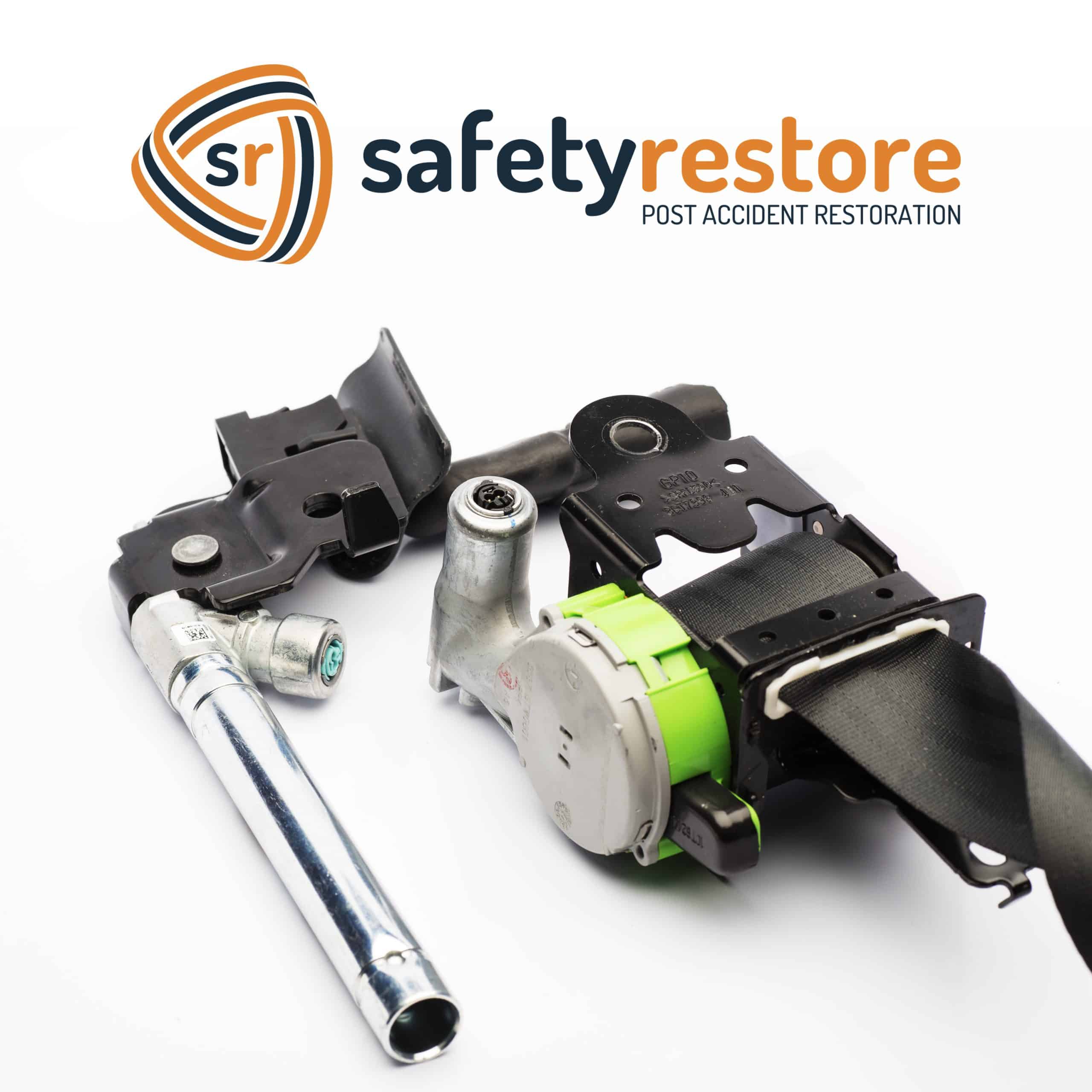
This is the option most people don’t know exists until they search for it. A mail-in repair service receives your locked pretensioner, rebuilds it using 100% OEM parts, and ships it back — typically within 24 hours. The cost is a fraction of the dealer price, and the quality is equivalent because the same OEM components are used.
Safety Restore specializes in exactly this service. Single-stage seat belt pretensioner repair starts at $69.97, dual-stage at $99.97, and triple-stage at $114.97. Free return shipping is included on every order. Every repair comes with a lifetime warranty.
How the Mail-In Repair Process Works
If you’ve never used a mail-in repair service before, the process is simpler than it sounds.
Step 1: Remove the seat belt assembly from your vehicle. This typically involves removing the lower anchor bolt, the upper guide, and the B-pillar trim panel. Most vehicles require only basic hand tools. The pretensioner is the cylindrical or rectangular housing at the base of the belt spool.
Step 2: Ship it to Safety Restore. Package the assembly securely and ship it to the facility. You don’t need to send the whole belt — just the pretensioner unit.
Step 3: Repair and return. The team rebuilds the pretensioner using OEM parts and programming, then ships it back within 24 hours of receiving it. Free return shipping is included.
Step 4: Reinstall. Bolt the repaired assembly back into your vehicle. The belt retracts, tensions, and functions exactly as it did before the accident.
The whole process typically takes two to three days from the time you ship, depending on your location and carrier speed.
What About the Airbag Module?

If your airbag deployed in the accident, or if your airbag warning light is on, you likely have a second issue to address: the SRS airbag module.
The airbag module stores crash data after deployment. Once that data is written, the module is locked and the airbag system is disabled. The warning light stays on, and the system won’t function in a future crash until the module is reset or replaced.
Dealer replacement of an airbag module can cost $400 to $600 or more. Safety Restore also offers an SRS airbag module reset service for $54.97 that clears crash data and hard codes via OEM programming, restoring the module to pre-accident condition. Same mail-in process, same 24-hour turnaround, same lifetime warranty.
If you’re dealing with both a locked seat belt and an airbag light, it makes sense to address both at the same time.
What If the Webbing Is Damaged?
Sometimes the pretensioner fires and the belt itself survives intact. Other times, the webbing gets cut, frayed, or burned during the accident. If your seat belt webbing is visibly damaged, a pretensioner repair alone won’t solve the problem.
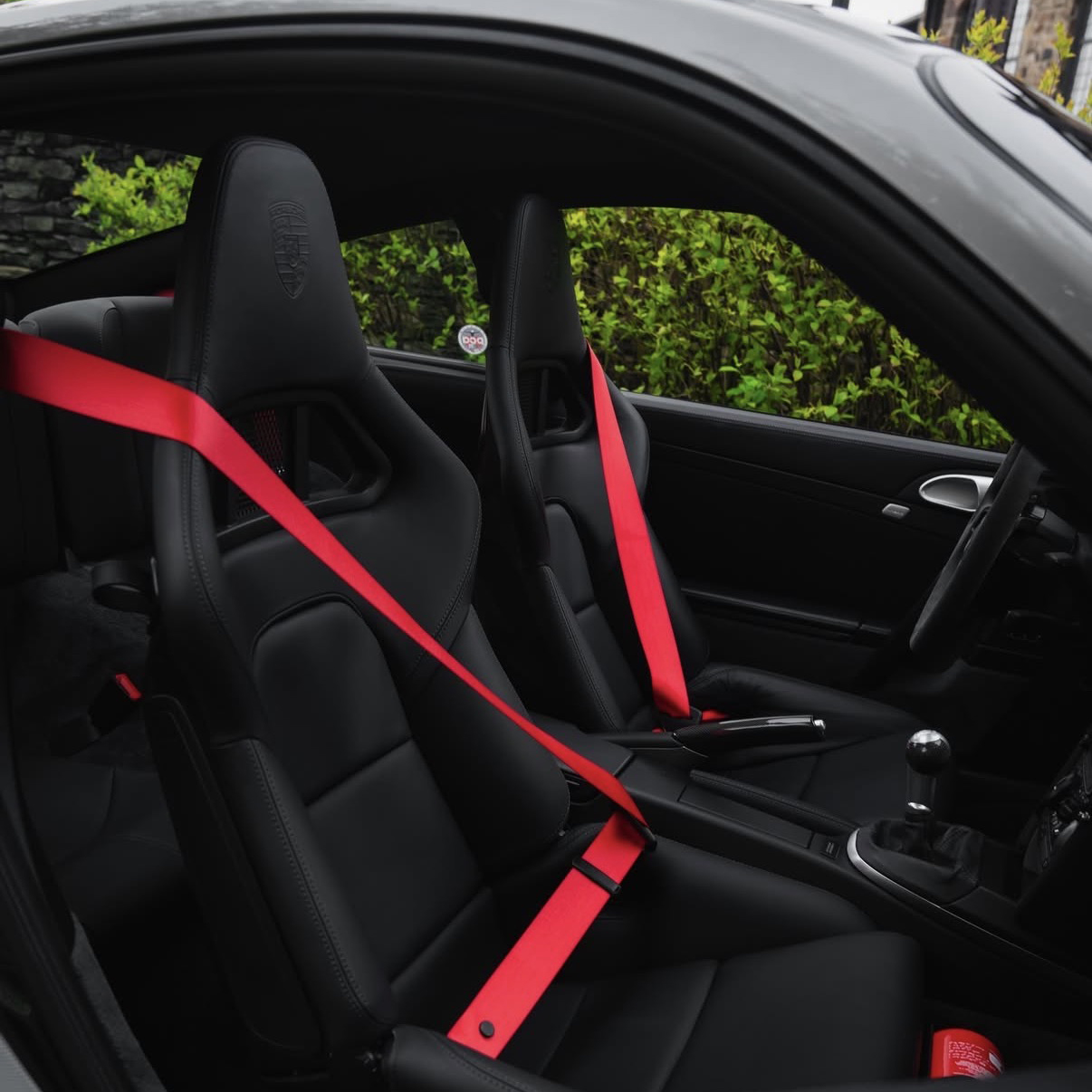
Safety Restore offers seat belt webbing replacement for $99.97, covering belts that are cut, torn, ripped, frayed, or otherwise compromised. If you want a different look, custom color webbing is available in red, yellow, orange, blue, green, and other options at the same price point.
How Much Does Seat Belt Repair Cost in 2026?
Here’s a quick comparison of what you’re likely to pay across your options:
| Repair Option | Estimated Cost | Turnaround | Warranty |
|---|---|---|---|
| Dealership replacement | $300–$500+ | 2–5 days | Varies |
| Used salvage part | $20–$80 | Varies | None |
| Safety Restore mail-in repair | $69.97–$114.97 | 24 hours | Lifetime |
The mail-in option delivers OEM-quality results at a price that’s up to 90% less than what a dealer charges. For most car owners, it’s the most practical choice by a wide margin.
Is It Safe to Drive While You Wait for the Repair?
Short answer: no. If your seat belt is locked and won’t retract, it cannot protect you in another collision. You should avoid driving the vehicle until the repair is complete.
If you absolutely must drive, sit as close to the seat as possible and keep trips short and local. But treat this as a temporary necessity, not a solution. A non-functional seat belt is a genuine safety hazard, not a minor inconvenience.
Why OEM Parts Matter for Pretensioner Repair

When a seat belt pretensioner is repaired, the quality of the replacement components directly affects how the belt performs in a future crash. OEM (original equipment manufacturer) parts are built to the same specifications as the original hardware in your vehicle. They fire at the correct threshold, apply the correct tension, and integrate correctly with your vehicle’s SRS system.
Aftermarket or non-OEM components may be cheaper to source, but they introduce uncertainty into a system where performance is literally life-or-death. Safety Restore uses 100% OEM parts on every repair — that’s the standard that makes the lifetime warranty meaningful.
Frequently Asked Questions
Can a locked seat belt be repaired, or does it need to be fully replaced? In most cases, it can be repaired. When a pretensioner fires during a crash, the internal mechanism locks the belt. A qualified repair service rebuilds the pretensioner using OEM parts, restoring it to full function without replacing the entire assembly.
How long does mail-in seat belt repair take? Safety Restore completes repairs within 24 hours of receiving your belt and includes free return shipping. Total turnaround from the time you ship is typically two to three days, depending on your location.
Will a repaired seat belt pass a state inspection? Yes, provided the repair is done correctly using OEM parts and the belt functions as designed. A properly repaired pretensioner retracts, tensions, and locks the same way as the original.
Is it safe to drive with a locked seat belt while waiting for the repair? No. A locked seat belt cannot provide meaningful protection in a collision. Avoid driving until the repair is complete, or limit driving to short, low-risk trips if absolutely necessary.
Does Safety Restore work on all vehicle makes and models? Yes. The mail-in repair service covers all makes and models, including domestic, import, luxury, and commercial vehicles.
What’s the difference between a single-stage and dual-stage pretensioner? A single-stage pretensioner fires once during a crash. A dual-stage fires in two sequences based on impact severity. Triple-stage pretensioners, found in newer vehicles, fire in three stages. All three types can be repaired through the mail-in service, with pricing starting at $69.97 for single-stage.
What if my airbag also deployed in the accident? If your airbag deployed, the SRS module will have stored crash data and the airbag warning light will be on. You’ll need a separate airbag module reset in addition to the seat belt repair. Safety Restore handles both services through the same mail-in process.
A locked seat belt after an accident is a fixable problem. You don’t need to pay dealer prices, and you don’t need to wait a week for parts. The mail-in repair process is straightforward, the cost is reasonable, and the result is a belt that works exactly as it should.
If your seat belt locked in a crash, safetyrestore.com is the place to start.