
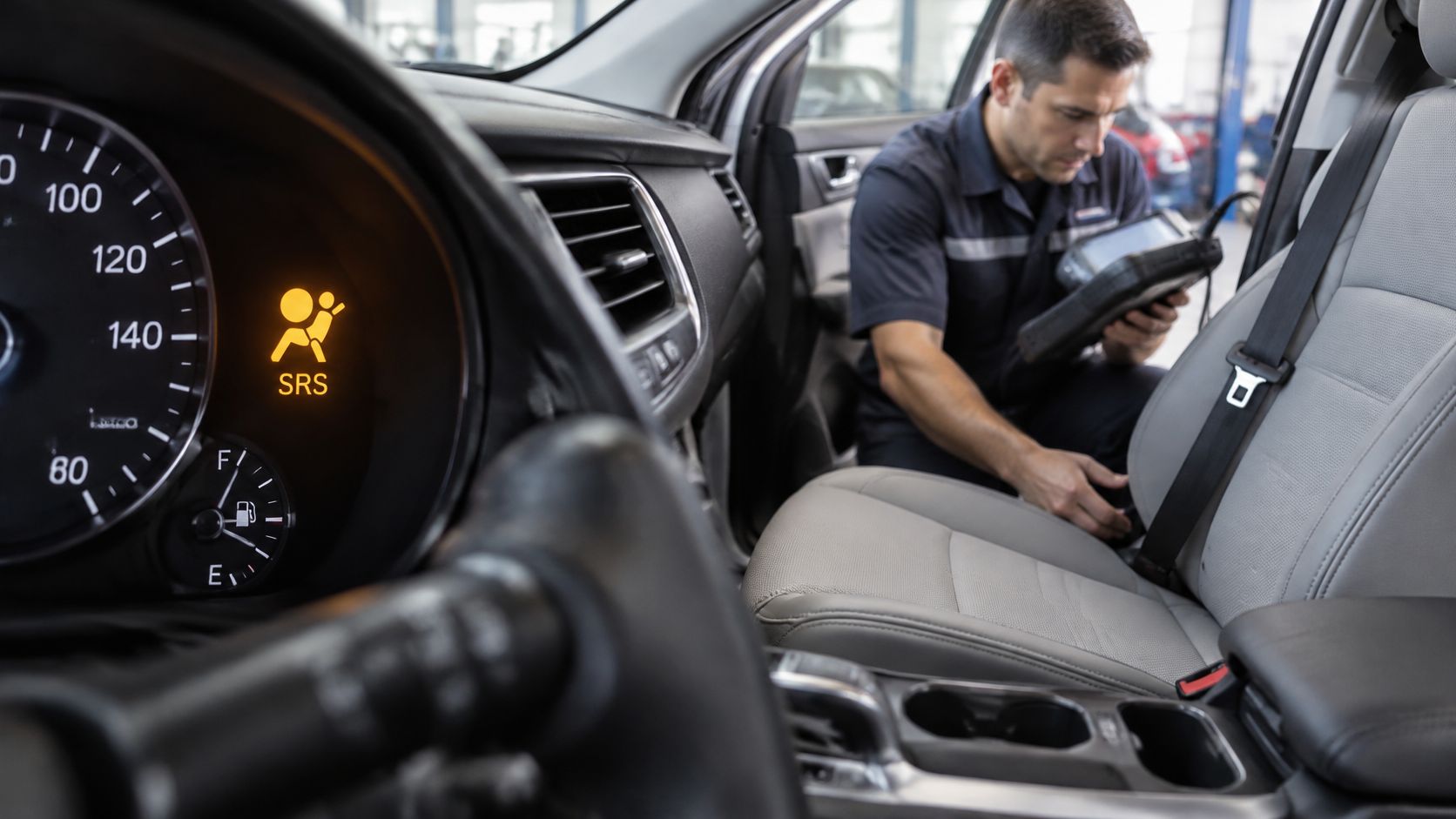
You started the car, and a light about the passenger airbag is still on. Maybe the cluster symbol flashed and never went out. Maybe the center dash reads PASSENGER AIR BAG OFF with an empty seat, or it stays that way after an adult sits down. From the driver's seat those look like one problem. They are not.
A passenger airbag warning light is a message from the restraint system. One version is often doing its job by keeping the passenger airbag switched off. The other says the system found a fault and may not protect anyone in a crash. Turning the lamp off is not the same as proving the airbags and pretensioners will work.
Table of Contents
- What Each Passenger Airbag Light State Means
- How to Run Safe Checks Before Calling a Shop
- Common Causes and When Module Resets Apply
- Three Cases Where the Light Came On for Different Reasons
- Choosing a Dealer, Independent Shop or Mail-In Repair
- Confirm the Fault Is Fixed Before You Drive
What Each Passenger Airbag Light State Means
The passenger airbag warning light belongs to the Supplemental Restraint System (SRS) self-check, not a general service reminder. A Toyota SRS technical bulletin says the warning light is designed to illuminate when the ignition is switched on and then turn off after a few seconds if the system passes its initial check.
That short flash means the monitor woke up. It has looked across the airbags, impact sensors, wiring, the restraint control module, and the seat-belt pretensioners. If the lamp never lights, stays on after the check, or comes on while driving, that bulletin says the SRS has detected a fault and the vehicle should be diagnosed. The lamp tells you service is needed and points technicians toward stored diagnostic information.
Nothing visible has to be torn or deployed. A lamp that stays on can already mean reduced occupant protection, because one of those parts may not operate as designed in a crash. The same Toyota recall documentation notes that an SRS electronic-control-unit defect could cause inadvertent deployment of front airbags or pretensioners, and it directs drivers with an illuminated SRS lamp to seek diagnosis and repair.
The status light is not the fault light
The cluster lamp is usually red or amber. A separate yellow telltale reads PASSENGER AIR BAG OFF. OFF is often normal with an empty seat, a child restraint, or an occupant below the weight that turns the passenger airbag on. It is a problem when OFF stays lit with an adult seated, because that frontal airbag will not deploy for them.
Practical rule: Write down the exact lamp, its color, and the wording before you touch anything else. Those words pick the next step.
| Light state | What it usually means | What to do |
|---|---|---|
| Lights at ignition, then goes off | SRS self-check passed | No action beyond normal use |
| Stays on after startup check | SRS has detected a fault | Diagnose soon; restraint may not work in a crash |
| Comes on while driving | Fault detected during operation | Diagnose before the next long drive |
| PASSENGER AIR BAG OFF steady, adult seated | Passenger airbag deactivated by occupant sensing | Check seat load; diagnose if OFF persists with an adult seated |
| PASSENGER AIR BAG OFF with empty seat or child seat fitted | Normal suppression | No fault; confirm seat setup |
I would not clear a code until that note is written down. A shop that only hears "the airbag light is on" cannot tell which row you are in.
How to Run Safe Checks Before Calling a Shop
If the passenger status changes when you remove an object from the seat, the system may be responding to occupancy. A persistent SRS warning needs a scan. These checks can help you report what happened, but they cannot confirm the restraint system is crash-ready.
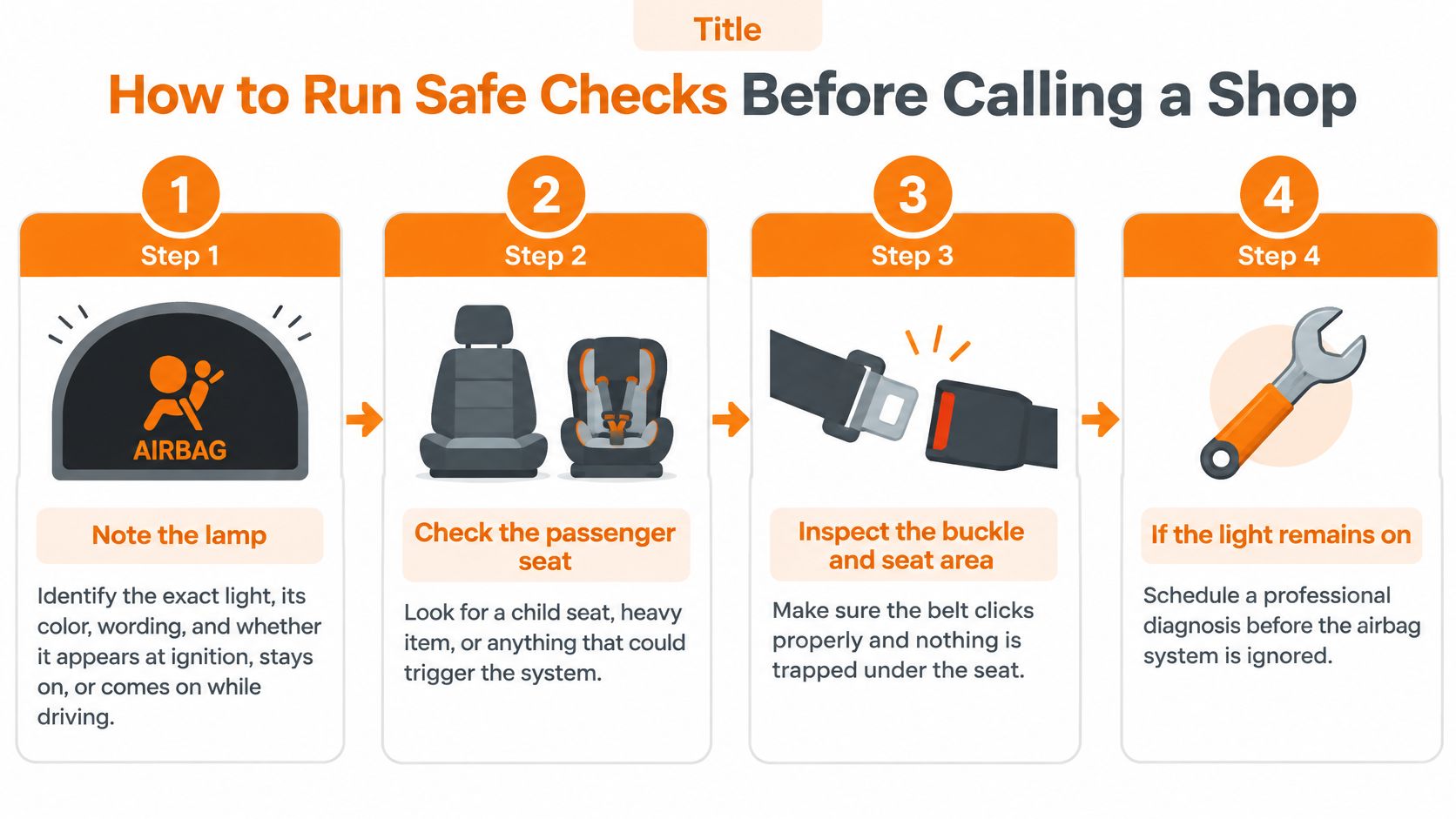
- Record the warning. Note the lamp's color, exact wording, and when it appears: at startup, continuously, or while driving. Keep the separate PASSENGER AIR BAG OFF telltale distinct from the SRS fault lamp.
- Clear the passenger seat. Remove bags, cargo, and seat covers, then check whether the status changes. Do not press down on the cushion or move wiring beneath the seat.
- Check any child restraint against the vehicle manual. A correctly installed child seat can result in the passenger airbag being off. If the status seems inconsistent with the seat setup, note that for the technician.
- Observe the startup sequence. With the seat empty, turn the ignition on and record what the lamps do. Repeat with an adult seated. Stop if the SRS warning stays on or the status does not match the occupant.
- Inspect visible belt condition only. Look for cut webbing, a buckle that will not latch, or a belt that will not pull out. Do not unplug yellow connectors or dismantle restraint components.
- Check the VIN for recalls. Use the vehicle manufacturer's recall lookup or the NHTSA recall lookup, and save any result that applies.
- Use an SRS-capable scan tool if available. Record the exact codes. A basic engine-code reader may not access the airbag system. Do not erase codes: the stored information can help identify the fault.
| Result | What to do |
|---|---|
| OFF status matches an empty seat or child restraint, and no SRS warning remains | The status may be normal; keep watching for a change |
| SRS warning stays on, or passenger status seems wrong with an adult seated | Arrange an SRS diagnosis and give the shop your observations |
| Belt is damaged, locked, or will not latch, or a restraint warning appeared after a crash | Do not dismantle the system; contact a qualified repairer |
A lamp going out after a check does not prove the airbags and pretensioners are ready to work. A scan identifies stored faults, but confirming readiness also requires the system and its components to be checked.
Common Causes and When Module Resets Apply
A passenger airbag warning can point to a seat sensor, belt hardware, wiring, a recall, or crash data stored in the SRS module. The exact code matters: a seat mat should not be replaced before its wiring is checked, and clearing a code does not confirm the restraint system is ready.
| Cause | How it shows up | Who should inspect |
|---|---|---|
| Occupant detection sensor or seat mat | OFF status with an adult seated, or changes when weight shifts | Shop with an SRS scan tool and seat test |
| Seat belt buckle or pretensioner | Belt locked or stuck, alongside the airbag light | Shop; inspect belt hardware |
| SRS module with crash data or hard codes | Lamp stays on after an accident or body repair | Shop; scan codes, then clear only after repairs |
| Wiring or connector fault | Light flickers or warnings come and go | Shop; check harness and connectors |
| Cargo or seat cover on passenger cushion | OFF status or fault during testing with the seat empty | Owner; remove items and retest |
| Open manufacturer recall | Warning tied to a model-specific fault | Dealer; check VIN for recalls |
Occupant sensing and intermittent wiring
The passenger airbag is meant to switch off for an empty seat, an infant, or a child restraint. If OFF remains displayed with an adult seated, the system needs diagnosis. A fault may be in the sensing system or its wiring, so a sensor should not be replaced before the harness and connectors are checked.
Crash data, pretensioners, and what a reset can do
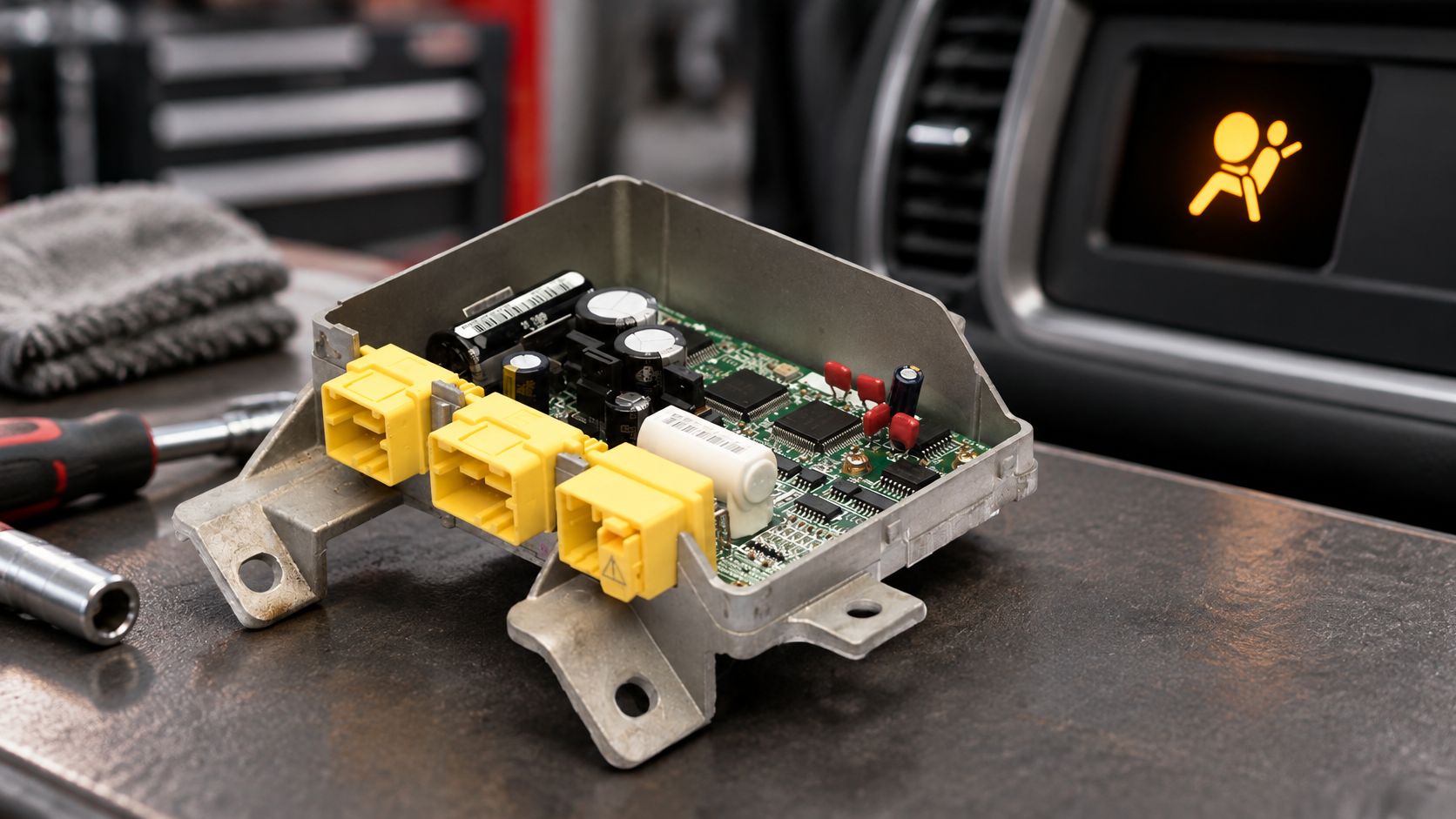
A pretensioner fault may appear with a belt that is locked, stuck, or will not retract. The belt and module can trigger the same warning, but clearing the warning does not repair faulty belt hardware.
During an accident, the airbag module writes crash data to its memory chip. The airbag light comes on, and the module is considered unusable until the stored data is addressed. After the vehicle's other repairs are complete, Safety Restore's SRS airbag module reset service clears crash data and hard codes from the original module.
A reset does not fix a broken sensor, damaged harness, or worn pretensioner. The shop must verify those components and confirm the system's readiness after clearing codes. If the warning returns, further diagnosis is needed. Replacing the module is a separate option: a different module must be programmed to the vehicle's VIN, which requires a dealer.
Three Cases Where the Light Came On for Different Reasons
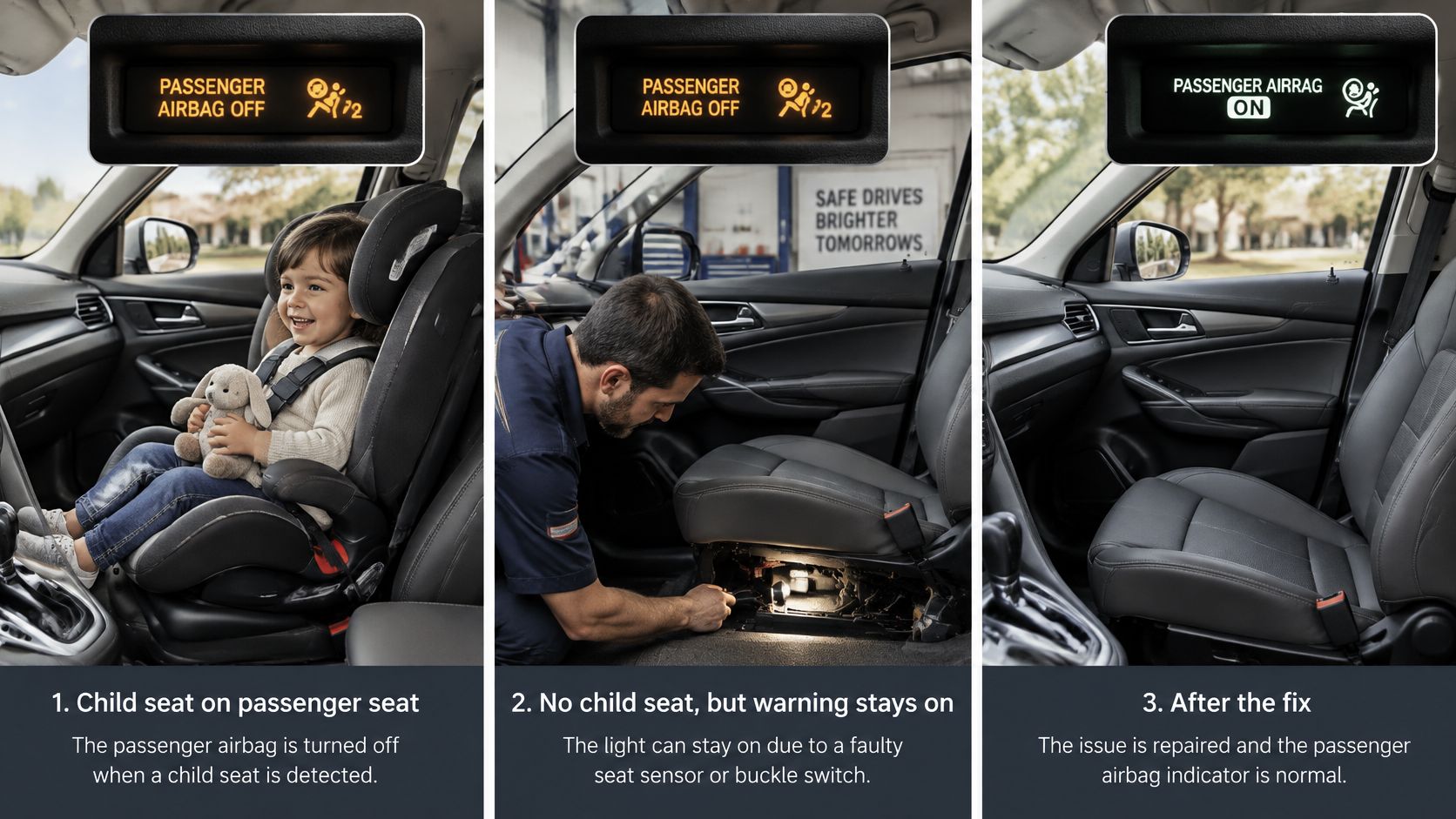
A used car can arrive with a passenger-airbag warning that started after a seat was replaced. The previous owner may have swapped the seat without matching its connections to the vehicle's restraint system. A scan of the SRS module can identify a stored fault; the replacement seat and its wiring still need physical inspection before anyone treats the system as ready.
After a minor crash, a body shop replaced a bumper and checked that the belts still latched and pulled out normally. The airbag symbol stayed on. A scan found crash data and a hard code in the SRS module, rather than a belt fault. The module was reset after the repairs were confirmed, and the startup sequence then passed. Crash data can leave the restraint controller unready, so a cleared code alone is not proof that the system will deploy correctly.
The clip below illustrates why reading the restraint-module code is more useful than guessing from the dashboard symbol.
On another car, the warning appeared on rough pavement and disappeared on smooth roads. The stored code pointed to the occupant sensor, but inspection found a loose connector under the seat losing contact as the cushion moved. Replacing the sensor would not have fixed that connection. Have an intermittent SRS fault diagnosed before relying on the passenger airbag; a scan taken while the warning is active may capture the fault before it disappears.
Choosing a Dealer, Independent Shop or Mail-In Repair
Match the route to the fault you already logged. Cost and wait time matter, but the wrong route leaves the car unverified.
| Route | Best for | Limits |
|---|---|---|
| Dealer | Complex diagnosis and module replacement with VIN programming | Usually highest cost and longest wait |
| Independent shop with SRS scan tool | Diagnosis, wiring checks and seat-sensor testing | Quality varies; confirm restraint scanning |
| Mail-in SRS or seat belt repair service | Reset of an original module or repair of a removable pretensioner after a crash | Sensors and wiring still need inspection on the vehicle |
| Owner with OBD scanner | Reading and logging stored codes | Cannot confirm a repair; do not clear codes before diagnosis |
A dealer is the right call when the module must be replaced and programmed to the VIN, or when an open recall has to be closed. An independent shop with a real SRS scanner is usually faster for wiring, seat-mat tests, and reading manufacturer-specific codes. Ask whether the tool talks to the restraint module, not only the engine computer.
Mail-in repair fits an original module or pretensioner you can remove, when you want that part restored instead of buying a new assembly. Sensors and under-seat wiring still have to be checked on the car. A locked belt after a collision is the kind of removable part covered by seat belt repair after an accident.
Before you hand the job over, the provider should read the codes, ask whether the car has been in a crash, and say plainly what the repair will not fix. Your own scanner can log codes. It cannot sign off the repair. A stored-data case with sound wiring suits a reset. A warning that changes with seat position or road vibration needs diagnosis first.
Confirm the Fault Is Fixed Before You Drive
Once the fault has been diagnosed and repaired, check the repair record and have the SRS system scanned again. The scan should show that the original fault has been addressed, with no unresolved codes. Use the startup sequence described earlier to confirm the warning lamps behave normally. The passenger airbag OFF indicator should also match the seat's occupancy.
If the warning remains on, or the scan shows an unresolved fault, treat the restraint system as unverified and arrange diagnosis before relying on it in a collision. Keep the scan results and repair paperwork, including any recall work, so the next technician can see what was checked and repaired.
Safety Restore offers mail-in repair for customer-supplied SRS modules and seat belt mechanisms. Its module reset clears stored crash data and hard codes, but the vehicle's sensors, wiring, and installed components still need to be checked before the system can be considered ready.
