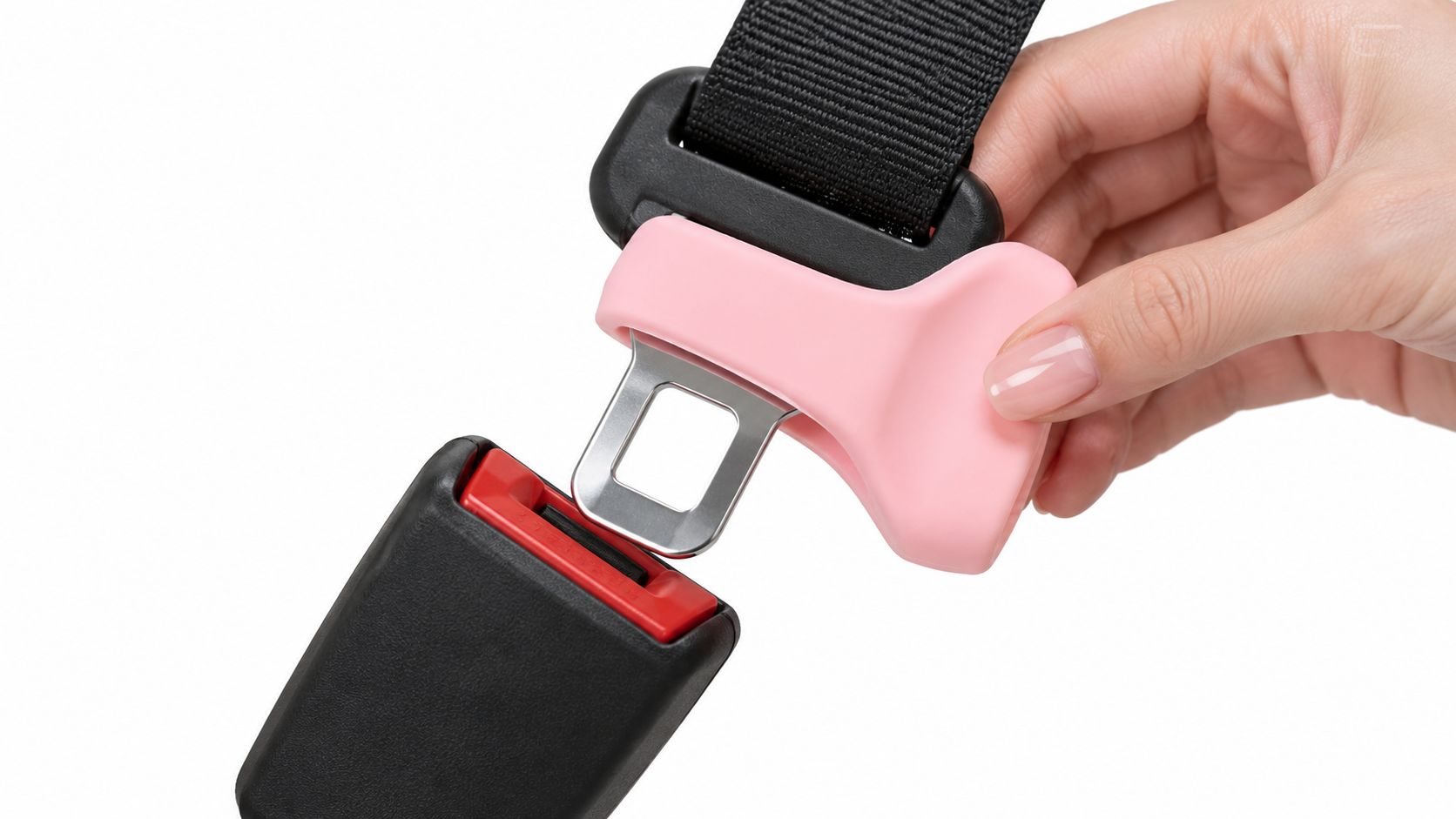
You're probably here because a seat belt buckle cover looked harmless. Maybe it was a soft silicone sleeve in a color you liked. Maybe it promised to stop scratching, keep crumbs out, or make it harder for a child to unbuckle. On a product page, those all sound reasonable.
The problem is that a buckle isn't trim. It's part of a safety system that has to work instantly, by feel, under stress, and sometimes in a wrecked vehicle. That changes the question from “Will this fit?” to “Will this still let the buckle work exactly as intended?”
That's where people get tripped up. Some covers are little more than cosmetic sleeves. Others act more like guards that change access to the release button. Those two categories don't carry the same risk. A cover can help in one context and create a real hazard in another.
This guide treats buckle covers as context-dependent devices, not universal accessories. That's the safest way to think about them.
Table of Contents
- Introduction to Seat Belt Buckle Covers
- What a Seat Belt Buckle Cover Is and How It Works
- Common Uses and Real World Applications
- Compatibility and Fitment Notes You Should Check
- Safety Cautions and When to Avoid Buckle Covers
- Choosing Safe Options and Next Steps After Damage
Introduction to Seat Belt Buckle Covers
A parent loads groceries, buckles a child in, and notices the red button is already half covered by a new accessory. In a calm driveway, that may seem minor. In a rushed school drop-off or after a crash, small changes to that button can matter a lot.
That is the right starting point for seat belt buckle covers. They are not one universal product with one clear purpose. Some are simple sleeves meant to reduce wear or heat on the buckle housing. Others are sold to make unbuckling harder for a child or a passenger who releases the belt at unsafe times.
Those uses should not be judged by the same standard.
A buckle is part of a restraint system, so the first question is not whether a cover looks tidy or feels protective. The first question is whether the buckle can still be found and released quickly, by touch, with one hand, under stress. A good comparison is a light switch cover. If it protects the wall but makes the switch harder to find in the dark, it has changed the job that matters.
The mental shift that makes this topic clearer
A buckle cover changes access. That is its real effect, even when the product page talks about style, comfort, or scratch protection.
For a purely cosmetic sleeve, the safest case is narrow. It sits on the outside without crowding the release button, narrowing the opening around it, or changing how a hand presses and releases the latch. Once a cover starts making the button less visible, less reachable, or harder to press, it has moved from accessory territory into interference.
That distinction helps clear up a common confusion. A product that helps in one setting can create risk in another. A caregiver may want to limit casual unbuckling during transport. An adult driver or front-seat passenger may need the opposite. Fast, direct release with no extra step.
Why caution matters here
Federal safety rules for seat belt assemblies are built around easy access and quick release. That principle is also reflected in NHTSA interpretation guidance on seat belt buckle accessibility. In plain language, the buckle should work the way people expect when seconds count.
So the practical rule is simple. If a cover makes you hunt for the button, press with extra force, change finger position, or use two hands, it is solving the wrong problem. It may also create accessibility concerns for older adults, passengers with limited hand strength, or anyone trying to unbuckle in a cramped or damaged vehicle.
That is why buckle covers are best treated as context-dependent devices, not default car accessories.
What a Seat Belt Buckle Cover Is and How It Works
Think of a buckle cover the way you'd think of a phone case. It wraps around the outside of an object people touch a lot. It may reduce scratches, collect less dust on the original surface, or change the look and feel. But just like a phone case can make side buttons harder to press, a buckle cover can change how the release button works in your hand.
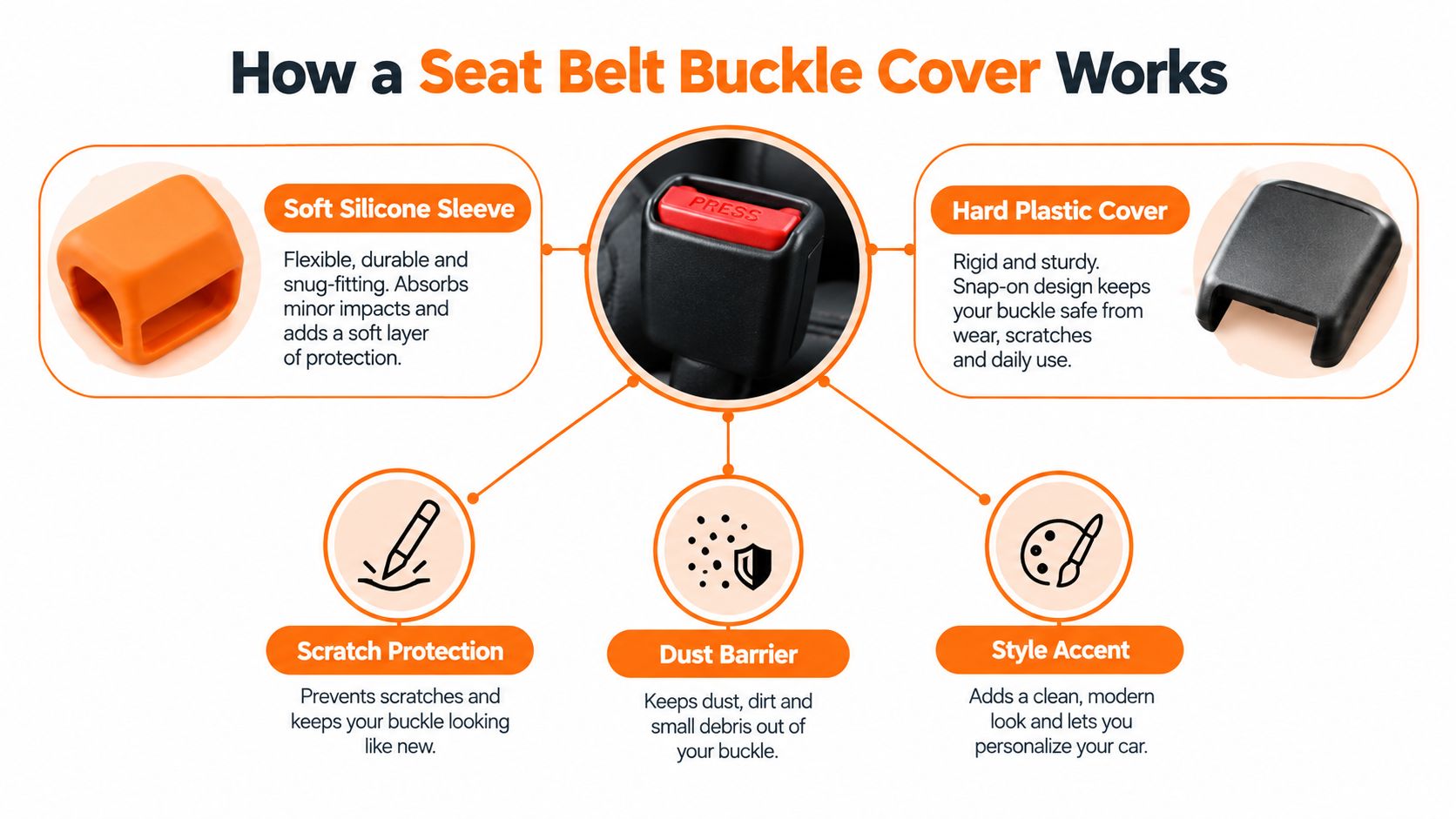
The main types people lump together
Not every seat belt buckle cover does the same thing. That's one reason online shopping gets confusing.
- Soft silicone sleeves often stretch around the buckle housing. They're usually sold for comfort, appearance, or surface protection.
- Hard plastic shells tend to snap over or around the buckle body. These can feel neat and tidy, but rigid edges can matter if they crowd the button opening.
- Child-restraint buckle guards or shields are a different category. They aren't just decorative. They're meant to make opening harder or less direct.
Those categories may look similar in a thumbnail photo, but they create different risks.
What the cover actually touches
A buckle has a housing, a release button, and a specific opening and motion your hand uses to unlatch it. A cover typically sits around the housing and near the button area. That means the details matter.
Small changes can have outsized effects, such as:
- Reduced button exposure so your thumb doesn't land naturally
- Raised edges that force you to press at an angle
- Extra material around the face that makes the release harder to see
- Added stiffness that changes the feel of the press
A buckle can still “work” in a driveway test and still be a bad idea if it's slower, less obvious, or harder to release under stress.
What a cover does not do
A seat belt buckle cover doesn't repair a sticky release, a damaged latch, crash-related locking, or a pretensioner problem. If the issue is mechanical, an accessory can distract you from the actual fix.
That's why I tell people to separate appearance, comfort, and restraint function in their minds. If you only want to reduce cosmetic wear, your standards should still be strict. If you're trying to stop unbuckling, you're no longer shopping for décor. You're dealing with a restraint-access question.
Common Uses and Real World Applications
People shop for buckle covers for very different reasons, and those reasons shouldn't be judged the same way. A cover used as a soft trim piece in a personal car is not the same as a guard intended to stop a child from pressing a buckle.
When the goal is cosmetic
Some drivers want a cleaner look, a softer touch point, or less wear on exposed plastic. In that narrow use, the key question is simple: does the accessory leave normal buckle use unchanged?
A thin sleeve that leaves the release button fully visible and easy to press may be much less concerning than a rigid cover that creates a recessed opening. The use case is low drama, but the fit still has to be exact.
When the goal is stopping unbuckling
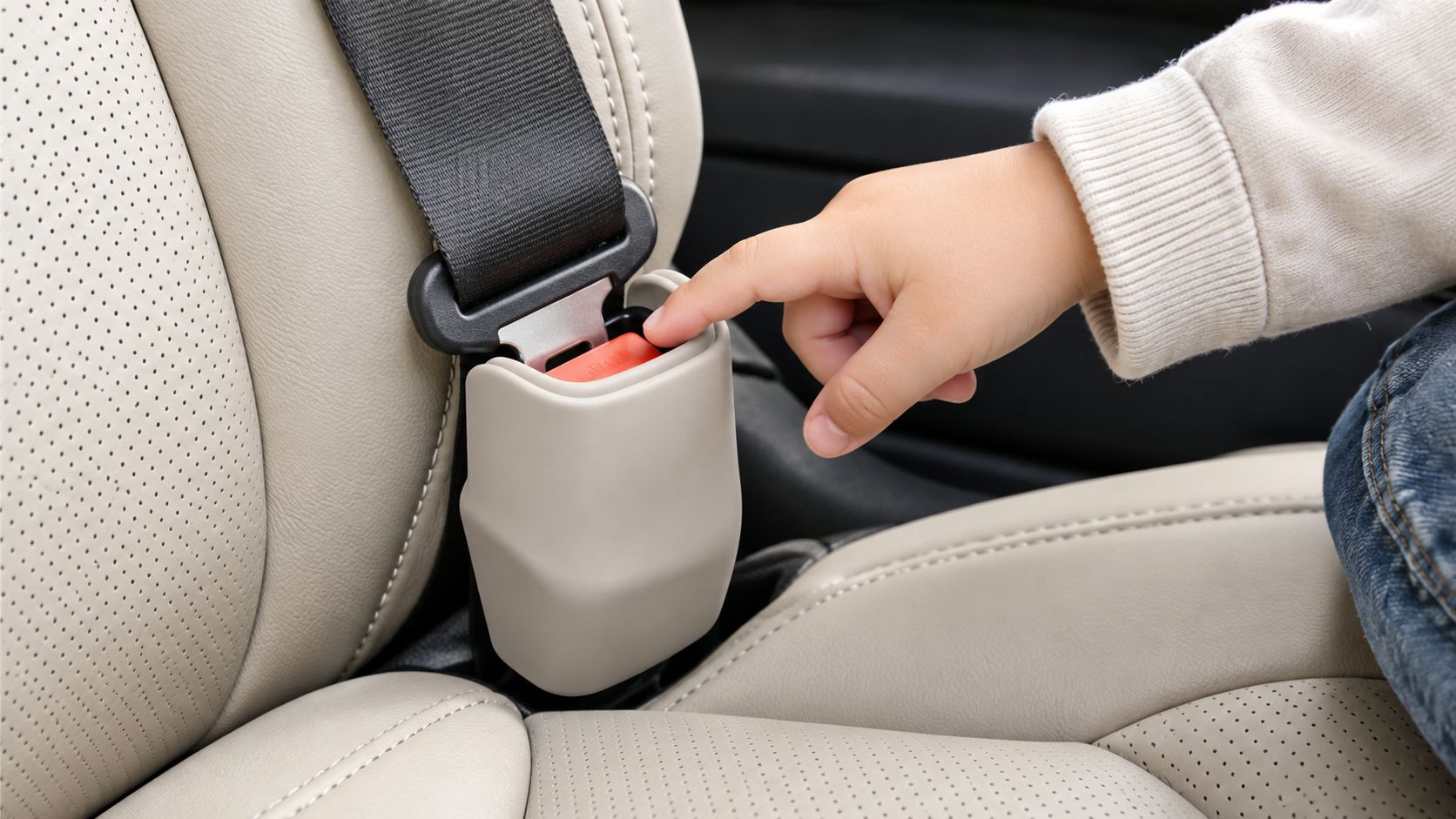
Many searches really lead here. A child learns how to press the red button. A passenger with cognitive or sensory challenges unbuckles unexpectedly. A transport operator wants more control over belt use.
That doesn't make the solution simple. Official guidance in this area is limited, and much of it is cautionary. Some government and standards-based guidance says these devices may be allowed only in narrow circumstances, can require a medical certificate, and may need to comply with a specific Australian standard. Other official guidance warns against aftermarket buckle guards that change intended belt use and notes that child-seat safety depends on one-motion release after a crash, as discussed in South Australia's seat belt safety guidance.
The same product can change meaning by context
A “buckle cover” on a daily commuter seat may be just a sleeve. The same-looking item used on a child restraint or special transport setup may be functioning as an access barrier.
That's why “universal accessory” is the wrong frame. Try this simpler filter instead:
| Situation | What the buyer usually wants | Risk level |
|---|---|---|
| Personal vehicle, cosmetic only | Scratch or dust protection | Lower, if release stays unchanged |
| Family car with child who unbuckles | Prevent button access | Higher, because emergency release becomes the issue |
| Disability or medical transport | Control unplanned unbuckling | High, because legality and rescue access both matter |
| Fleet or shuttle setting | Standardize equipment use | Depends on seat type and who uses it |
If your reason for buying the product is “I need someone not to open this buckle,” you should pause and treat it as a restraint-management issue, not a styling choice.
Compatibility and Fitment Notes You Should Check
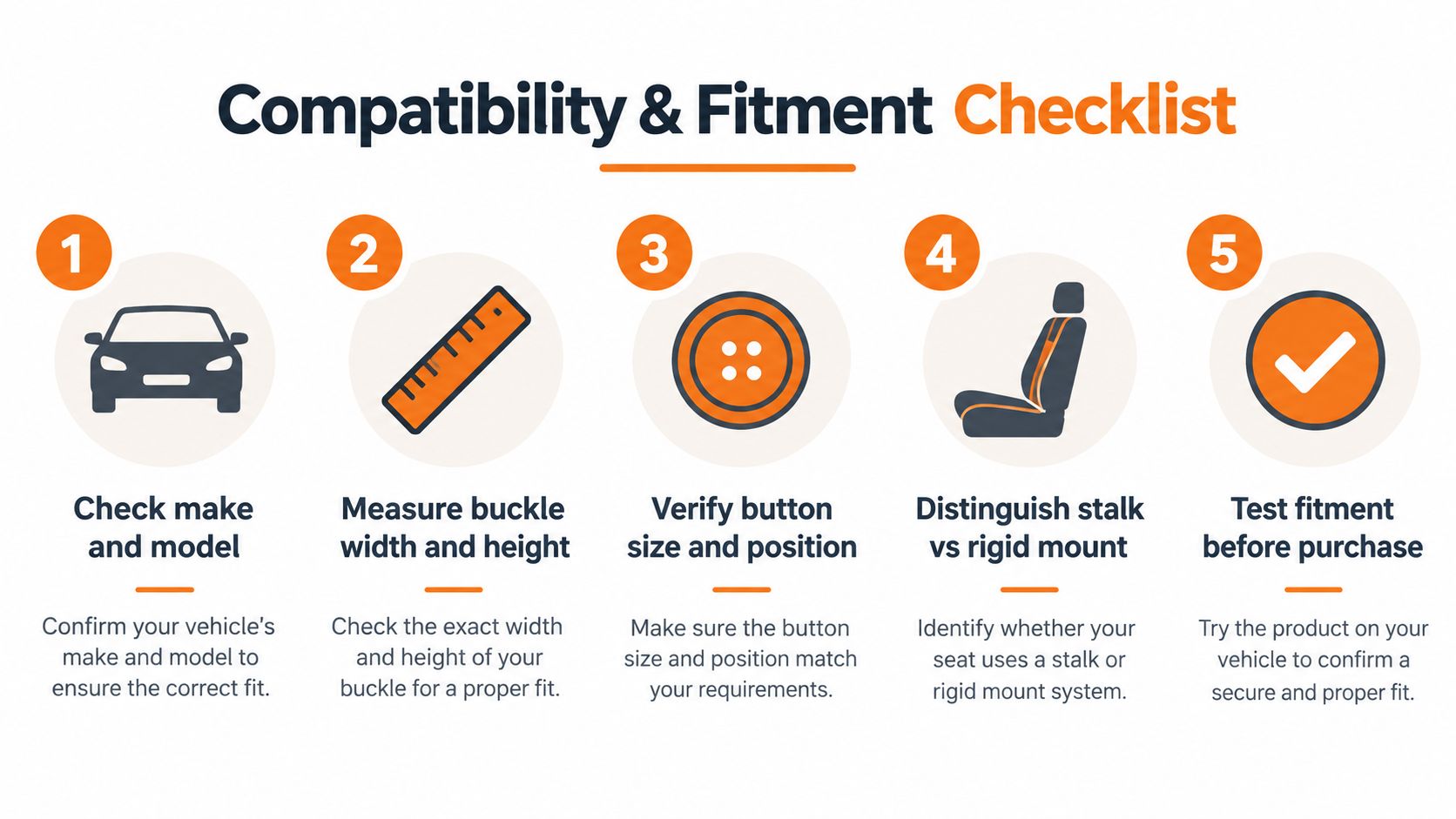
“Universal fit” is one of the most misleading phrases in this category. A cover may stretch over the buckle body and still be wrong for the seat, the user, or the restraint type.
Physical fit is only the first test
Start with the obvious. Buckles vary by shape, width, height, button position, and how they sit next to the seat. Some are on flexible stalks. Others are mounted more rigidly. A cover that fits one style can bunch up or shift on another.
Then check what matters more than shape. Does your thumb land naturally on the release? Can you see the button immediately from the normal seated position? Does the cover slide, rotate, or ride up after repeated use?
Adult belts and child restraints are not the same job
A lot of confusion comes from mixing these together. An occupant belt buckle in the vehicle and a buckle used with a child restraint aren't interchangeable contexts. Official interpretation material from NHTSA shows why. NHTSA has said that a product that isn't itself a seat belt assembly isn't directly regulated by FMVSS 209, but the maker still bears responsibility for safety-related defects. NHTSA also noted that a product fully covering a buckle can make a child restraint fail buckle-release requirements because the buckle must keep a minimum accessible release area and unlatch within a specified maximum force, as explained in the NHTSA buckle sheath interpretation.
That means a cover can fit physically while still undermining compliance and safe use.
A practical fit check
Use this checklist before you leave any cover installed:
- Look before touching. Sit in the seat normally and see if the release button is immediately obvious.
- Press with one hand. Don't brace with the other hand.
- Try it without looking down. That's closer to how many people release a belt in real life.
- Test from awkward angles. Lean slightly, wear gloves if relevant, and try with a weak-hand press.
- Remove it if release changes at all. “Almost the same” isn't the standard.
| Use Case | Fit Consideration | Appropriate Use |
|---|---|---|
| Driver or front passenger belt | Button visibility and thumb access | Appropriate only if function feels unchanged |
| Rear outboard belt | Space between seat cushion and buckle | Appropriate only if cover doesn't sink or twist |
| Child restraint buckle area | Release area and hand force | Often not appropriate unless the system is specifically designed for it |
| Shuttle, van, or assisted transport | User ability and rescuer access | Requires case-by-case review, not a universal assumption |
One more compatibility issue people miss
Some guidance outside the U.S. takes an even stricter view in certain situations. German supplemental guidance has stated that when a protective cover is attached to a safety-belt buckle, that buckle cannot be used for the safety belt and the cover must be removed before someone sits there. NHTSA material also shows that buckle shields for child restraints are treated as context-specific devices, not general accessories, in the recall-related NHTSA document discussing buckle shields.
That's the cleanest way to understand “universal fit.” It may mean the part stretches over many buckles. It does not mean it's universally appropriate to use.
Safety Cautions and When to Avoid Buckle Covers
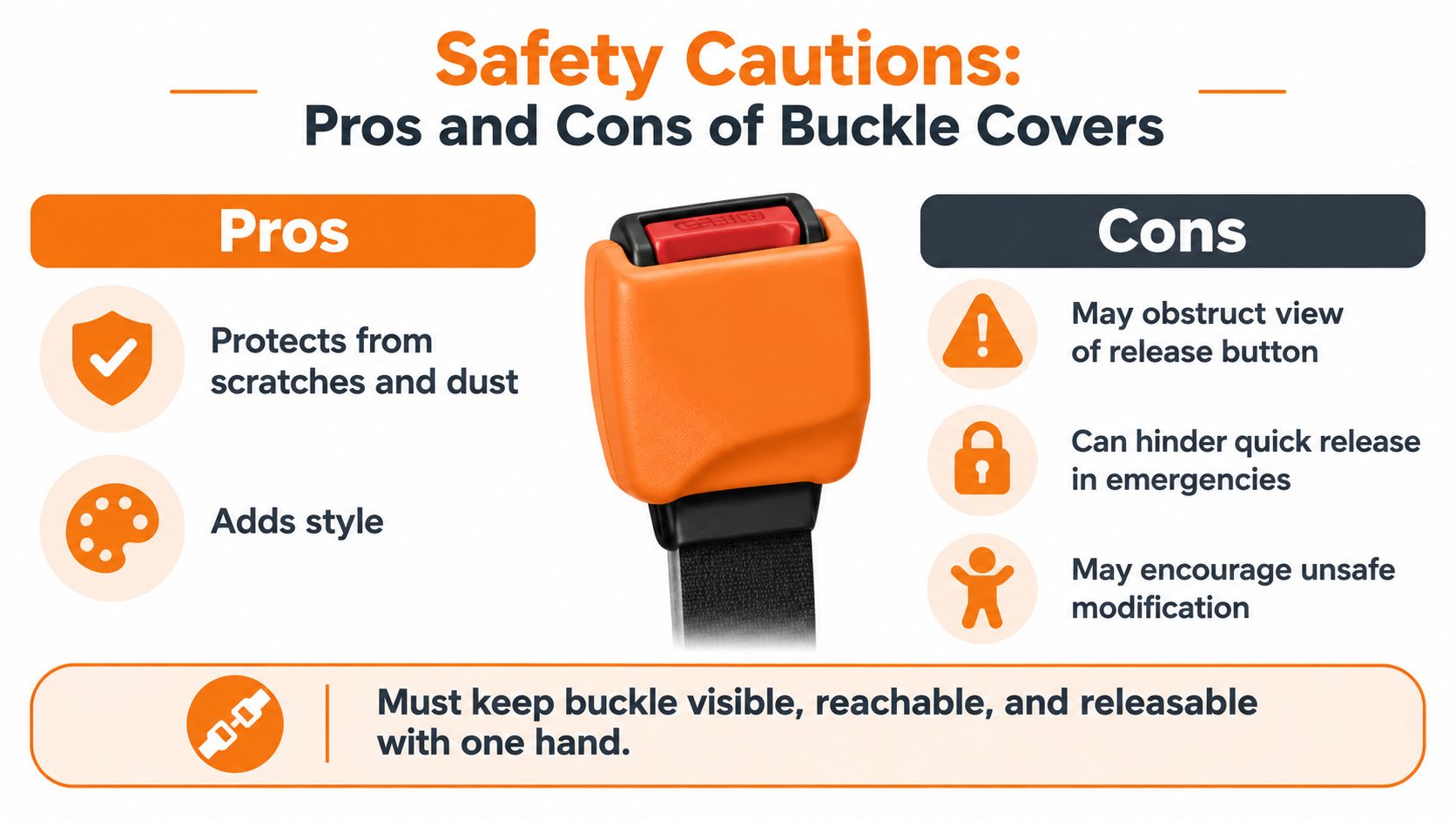
A crash is the worst time to discover a buckle cover changed how the release works. The rider is stressed. A parent, caregiver, or first responder may be reaching in from an awkward angle. If the button is harder to see, harder to press, or requires an extra step, the cover has turned a basic safety control into a small obstacle. Small obstacles matter here.
What accessibility means in plain language
A seat belt buckle works like a fire-exit push bar. It should be obvious, easy to reach, and quick to operate without instructions. Safety rules in major markets reflect that same idea. The release should be visible, reachable, protected from accidental opening, and simple for the wearer or a rescuer to operate with one hand.
That is why buckle covers are not a universal accessory. They are context-dependent devices. A soft cosmetic cover that leaves the button fully exposed may be acceptable in one vehicle. A thicker cover that hides the release edge or changes finger placement can create a problem in the next vehicle, even if the product listing calls it universal.
Where covers create the most risk
Problems usually show up in four places.
- Button visibility drops. The user has to look twice or feel around for the release.
- Finger access gets tighter. A thumb cannot land flat on the button.
- Release force or angle changes. Pressing straight down becomes a sideways push or a pinch.
- Emergency use gets less intuitive. Another person may not know whether to lift, peel back, or move the cover first.
The key test is simple. A buckle should release the same way it did before the cover was installed. Same location. Same motion. Same ease.
When to avoid buckle covers entirely
Some situations call for extra caution because the buckle is part of a larger safety or accessibility need, not just a comfort issue.
Avoid using a cover when the rider has limited hand strength, reduced dexterity, arthritis, or one-hand use only. Avoid it when a caregiver, school transport aide, or medical transport worker may need to release the belt quickly without knowing the setup in advance. Be very cautious around child restraint seating positions or specialized transport arrangements, where blocking access can defeat the reason the buckle was designed that way in the first place.
This is also where legal compliance can get murky. A product meant to prevent unbuckling may help with a specific behavioral problem, but it can also interfere with emergency release or conflict with accessibility expectations. That tradeoff needs case-by-case judgment, not a blanket assumption that any cover is safer because it adds a barrier.
If a buckle cover makes release slower for the intended user or for a helper, it is solving the wrong problem.
Red flags that mean remove it
Take the cover off if you notice any of these:
- The release button is partly hidden
- You need more force than before
- Your thumb slips off the button edge
- The cover twists, slides, or bunches up
- A helper would need an explanation before unbuckling it
- The product's purpose is to block a standard occupant buckle from being released normally
If you're also checking everyday legal use rules, this overview of seat belt requirements in Georgia can help with the state-law side of the question.
The practical takeaway is straightforward. Use a buckle cover only if it preserves normal buckle function for the actual people who use that seat. If it changes access, release speed, or rescue use, skip it.
Choosing Safe Options and Next Steps After Damage
A buckle cover makes sense only after you name the problem clearly. A soft sleeve that improves comfort or reduces rubbing is one kind of choice. A device that changes how a person or helper reaches the release button is a safety decision, and it deserves the same care you would give any other part of the restraint system.
That difference matters because buckle covers are not universally helpful. In one vehicle, a simple cover may leave access unchanged and cause no trouble. In another, the same idea can slow release, confuse a caregiver, or interfere with the access a disabled passenger depends on. The question is not whether covers are good or bad in general. The question is whether this specific cover preserves normal use for this specific seat and user.
A safer decision path
Use this filter before you buy, keep, or reinstall one:
- Choose a cover only if the buckle still works the same way by touch and by sight.
- Set aside products marketed mainly to stop normal release of a standard occupant buckle.
- Treat vague "universal fit" claims carefully if the product photos do not clearly show button clearance.
- Read the vehicle and child restraint manuals if that seating position is used for a car seat or booster.
- Get advice from a qualified installer or medical transport professional if the passenger has mobility, behavioral, or disability-related needs.
A helpful comparison is a phone case that still lets you press every side button normally. If the case makes the power button hard to find, the case is the problem. Buckle covers follow the same logic.
When the issue is damage
A cover cannot solve a damaged buckle. If the latch sticks, the button binds, the belt locked after a crash, or the assembly no longer feels like it did originally, stop treating it as an accessory question.
At that point, the safer next step is repair or replacement of the original restraint hardware. Safety Restore offers a mail-in service for seat belt mechanisms and related SRS components supplied by the customer. That option fits this topic because it addresses the underlying fault instead of hiding it with fabric or padding.
Accessories belong on hardware that already works correctly.
Check the buckle with bare hands, without any cover installed. It should latch, release, and feel predictable every time. If it does not, fix the restraint first and decide about appearance second.
If your seat belt buckle is damaged, locked, or not functioning the way it should, Safety Restore offers mail-in repair for seat belt mechanisms and related SRS components so the original hardware can be returned ready for reinstallation. That fits this topic because a cover can't fix a mechanical fault, but a proper repair can restore the buckle's intended function. Visit Safety Restore to review the service and decide whether repair makes more sense than adding an accessory.