
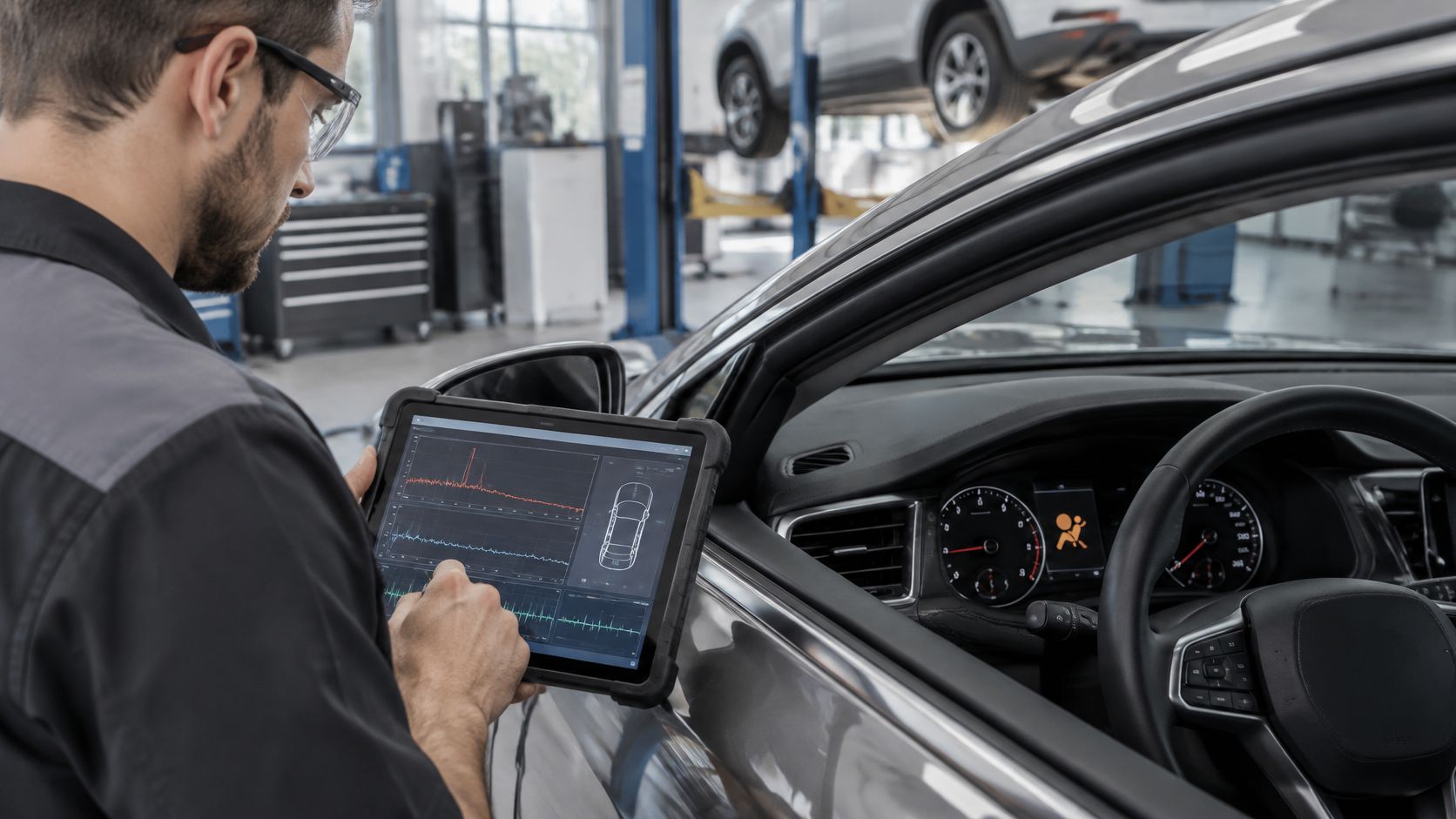
A car can leave the body shop looking finished, with replacement trim in place and no airbags hanging from the steering wheel, yet its SRS warning light stays on. A scan may show crash data or a deployment-related fault, leaving the owner and technician with the same question: is the original airbag module still usable, or does it need replacement?
The airbag control module, also called the SRS module or restraint control module, is the computer that monitors crash inputs and can store an event record. Think of that record as a flight recorder for the restraint system, not a diary of everything that happened to the car. Understanding what it captured helps explain why a no-deployment crash can still matter, how to read the record, and why clearing memory should come only after the hardware has been checked and repaired.
Table of Contents
- Why the Airbag Light Stays On After a Crash
- What Airbag Module Crash Data Actually Stores
- How the Module Records and Locks an Event
- When No Airbags Fired but Data Remains
- What the Record Proves and What It Does Not
- How Technicians Read and Verify Crash Data
- Choose a Reset or a New Module
Why the Airbag Light Stays On After a Crash
After a collision, a car may have no visibly deployed airbags, or its deployed bags and belts may already have been replaced. Yet the SRS warning light remains on, and a scan reports a crash or deployment code.
The light is a warning to diagnose the system, not proof that the module must be replaced. A stored crash event, a fault in a sensor or circuit, or a restraint component needing repair can each keep it illuminated.
A locked seat belt can signal a pretensioner or retractor problem, so the module may not be the only part requiring attention. A technician addressing that fault may need a locked seat belt repair after an accident.
Retrieve and save the available record, identify the affected parts and circuits, repair the physical cause, and then assess whether the original module can be cleared and reused. Ordering a replacement before reading the record may mean discarding a unit that could be reusable once crash data and hard faults are addressed and the rest of the SRS is checked.
What Airbag Module Crash Data Actually Stores
| Data element | What it usually shows | Locked after deployment |
|---|---|---|
| Vehicle speed | Speed in the seconds before the event, often about five seconds | No, pre-crash buffer until a trigger |
| Engine RPM and throttle | Engine speed and pedal position before impact | No, pre-crash buffer until a trigger |
| Brake-switch status | Whether the brake was applied before impact | No, pre-crash buffer until a trigger |
| Delta-V | Longitudinal change in velocity as a severity estimate | Yes, stored with the event |
| Seat-belt switch | Driver belt buckled or not at the event, if recorded | Yes, with the event record |
| Frontal airbag deployment | Whether it fired and time from T0 to fire or first stage | Yes, up to two events |
| Passenger airbag status | Cutoff or suppression state where fitted | Yes, with the event record |
| Warning-lamp state | SRS lamp status at deployment | Yes, with the event record |
| Steering angle | Wheel angle if that vehicle's EDR includes it | Only if the module records it |
Under 49 CFR Part 563, an event data recorder, or EDR, records dynamic time-series information immediately before or during a crash, including vehicle speed and change in velocity. The regulation also covers restraint information such as whether a frontal airbag deployed and the time to deployment, or to first-stage deployment in a multistage system. For a frontal or side-airbag deployment crash, the rule calls for current deployment data for as many as two events, with each deployment record protected from being overwritten by a later event.
Some measurements live in a temporary rolling buffer before a trigger. Once the module recognizes an event, it can transfer relevant information into nonvolatile memory, which retains it without normal battery power.
A locked record can survive battery damage or disconnection because the event information is transferred from temporary storage into nonvolatile memory.
Delta-V is the change in velocity recorded over an event window. It's a useful measure of crash severity, but it isn't, by itself, a courtroom reconstruction of how the collision happened. The number needs context: the vehicle's recording limits, physical damage, and other evidence all matter.
The table's “usually” is important. A module records only the data elements its design supports, within its specified range, accuracy, resolution, sampling interval, and duration. One vehicle may record a field another doesn't. A blank field means the module didn't provide that measurement; it doesn't prove the event or action never occurred. Match every download to the capabilities and limitations of that specific vehicle.
How the Module Records and Locks an Event
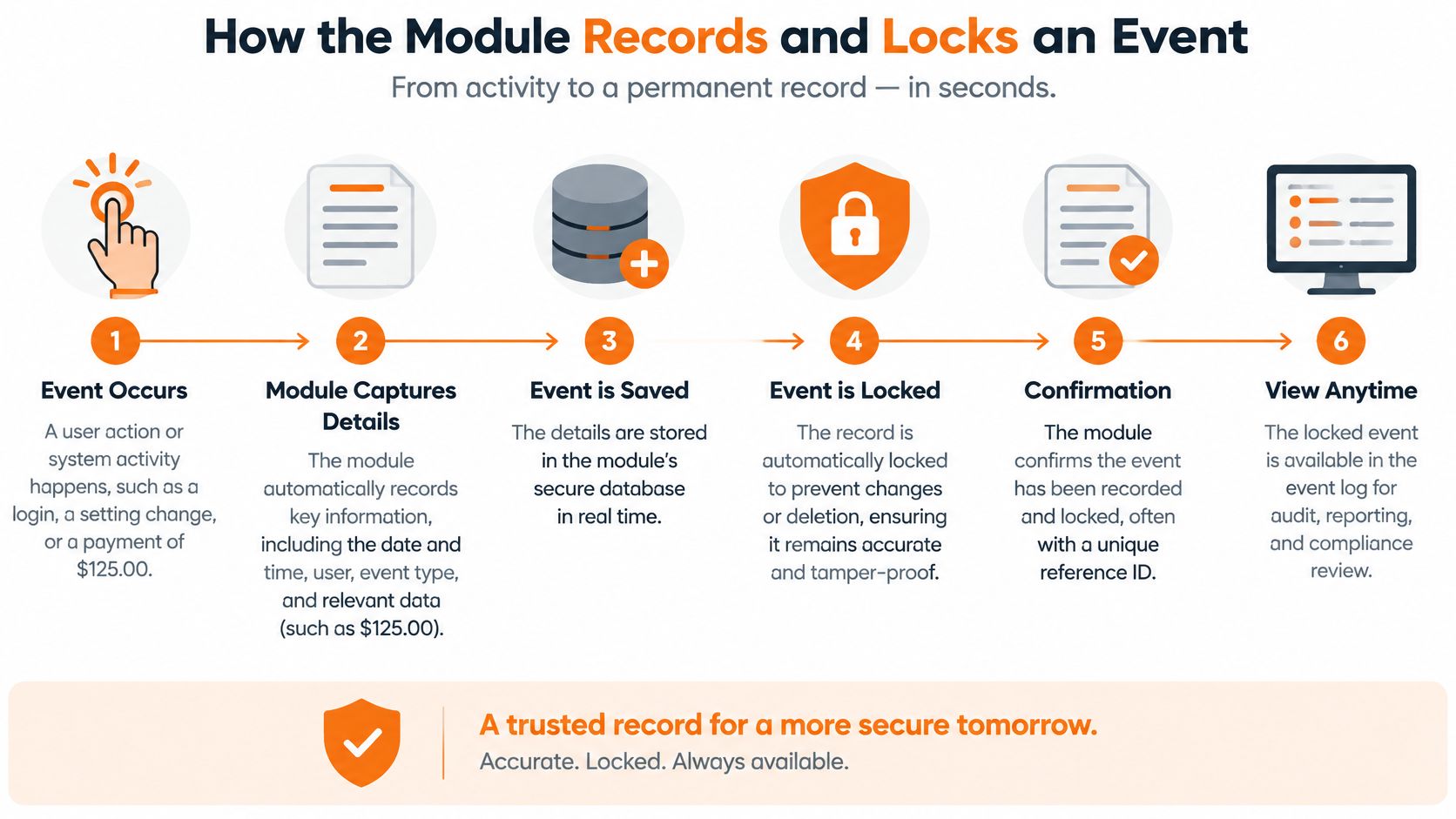
The module acts more like a referee than a simple on-off switch. It evaluates acceleration signals from impact sensors and, on some vehicles, pressure signals for side impacts. It uses those inputs to assess direction and severity, then decides whether to command particular firing loops for airbags and seat-belt pretensioners.
A file's timing makes more sense if you follow the memory path:
- Buffer: The module keeps a rolling set of pre-crash samples, such as speed, engine RPM, throttle position, and brake-switch status.
- Trigger: The control algorithm identifies an event and establishes its crash-time origin, called T0.
- Transfer: The module copies event information from temporary storage to nonvolatile memory.
- Lock: A deployment record is protected from later overwrite. Other event records and diagnostic faults may also be present.
That buffer-to-memory behavior has a longer history than many drivers realize. General Motors' selected airbag-equipped vehicles for the 1974 model year recorded airbag status and crash-severity information during deployment. Later systems added sensor closure times and fault codes, then used a solid-state accelerometer and algorithm to calculate and store longitudinal change in velocity, along with several pre-crash measurements. The NHTSA report on automotive crash event data recording describes that development and explains why airbag modules can store more than a firing command.
Times in the record are measured relative to T0, not the clock on the dashboard. A technician should compare channels by their time offsets from the event origin, not treat the numbers as ordinary time-of-day stamps.
The module's design also affects what the record means. A shop must match the event file to the exact vehicle and restraint-system configuration, rather than interpreting it against a generic code list.
When No Airbags Fired but Data Remains
The steering-wheel airbag is still in its cover, but the SRS lamp is on. That can happen because no visible airbag deployment doesn't mean no restraint event occurred. A non-deployment event may still leave pre-crash or crash data, and a non-reversible device such as a seat-belt pretensioner may have been commanded. NHTSA's investigation material describes both recordable non-deployment events and accident-related faults; its report on non-deployment events and restraint-system data helps explain why a scan is warranted even when the airbags stayed closed.
Consider three shop-floor cases:
- A front impact tightens the belts. The pretensioners fire and the retractors lock, but the airbags don't deploy. The module may retain event information, while the belts still need inspection and appropriate repair. A seat-belt buckle pretensioner repair addresses a component that a memory reset can't physically restore.
- A side impact damages a sensor circuit. The curtain airbag doesn't deploy, but a satellite sensor, connector, or wire may be damaged. The module can report a current fault even without a deployment command.
- A used or salvage car has a history the buyer never saw. A scan may show a prior event, or the belts may show signs of earlier deployment. That information calls for investigation; it doesn't establish, on its own, exactly what happened or whether the entire system is serviceable.
A module may support front, side, rear, or rollover event channels, but not every module records every event type. A near-deployment record may also sit alongside a later deployment record. The technician should check the actual scan results and physical evidence instead of assuming every vehicle retains the same set of events.
A damaged connector, sensor, or power supply can create a diagnostic trouble code during a collision. So can a restraint component that was affected without visibly opening an airbag. If the belt is locked, the Seat Belt Repair After Accident service description identifies it as an OEM seat-belt repair service for locked or blown pretensioners after an accident. A reset won't rebuild a fired pretensioner or repair a broken clockspring. Photograph belt and trim condition, note which firing loops the scan tool reports, and treat a stored event as a reason to inspect, not as proof the system is either fine or ruined.
What the Record Proves and What It Does Not
A common overclaim is that crash data tells the shop everything about the collision. It doesn't. The record is a restraint-system snapshot, not a complete vehicle diagnosis. NHTSA investigation material says airbag-ECU data concerns the restraint system, not diagnostic information for every other vehicle system. Its crash investigation report also cautions that module data should be considered alongside physical evidence and the circumstances of the crash.
| Question | What the module can show | What still must be verified |
|---|---|---|
| Did a restraint get a fire command? | Deployment flag and time from T0 | Inflator, bag, and trim condition |
| Did a pretensioner fire? | Pretensioner command or related code | Locked retractor and webbing |
| Was the belt buckled? | Seat-belt switch, if recorded | Buckle, retractor, and webbing damage |
| How hard was the hit? | Delta-V and pre-crash speed, if stored | Crush, photos, and other evidence |
| Is the SRS ready to release? | Current and latched SRS codes after repair | Sensors, clockspring, wiring, occupant classification |
| What failed outside the restraints? | Nothing; other systems are out of scope | Remaining controllers and OEM procedures |
A module might show a deployment command, timing relative to T0, pretensioner activity, a belt-switch state, or its own diagnostic codes. Depending on the vehicle, it may also provide pre-crash speed or delta-V. It cannot establish that a replacement airbag is good, a clockspring is intact, the alignment is correct, the frame is undamaged, or another controller has no fault. Those questions call for physical inspection, scans of other systems, and the vehicle manufacturer's repair procedures.
The module's event coverage has limits too. Some vehicles may not record rear or rollover events. And clearing a stored event or resolving a module fault does not prove that impact sensors, wiring, pretensioners, airbags, or occupant-classification components are serviceable.
Evidence handling: If a collision may lead to a claim or investigation, preserve the original scan and module identity. Get the owner's or insurer's direction before erasing a disputed file.
The record can include driving details such as speed and brake use, so limit access to people who need it. Note who requested the download and why, retain the original event status and module part number, and store the downloaded file separately from routine repair paperwork. If the crash may become evidence, get written direction from the insurer or appropriate legal counsel before altering the module.
A different module from another vehicle creates a separate issue: it must be programmed to the vehicle's VIN, typically by a dealer. And if a collision raises questions beyond repair, Angel Lugo's Connecticut accident advice offers context about the legal consequences of leaving an accident scene. Treat the module as one channel of evidence beside photos, measurements, and the applicable OEM procedure.
How Technicians Read and Verify Crash Data
A useful workflow starts with a complete record, not an erase command. The SRS control unit evaluates sensor inputs and can command separate airbag and pretensioner circuits; one generic code-clearing action can't verify that each part of the system is sound. Bosch describes production airbag-control-unit architectures supporting up to 32 firing loops and 12 PSI5 sensor interfaces, a reminder that diagnosis must fit the vehicle's exact configuration. See Bosch's airbag control unit overview.
Scan before swapping parts. Use an OEM or capable SRS scan tool to save current, history, crash, and deployment codes. Record the module part number and event status. A basic powertrain-only scanner may not show what the restraint module reports.
Preserve evidence where needed. If the collision may be disputed, use an approved crash-data retrieval tool, such as the NHTSA Crash Data Retrieval system or the vehicle manufacturer's download method. Save the event record before erasing anything, and compare its status with the vehicle file so the shop can answer later questions about what was cleared.
Compare commands with the vehicle. List the firing loops and pretensioners the scan tool says were commanded, then inspect the corresponding airbags, belts, and trim. A reported command is a diagnostic clue, not proof that a component is currently sound.
Repair the physical fault first. Address deployed airbags, fired pretensioners, damaged sensors, connectors, clockspring, and wiring. Verify resistance and continuity using the manufacturer-approved procedure. Don't substitute a generic resistance guess for the correct specification.
Clear only after repairs. Stored crash data or a hard fault may remain after the physical cause is fixed. Clearing too early can erase useful evidence, while clearing a code without fixing damaged hardware doesn't make the system ready.
Choose the correct memory service. An OBD-level erase may not remove a locked event record or hard codes stored in the module. When the original module is being reused and is suitable for reuse, a reset may involve direct EEPROM access to erase the stored SRS codes, rather than a routine scan-tool command.
Reinstall and verify the complete system. Run a full SRS self-test and check that the scan tool reports no current or latched deployment-related faults. Release the vehicle only after the module communicates correctly and the system passes its checks.
Codes such as B107E, B207F, B1015, B1139, B1193, B1206, B1342, B1620, B1649, B1650, and DF194 are examples of codes that may be associated with SRS faults. They aren't a universal code dictionary; the meaning and repair path depend on the vehicle.
A dark warning lamp isn't the release test. Communication plus a passed SRS self-test is.
Choose a Reset or a New Module
There are three practical paths after the scan and physical inspection: replace a damaged or non-communicating module, install and program a suitable replacement, or consider resetting the original module if it's intact and the remaining issue is stored crash data or hard codes. The condition of the module and the rest of the restraint system should decide the route, not the warning lamp alone.
| Option | When it fits | Cost signal | Programming needed |
|---|---|---|---|
| Replace with a new module | Cracked, water-damaged, or board will not communicate | Dealer replacement can easily exceed $1,000 | Dealer VIN programming |
| Used module from another car | Original unit is unavailable or unusable | A few hundred dollars plus programming risk | VIN programming, usually at a dealer |
| Mail-in reset of original module | Intact unit with only locked crash data or hard codes left | $99.99 | None beyond reinstalling the factory-reset unit, VIN match kept |
A replacement is the appropriate choice when the module itself is damaged or can't communicate. A used unit may look like a cheaper alternative, but a module from another vehicle still needs VIN programming, typically through a dealer. For an intact original, resetting the existing module avoids substituting a unit with a different vehicle identity.
For that original-module path, Safety Restore offers an OEM airbag module reset for $99.99 to clear crash data and hard codes. The SRS Airbag Module Reset service description identifies it as a reset intended to clear stored crash data and hard codes. This is not a substitute for repairing airbags, sensors, pretensioners, or wiring first.
Customers ship the module to 40 Main Street, Westfield, MA 01085, and receive a factory-reset module back. A reset of the original unit keeps the vehicle's matching module in use; a different replacement still needs its VIN programming handled. If a claim or investigation may rely on the event record, preserve the scan and get direction before sending a module for erasure. The Law Office of Bryan Fagan preservation-letter resource explains why preserving electronic crash evidence can matter in a collision dispute.
The service listing for SRS Airbag Module Reset is a next step only after diagnosis and repair, not a shortcut around them. Save the original scan, complete the restraint repairs, then either program a replacement or send the intact original for reset. Don't release the vehicle until its SRS self-test passes.
If your original airbag module has stored crash data or hard codes, Safety Restore offers a mail-in reset service for the module after the underlying restraint-system repairs are complete. Visit Safety Restore to review the service and decide whether resetting the original module fits your repair plan.


