Seat Belt Extender Guide: Types, Safety Ratings, and Which Cars They Fit
- What Is a Seat Belt Extender?
- Types of Seat Belt Extenders
- How Seat Belt Extender Safety Ratings Work
- Which Cars They Fit: Matching Extenders to Your Vehicle
- What to Avoid
- When Your Belt Needs More Than an Extender
- FAQs
If your seat belt feels too short, digs into your neck, or just won’t sit comfortably across your body, a seat belt extender can genuinely help. They’re also useful for passengers with larger frames, pregnant drivers, or anyone wearing a bulky coat or medical device that makes buckling up a hassle.
But they’re not all created equal. Some are well-engineered and safe. Others are cheap plastic pieces that could fail exactly when you need them most. This guide covers the main types, how safety ratings actually work, and how to figure out which extender fits your specific vehicle.
What Is a Seat Belt Extender?
A seat belt extender is a short webbing segment with a buckle on one end and a tongue on the other. You plug the tongue into your car’s existing buckle, adding several inches of usable belt length. For that ride, the extender becomes part of your restraint system.
Common use cases include:
- Drivers and passengers with larger frames who find the standard belt too tight or restrictive
- Pregnant drivers who need more slack across the lap
- People recovering from surgery or wearing a medical device near the waist
- Rear middle-seat passengers where the belt geometry is awkward
- Pet owners using a vehicle-specific harness that needs a longer connection point
Types of Seat Belt Extenders
Type A: Rigid Buckle Extenders
The most common type. These use a standard metal-to-metal buckle mechanism and add roughly 7 to 12 inches of webbing. When properly matched to your vehicle’s buckle, most are rated to handle the same load as a factory belt.
That phrase — “properly matched” — matters more than most buyers realize. Buckle latch plates vary by manufacturer. Ford, GM, Toyota, Honda, and others each use slightly different latch widths and release mechanisms. An extender built for a Ford F-150 may not latch securely into a Toyota Camry, even if it clicks in and feels fine.
Type B: Soft Loop Extenders
These use a fabric loop instead of a rigid buckle. They’re less common for standard passenger use and more often found in specific applications like child seat installations or certain accessibility setups. They generally offer less load-bearing reliability than rigid extenders and should only be used where the manufacturer explicitly recommends them.
Airline-Style Extenders
You’ve seen these on commercial flights. Airline seat belt extenders use a completely different buckle standard than automotive belts — and they are not interchangeable with car seat belt systems. Never use an airline extender in a vehicle. The buckle geometry, webbing strength, and load ratings are entirely different.
How Seat Belt Extender Safety Ratings Work
As of 2026, there is no universal federal safety certification specifically for aftermarket seat belt extenders in the United States. That’s an important gap to understand before you buy.
Federal Motor Vehicle Safety Standard 209 (FMVSS 209) governs seat belt assemblies, and FMVSS 210 covers seat belt anchorage systems. Standalone extenders sold as aftermarket accessories, however, aren’t always tested to these standards by third-party labs before they reach consumers.
Here’s what that means in practice:
- OEM extenders sourced directly from your vehicle’s manufacturer are tested and validated for your specific buckle and restraint geometry. They’re the safest option, full stop.
- Third-party extenders vary widely. Some are engineered and tested to FMVSS 209 load requirements; many are not. Look for products that explicitly state their testing standard and load rating.
- Cheap generic extenders sold without any stated standard should be avoided. In a crash, a failed extender means the belt releases — which removes your protection entirely.
When shopping, look for a minimum breaking strength of at least 6,000 pounds, which aligns with FMVSS 209 webbing requirements. If a product doesn’t list its tensile strength or testing standard, that’s a red flag worth taking seriously.
Which Cars They Fit: Matching Extenders to Your Vehicle
This is where most buyers go wrong. Seat belt extenders are not universal, regardless of what some product listings claim.
Buckle Compatibility

Your vehicle’s seat belt buckle accepts a latch plate of a specific width, typically measured in millimeters. Common widths include:
- 7/8 inch (22mm): Common in many GM vehicles
- 1 inch (25mm): Found in many Ford, Chrysler, and import vehicles
- Wider or narrower variants: Present in some European and Asian makes
Before buying, measure the width of your existing seat belt tongue — the metal piece you insert into the buckle — and match it to the extender’s stated compatibility.
Vehicle-Specific Compatibility Examples
The table below reflects general patterns. Always verify with your owner’s manual or the extender manufacturer before purchasing.
| Vehicle Make | Common Buckle Width | OEM Extender Available? |
|---|---|---|
| Ford (F-Series, Explorer) | 1 inch | Yes, via Ford dealers |
| GM (Silverado, Equinox) | 7/8 inch | Yes, via GM dealers |
| Toyota (Camry, RAV4) | 1 inch | Yes, via Toyota dealers |
| Honda (Civic, CR-V) | 1 inch | Yes, via Honda dealers |
| Chrysler/Ram | 1 inch | Yes, via Stellantis dealers |
| BMW, Mercedes | Varies by model year | Check dealer or OEM parts supplier |
For older vehicles or less common makes, contact your dealer’s parts department with your VIN. They can confirm the exact buckle specification and whether an OEM extender exists for your model year.
Seat Position Matters
An extender that fits the driver’s seat buckle may not fit the rear passenger buckle in the same car. Rear center seats often use a different buckle mechanism than outboard positions. If you need extenders for multiple seats, measure each position separately.
What to Avoid
A few mistakes that come up repeatedly when people buy seat belt extenders:
Buying by price alone. A $5 extender from an unknown seller carries real risk. The webbing may not hold under crash loads, and the buckle may not release properly in an emergency.
Assuming “one size fits all.” No single extender works across every vehicle. Always verify buckle compatibility before use.
Using an extender to work around a damaged belt. If your seat belt is locked, frayed, won’t retract, or was involved in a crash, an extender won’t fix the underlying problem. A damaged belt needs to be repaired or replaced — not extended.
Stacking extenders. Using two extenders together to gain more length isn’t safe. Each connection point is a potential failure under crash forces.
When Your Belt Needs More Than an Extender
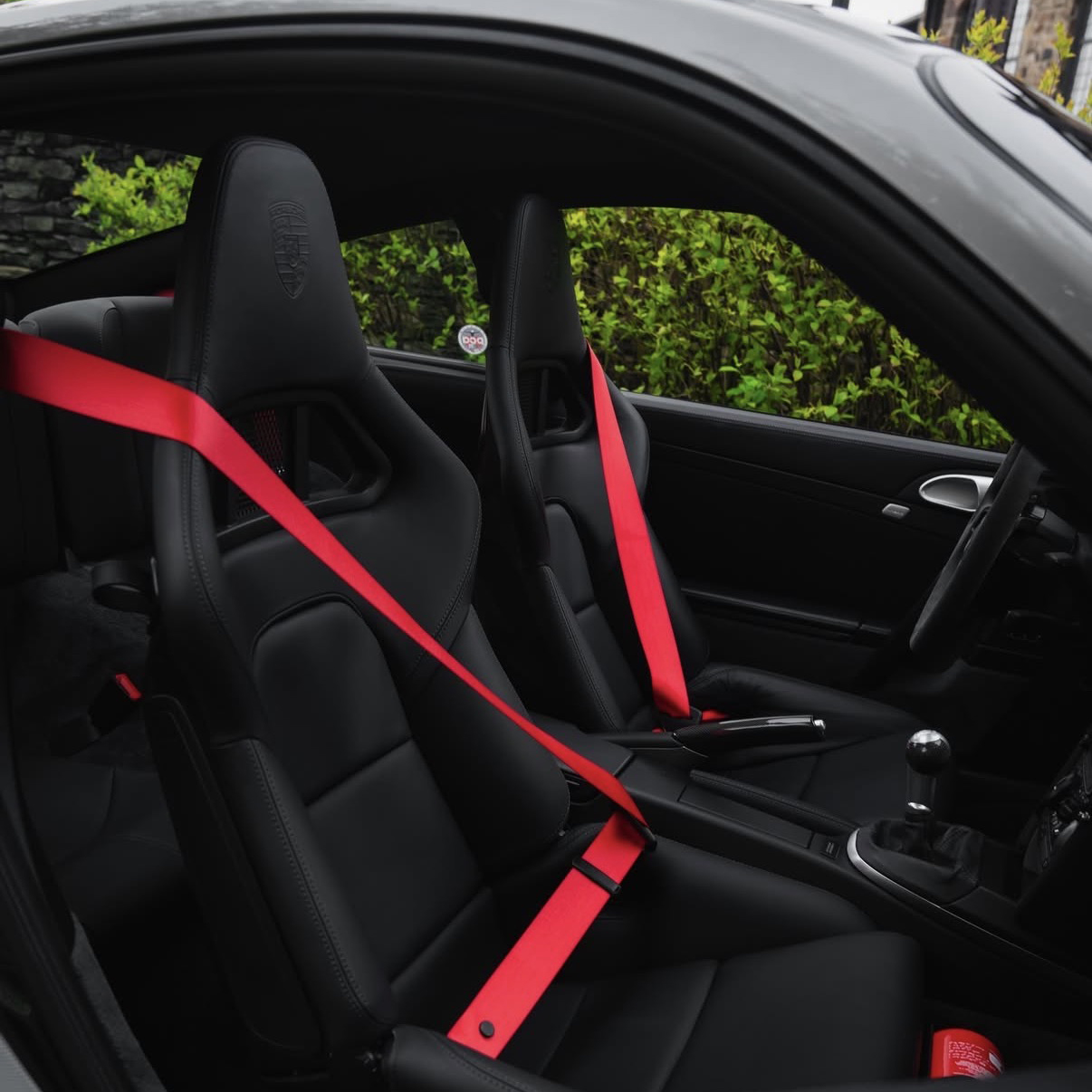
If your seat belt is locked after a collision, won’t retract, has visible webbing damage, or the pretensioner has fired, an extender isn’t the right tool. The belt itself needs attention.
Locked pretensioners and blown seat belt assemblies are common after accidents. Dealers typically quote $300 to $800 or more per belt for replacement. A more affordable route is a mail-in repair service. Safety Restore repairs single-stage, dual-stage, and triple-stage seat belt pretensioners starting at $69.97, using 100% OEM parts and programming, with a 24-hour turnaround and a lifetime warranty. The same service covers frayed or damaged webbing replacement when the belt itself has been compromised.
That’s a different problem from needing more reach on a functioning belt — but it’s worth understanding the distinction before spending money on an extender that won’t solve what’s actually wrong.
FAQs
Are seat belt extenders legal to use in a car? Yes. There’s no federal law prohibiting their use in passenger vehicles. That said, the extender needs to be compatible with your vehicle’s buckle system and should meet the same load requirements as the original belt to provide real protection in a crash.
Will a seat belt extender affect how my airbag system works? A properly fitted extender that keeps the belt in the correct position across your lap and shoulder shouldn’t interfere with airbag deployment. If the extender causes the belt to sit incorrectly on your body, though, it could affect how crash forces are distributed. Make sure the belt still crosses your chest and lap in the standard position when using one.
Can I use a seat belt extender with a child car seat? No. Child safety seats must be installed using the vehicle’s seat belt or LATCH system as specified by the car seat manufacturer. Using an extender with a child seat installation isn’t approved and could compromise the seat’s crash performance. If the belt is too short to properly secure a child seat, contact the car seat manufacturer directly.
How do I know which extender fits my car? Measure the width of your seat belt tongue and match it to the extender’s stated compatibility. For the most reliable fit, contact your dealer and ask for an OEM extender by VIN. That eliminates any guesswork about buckle geometry.
Can a seat belt extender fix a locked or stuck seat belt? No. If your belt is locked, won’t retract, or was involved in a collision, the pretensioner or webbing is the issue — not the length. An extender only adds reach to a functioning belt. A locked or damaged belt needs to be repaired or replaced before the vehicle is safe to drive.
How much length does a typical seat belt extender add? Most rigid buckle extenders add between 7 and 12 inches of usable belt length. Some models go up to 24 inches for passengers with more specific needs. Check the product’s stated added length before buying, and make sure it doesn’t create so much slack that the belt no longer fits snugly across your lap and chest.
Is there a weight limit for seat belt extenders? OEM extenders from vehicle manufacturers are typically rated to the same load specification as the original belt. Aftermarket extenders vary considerably. Look for a stated breaking strength of at least 6,000 pounds to align with FMVSS 209 standards. Any product without a stated load rating shouldn’t be trusted for crash protection.
A seat belt extender is a straightforward accessory when you buy the right one. Match the buckle width, verify the load rating, and source from your vehicle’s manufacturer when possible. If the belt itself is the problem rather than the length, that’s a repair job — and it’s worth handling properly before you get back on the road.