Seat Belts:
- What a Seat Belt Retractor Actually Does
- Signs Your Seat Belt Retractor Has Failed
- Common Causes of Retractor Failure
- Can You Repair a Seat Belt Retractor Yourself?
- Your Repair Options
- How to Know Which Problem You Have
- FAQs
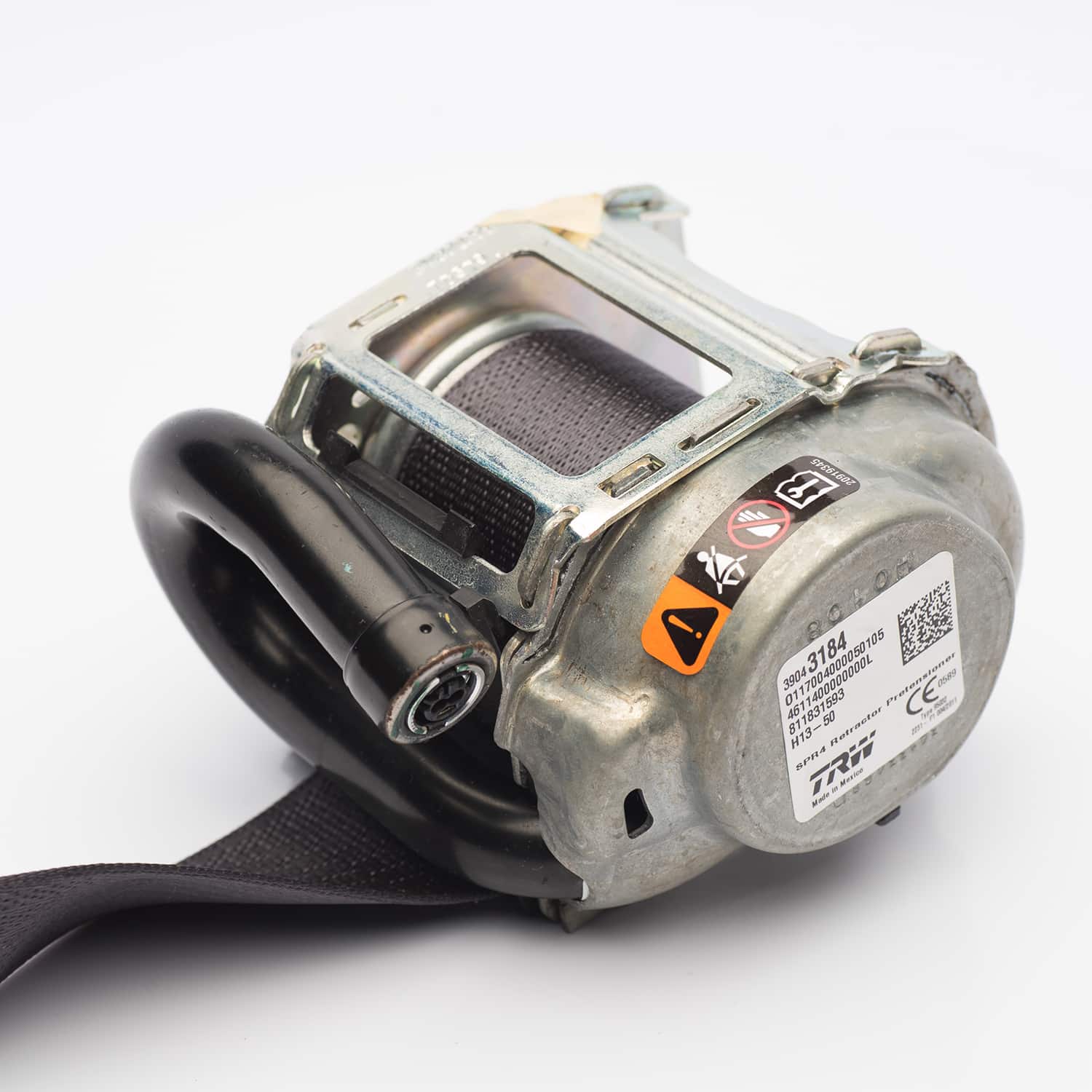
Your seat belt has one job: keep you safe in a crash. The retractor is the mechanical heart of that system — a spring-loaded spool inside the housing that feeds the belt out smoothly and locks it tight the moment it senses sudden movement. When the retractor fails, the whole belt becomes unreliable. That’s not something you want to find out at 60 mph.
This guide covers the clear signs of retractor failure, what causes them, and what your actual repair options look like.
What a Seat Belt Retractor Actually Does
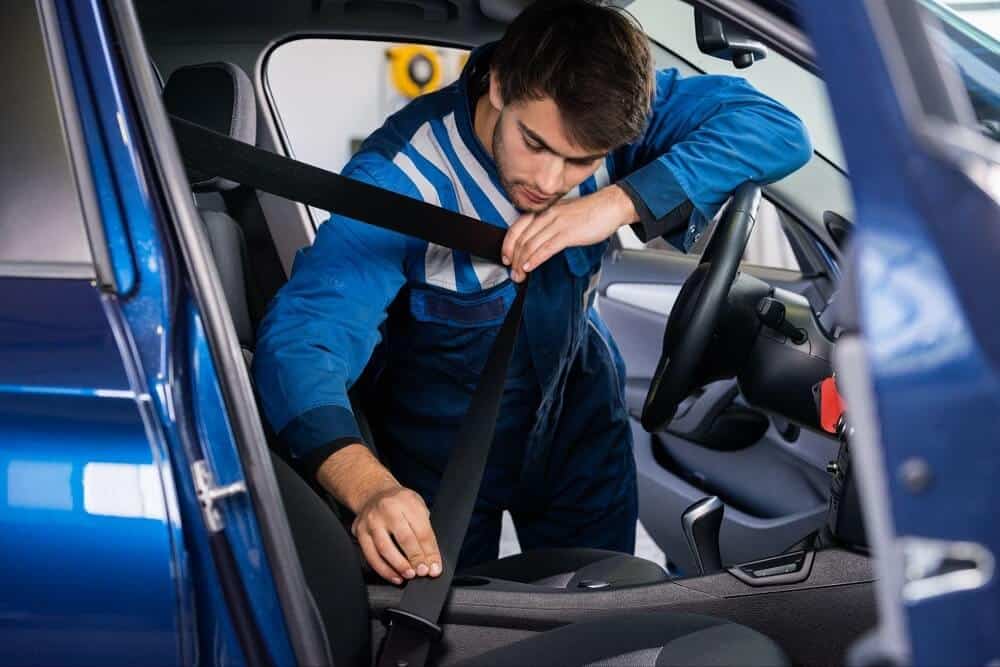
The retractor lives inside your vehicle’s pillar, tucked behind trim panels. It holds the belt webbing on a spool and uses a spring to maintain tension as you move. A locking mechanism — triggered by rapid deceleration or a sharp change in the vehicle’s angle — freezes the spool so the belt holds you in place during a collision.
Most modern retractors also include a pretensioner: a small pyrotechnic device that fires during a crash to pull the belt tight against your body before you even start moving forward. Once a pretensioner fires, the retractor locks permanently. The belt won’t retract or extend at all until the unit is professionally repaired or replaced.
Signs Your Seat Belt Retractor Has Failed
The Belt Won’t Retract
The most obvious sign. You release the buckle and the belt just hangs there instead of winding back into the housing. A worn or broken return spring is usually the culprit — over time, it loses tension and can no longer pull the webbing back onto the spool.
Beyond the inconvenience, a belt that won’t retract is a real safety hazard. Loose webbing can get caught in a door, tangle around a passenger, or interfere with the locking mechanism when you actually need it.
The Belt Feels Stiff or Jerky
A healthy retractor feeds the belt out smoothly. If yours feels like it’s fighting you — sticking at certain points, or locking up after just a few inches — the spool mechanism or inertia lock is likely worn or dirty. Debris, dried lubricant, or a bent internal component can all cause this.
The Belt Locks Up Constantly
Some locking is normal, especially on steep hills or during hard braking. But if your belt locks every time you lean forward or reach for something, the vehicle-sensitive or webbing-sensitive sensor inside the retractor may be misaligned or damaged.
The Belt Is Completely Locked After a Crash
If your vehicle was in an accident — even a minor one — the pretensioner may have deployed. When that happens, the retractor locks permanently and the belt won’t move in either direction. This isn’t something you can work around. The pretensioner has done its job, and the unit needs to be professionally repaired or replaced before the belt will function again.
Visible Damage to the Webbing or Housing
Frayed webbing, burns, or cuts are obvious reasons to stop using a belt immediately. But also inspect the housing. Cracked plastic, a bent mounting bracket, or a retractor that rattles loosely in its mount all suggest the unit has been compromised — possibly in a collision that didn’t trigger the airbags.
Common Causes of Retractor Failure
Age and wear. The spring inside a retractor is under constant tension for the life of the vehicle. After years of use, it weakens — the most common reason a belt stops retracting.
Crash deployment. A fired pretensioner is a one-time device. It can’t be reset by cleaning or adjusting. The internal charge is spent and the mechanism is locked.
Contamination. Spilled liquids, dust, and grit can work into the retractor housing and gum up the spool or locking mechanism. This is often what causes that sticky, jerky feel.
Twisted or kinked webbing. If the webbing gets twisted and is forced back into the retractor at an angle, it can jam the spool and prevent normal operation.
Impact damage. Even a low-speed collision can bend the retractor housing or knock the inertia sensor out of alignment, causing the belt to lock up constantly — or not lock at all.
Can You Repair a Seat Belt Retractor Yourself?
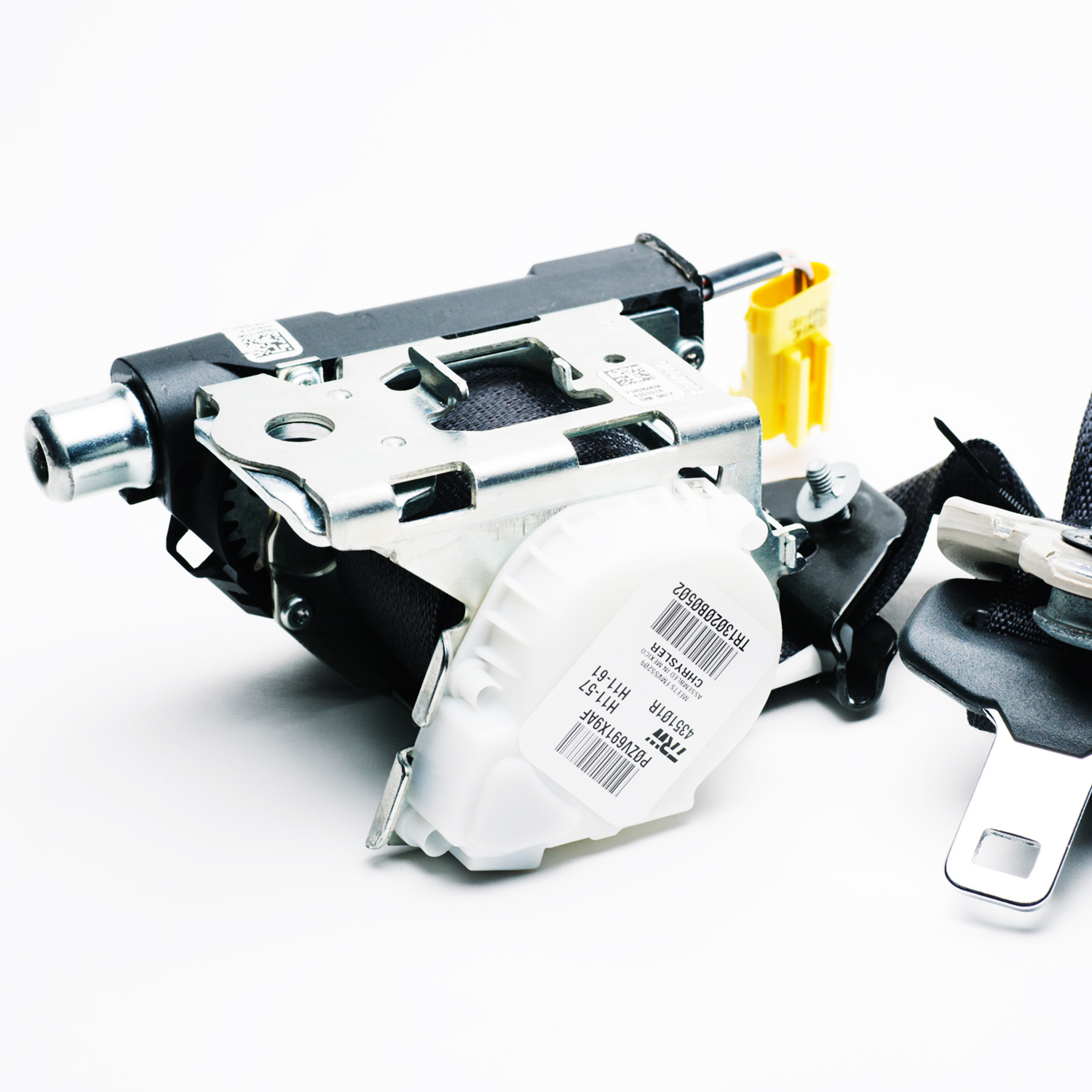
For minor issues like a twisted belt or surface-level contamination, some people attempt cleaning or small adjustments. But seat belt retractors are safety-critical components, and the margin for error is essentially zero.
Disassembling a retractor incorrectly can leave the spring under dangerous tension. More importantly, a retractor that looks fine after a home repair may not perform correctly in a crash — and there’s no way to verify that without specialized equipment.
For any retractor that has been in a crash, has a deployed pretensioner, or shows signs of mechanical failure, professional repair is the right call.
Your Repair Options
Dealer replacement. A dealership will typically swap in a new OEM seat belt assembly. It’s reliable, but expensive — often several hundred dollars per belt before labor.
Salvage yard parts. Used assemblies are available, but you have no way of knowing their history. A retractor pulled from a crashed vehicle may have a partially deployed pretensioner or a weakened spring, and it’ll look perfectly normal from the outside.
Mail-in repair service. This is where Safety Restore comes in. You ship your locked or blown seat belt retractor and pretensioner directly to Safety Restore. The team repairs or resets it using 100% OEM parts and programming, then ships it back — typically within 24 hours. The service covers all makes and models and is backed by a lifetime warranty. It costs significantly less than dealer replacement and gives you a restored original unit rather than an unknown used one.
How to Know Which Problem You Have
A quick way to diagnose before you decide on a repair path:
- Belt won’t retract, no crash involved: Likely a worn return spring. Retractor repair or replacement needed.
- Belt locks up constantly: Likely a faulty inertia sensor or contamination. Retractor repair needed.
- Belt is completely locked after a crash: Pretensioner has deployed. Professional repair or replacement required.
- Belt feels stiff or jerky: Likely contamination or a worn spool. Cleaning may help, but if the problem persists, repair is needed.
- Visible damage to webbing or housing: Stop using the belt. Repair or replace immediately.
FAQs
How do I know if my seat belt retractor is locked after a crash? If the belt won’t extend or retract at all and the vehicle has been in an accident, the pretensioner has almost certainly deployed. The belt will feel completely rigid and immovable — different from a sticky or stiff belt, which still moves but with resistance.
Is it safe to drive with a seat belt that won’t retract? No. A belt that won’t retract may not lock properly in a crash, and loose webbing creates hazards inside the cabin. It should be repaired before the vehicle is driven regularly.
Can a deployed seat belt pretensioner be repaired, or does it need to be replaced? A deployed pretensioner can be professionally repaired and reset. Safety Restore specializes in exactly this type of repair, returning your original unit to full working condition using OEM parts.
How long does a mail-in seat belt retractor repair take? Safety Restore typically completes repairs and ships the unit back within 24 hours of receiving it. Total turnaround depends on shipping time to and from the facility.
Will a repaired retractor pass a vehicle inspection? A properly repaired retractor using OEM parts and programming should function identically to the original. Inspection requirements vary by state, so it’s worth confirming local standards if you have any concerns.
Can I replace just the retractor, or do I need the whole seat belt assembly? In many cases, just the retractor and pretensioner unit can be repaired or replaced without touching the rest of the assembly. A professional repair service can assess what your specific vehicle needs.
What vehicles does seat belt retractor repair cover? Safety Restore services all makes and models — domestic trucks, imported sedans, and everything in between. If your vehicle has a standard seat belt system, it’s almost certainly covered.
A failed retractor isn’t a problem to ignore or work around. The belt exists for one reason, and a retractor that won’t lock, won’t retract, or has a spent pretensioner isn’t doing that job. Diagnosing the issue early and choosing the right repair path keeps you protected — without spending more than you need to.
Ready to order your seat belt repair? Visit SafetyRestore.com
Call or text (413) 564-1242