

Airbag Light Repair: When a DIY Reset Is Enough and When It Is Not
- What Triggers the Airbag Warning Light?
- When a DIY Reset Can Work
- When a DIY Reset Is Not Enough
- The Right Tool for Reading SRS Codes
- What Happens If You Just Ignore the Light?
- When Professional Repair Makes Sense
- A Simple Decision Framework
- FAQs
That glowing airbag warning light is easy to dismiss — it doesn’t affect how the car drives, and nothing feels obviously wrong. But when the SRS (Supplemental Restraint System) light stays on, it means your airbags may not deploy in a crash. That’s not a warning you want to ignore.
The question most drivers land on is whether they can fix it themselves or whether they need professional help.
The honest answer: it depends on why the light came on.
This article walks through the scenarios where a DIY reset is a legitimate fix, the situations where it falls short, and how to tell the difference before you waste time or money.
What Triggers the Airbag Warning Light?
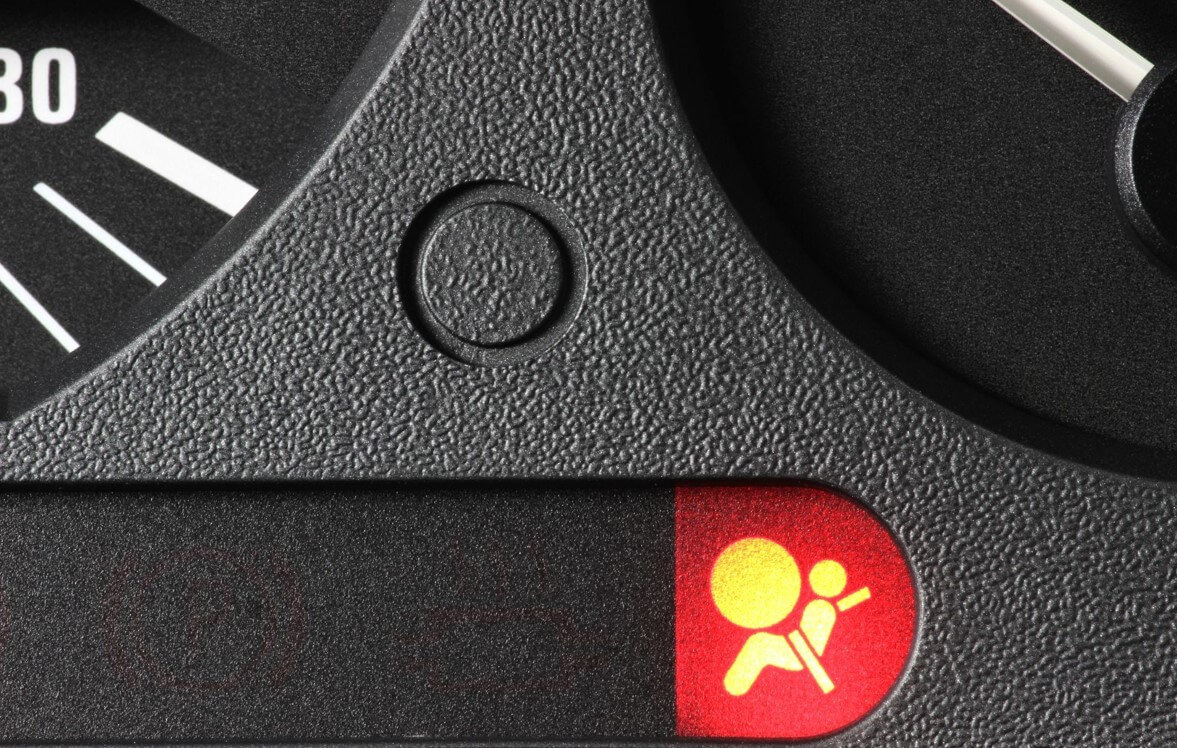
The SRS control module continuously monitors every component in your airbag system. When it detects a fault, it stores a diagnostic trouble code (DTC) and turns on the warning light.
Common causes include:
- A deployed airbag or pretensioner after a collision
- A locked seat belt pretensioner (the mechanism that tightens your belt on impact)
- A faulty clock spring in the steering column
- A disconnected or damaged SRS sensor or wiring harness
- A low battery or voltage drop
- An airbag module storing crash data from a prior accident
Each of these has a different fix. Treating them all as “just reset the light” is where most DIY attempts go wrong.
When a DIY Reset Can Work
There are a few genuine cases where resetting the airbag light yourself is both appropriate and safe.
After a Battery Replacement or Voltage Drop
A sudden loss of power can confuse the SRS module and trigger a fault code even when nothing is actually broken. If you recently swapped your battery or had it die and jump-started, the airbag light may come on as a side effect.
In this case, using an OBD-II scanner that supports SRS codes to read and clear the fault is reasonable. If the code doesn’t return after a day or two of driving, the reset worked — because there was no underlying hardware failure to begin with.
After Fixing a Known Sensor or Wiring Issue
If you’ve already identified and physically repaired the root cause — a loose connector under a seat, a damaged wiring harness — clearing the stored code is simply the final step. The reset isn’t the fix. It’s confirmation that the fix is done.
Codes Flagged as Intermittent or Historical
Some scanners distinguish between active faults and historical ones. A historical code that no longer shows as current may clear cleanly and not return. That’s a reasonable candidate for a DIY reset, as long as you confirm the fault is genuinely resolved and not just dormant.
When a DIY Reset Is Not Enough
This is where most people get into trouble. Clearing a code with a scanner doesn’t fix the underlying problem — the light will come back. Worse, in some cases the airbags remain non-functional even if the light temporarily goes off.
After Any Collision That Deployed Airbags or Locked Seat Belts
When a vehicle is in an accident and airbags deploy, the SRS module stores crash data. That data is permanently written to the module’s memory — you can’t erase it with a scanner. The module needs to be either professionally reset using the right programming equipment or replaced entirely.
Seat belt pretensioners that fired during a crash are a separate issue. They’re single-use components. The gas charge inside them is spent. Resetting the module does nothing to restore a pretensioner that has already deployed — the physical mechanism needs to be repaired.
Clearing crash data without addressing the hardware isn’t just ineffective. It creates a false sense of security that your airbag system is working when it isn’t.
When the Clock Spring Is Faulty
The clock spring is a coiled ribbon of wire inside the steering column that keeps the electrical connection intact between the steering wheel and the rest of the vehicle — including the airbag. When it fails, that circuit is broken.
No amount of code clearing fixes a broken clock spring. The part needs to be replaced first, then the code can be cleared.
When SRS Sensors Are Damaged
Impact sensors, seatbelt buckle sensors, and occupant detection sensors can all fail or get damaged. If the module is flagging a sensor fault, the sensor needs to be inspected and replaced if necessary. Resetting the code without doing that just restarts the diagnostic cycle — you’ll be back to square one.
The Right Tool for Reading SRS Codes
A standard OBD-II reader from an auto parts store often can’t read SRS-specific codes. It reads powertrain codes — the ones that trigger the check engine light — but the airbag system runs on a separate diagnostic protocol.
To properly diagnose an airbag light, you need a scanner that explicitly supports SRS or airbag diagnostics. Professional-grade options from Autel, Launch, and Innova include SRS capability. Many auto parts stores offer free scans, but confirm they can pull airbag codes specifically, not just engine codes.
Reading the code before attempting any reset is non-negotiable. Without knowing what the fault actually is, you’re guessing.
What Happens If You Just Ignore the Light?
Because the airbag warning light doesn’t affect how the car drives, it’s easy to put off. But the risk is real.
A fault in the SRS system means your airbags may not deploy in a crash — or worse, they could deploy unexpectedly. Your seat belt pretensioners, designed to lock and hold you in place on impact, may also be non-functional.
The warning light matters most in the exact moment you need it to have been taken seriously.
When Professional Repair Makes Sense
If the airbag light came on after a collision, or if you’ve cleared the code and it keeps returning, the system needs more than a reset. The most common repair needs are:
- SRS airbag module reset or replacement after crash data has been written to the module
- Seat belt pretensioner repair after the belt locked or fired during impact
- Sensor or wiring repair for damaged components
For the module and pretensioner specifically, mail-in repair is a practical and cost-effective option. Safety Restore repairs and resets SRS airbag modules and seat belt pretensioners using 100% OEM parts and programming, with a 24-hour turnaround and a lifetime warranty. You ship the part, they repair it, and it comes back ready to reinstall — for all vehicle makes and models, whether you drive a domestic or import.
A Simple Decision Framework
Before doing anything, work through these questions:
-
Was there a collision? If yes, don’t attempt a DIY reset. The module likely has crash data stored, and the pretensioners may have already fired.
-
Did you recently replace the battery or have a power interruption? If yes, scan for codes. If it’s a voltage-related fault and nothing else, a reset may be all you need.
-
Have you identified and fixed the root cause? If yes, clearing the code is the appropriate final step. If no, clearing the code is premature.
-
Does the light come back after resetting? If yes, there’s an active fault that needs diagnosis and repair — not another reset.
FAQs
Can I reset the airbag light myself without a scanner? Disconnecting the battery doesn’t reliably clear SRS codes on modern vehicles. Some older cars had workarounds, but on most vehicles made in the last decade, you need a scanner with SRS diagnostic support to read and clear airbag codes properly.
Will clearing the airbag code make my airbags work again? Not if there’s an underlying hardware fault. Clearing a code removes the stored fault from the module’s memory, but it doesn’t repair sensors, pretensioners, or crash data written after a collision. If the fault is still present, the code will return.
How do I know if my SRS module has crash data stored? An SRS-capable scanner will show crash data or hard codes that can’t be cleared with a standard reset. If you clear the code and the light comes right back, that’s a strong indicator. A shop with professional diagnostic equipment can confirm it.
Is it safe to drive with the airbag light on? The car will operate normally, but your airbags and pretensioners may not function in a crash. It’s not a warning to ignore indefinitely.
What’s the difference between resetting the airbag module and replacing it? Resetting means clearing crash data and restoring the original unit to its pre-accident state using proper programming. Replacing means installing a new or used module. A professional reset with OEM programming is typically less expensive than replacement and keeps the module that was already calibrated for your specific vehicle.
How much does airbag light repair typically cost? It varies widely depending on the fault. A simple code clear at a shop might run $50 to $100. A clock spring replacement can reach $200 to $400 in parts and labor. SRS module reset services through a mail-in provider are generally more affordable than dealer replacement, and you keep your original module.
Can a bad seat belt cause the airbag light to come on? Yes. The seat belt pretensioner is part of the SRS system, and the buckle sensor tells the module whether the belt is fastened. A locked pretensioner, a faulty buckle sensor, or a pretensioner that fired in a crash can all trigger the airbag warning light.
The airbag light is one of the few dashboard warnings that genuinely warrants attention. A DIY reset is appropriate in a narrow set of circumstances — but it’s not a universal fix. Know what triggered the fault, address the root cause, and then clear the code. If the fault is beyond a simple reset, professional repair is the safer and more reliable path.
Looking for an SRS airbag module reset after accident? CLICK HERE or
Call/txt (413) 564-1242