You're on your Tuesday commute when the car ahead stops hard. Your bumper folds, the airbag light comes on, and the rental-car clock starts charging you for every day the vehicle sits in a shop. The first estimate looks manageable until labor, paint, sensors, towing, and safety components turn a small-looking crash into a serious bill.
Affordable collision repair doesn't mean accepting the cheapest quote or skipping work that protects you in the next crash. It means controlling the total cost across parts, labor, downtime, diagnostics, insurance supplements, and warranty coverage. CCC's data puts the average total cost of repair at $4,667 through the third quarter of 2024, up from $4,501 during the same period in 2023, while its later estimate placed the 2024 figure above $4,730. CCC's Crash Course report also estimated $5,721 for vehicles six years old or newer.
The first 48 hours matter. Rental days accumulate, tow charges can grow, and a rushed estimate often locks you into the shop's default parts and labor assumptions. A useful overview of operational issues for repair businesses is this guide for auto repair shops, but vehicle owners need the same discipline: document the damage, ask precise questions, and approve only a repair plan you understand.
Table of Contents
- What Affordable Collision Repair Really Means After a Crash
- Where the Money Actually Goes in a Repair Bill
- How to Vet a Shop Before You Hand Over the Keys
- Repair Versus Replace and Where Real Savings Live
- Mail-In OEM Repairs That Cut Costs Without Cutting Corners
- Negotiating the Estimate and Controlling Labor Costs
- Your 30-Day Action Plan and Budget Expectations
What Affordable Collision Repair Really Means After a Crash
Control the early decisions
Start by photographing the vehicle from every angle, including the dashboard warning lights, tire position, gaps between panels, and any fluid leaks. Keep the police report, tow receipt, insurer correspondence, and rental agreement together. These records help separate crash damage from pre-existing damage and give the estimator something better than memory to work from.
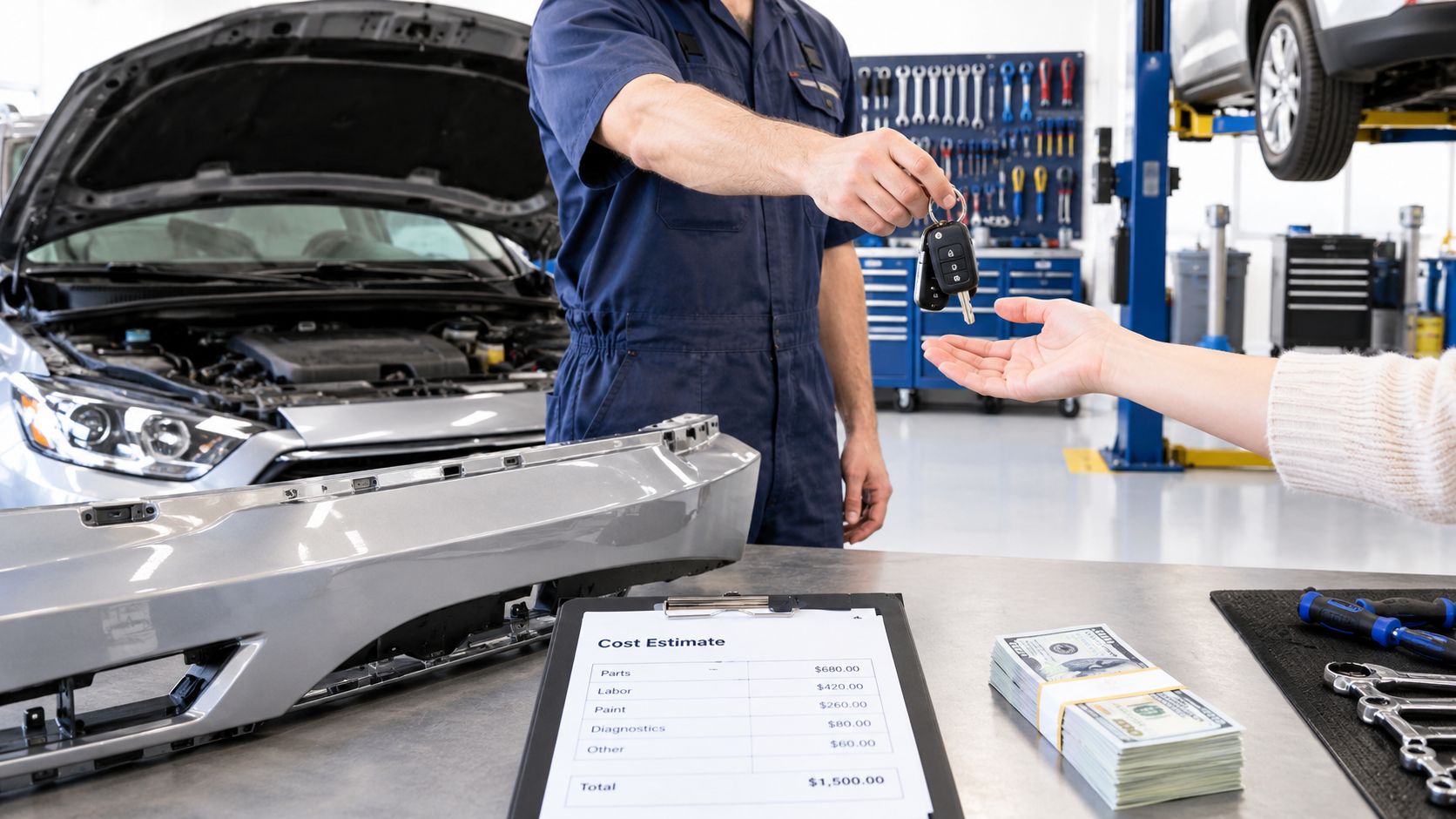
Don't authorize teardown based on a verbal promise that the repair will cost “around” a certain amount. The shop should inspect the vehicle, scan its systems, identify likely hidden damage, and explain what could become a supplement. A written estimate isn't a final bill, but it gives you a baseline for comparing labor operations, parts choices, paint work, and sublet charges.
Practical rule: The cheapest estimate is worthless if it creates supplements, rework, or extra rental days.
Affordability has four parts. Repair quality keeps you from paying twice. Labor control prevents avoidable hours from inflating the invoice. Parts strategy determines whether the shop repairs, reuses, sources recycled components, or installs new parts. Downtime management limits rental exposure and keeps the claim moving.
Know what you're actually protecting
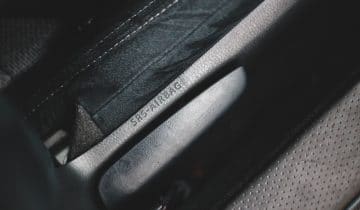
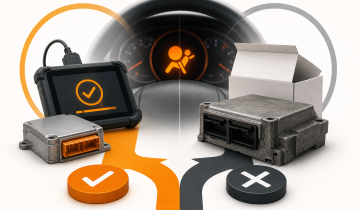
Safety-related warning lights deserve immediate attention. A bumper can look like a cosmetic problem while a crash sensor, seat-belt pretensioner, or SRS control module records a deployment event. A shop that clears a warning light without diagnosing the underlying fault is not saving you money. It's postponing the bill and potentially leaving the restraint system unreliable.
Insurance also changes the calculation. Your deductible may be fixed, but the scope of repairs, parts authorization, supplements, and rental coverage still require scrutiny. Ask who approves additional work, how quickly the insurer responds, and whether the shop will document every supplement with photographs and diagnostic findings.
Real savings come from better decisions, not weaker repairs. Choose a shop that measures damage accurately, challenges unnecessary replacement, uses the right component for the risk involved, and gives you a clear path from estimate to final inspection.
Where the Money Actually Goes in a Repair Bill
After a fender bender, the estimate can look like one intimidating total. It is not. It is a group of separate decisions covering body labor, paint and materials, parts, outside services, and safety-system work. The mix depends on the vehicle and damage, so reject any universal percentage split.
The five buckets
Body labor pays for teardown, alignment, repairs, replacement, reassembly, corrosion protection, and related operations. This is the line most likely to grow when an estimator guesses, duplicates an operation, or charges removal and installation time that another operation already includes. Labor rates rose 4.7% in 2024, while total repair costs still rose 3.7% year over year through the third quarter, according to CCC's collision repair data. Review the operation list, not just the hourly rate. Poor estimate control wastes labor hours before anyone touches the car.
Paint and materials cover preparation, refinishing, masking, blending, and shop supplies. A cheap replacement panel can erase its apparent savings if it needs extensive preparation or adds blending to adjacent panels. Ask which panels require blending and why.
Parts can include new OEM parts, aftermarket equivalents, or recycled OEM components. Industry reporting places aftermarket parts at roughly 20% to 40% below OEM parts, while another comparison reports OEM parts can cost 30% to 50% more than high-quality aftermarket equivalents. Collision repair parts guidance makes the key point: price alone does not decide value. Fit, finish, calibration, and rework determine the final cost.
Sublet operations include towing, glass, alignment, scanning, calibration, and rental-related services. Ask whether the shop performs any of this work in-house. If it uses vendors, request the vendor rate and documentation before authorization.
Safety components may include seat belts, pretensioners, airbags, sensors, and SRS modules. Separate damaged, deployed, locked, and serviceable components before approving a full assembly replacement. A qualified OEM-component repair service may restore a serviceable unit without replacing an entire assembly, but diagnosis and safe function come first.
| Line Item | Share of Bill | Negotiable? |
|---|---|---|
| Body labor | Varies by damage and repair method | Often, through accurate operation times |
| Paint and materials | Varies by panel count and finish requirements | Sometimes, through scope and blend review |
| OEM or equivalent parts | Varies by component and sourcing | Often, if safety and fit requirements are met |
| Sublet operations | Varies by required outside services | Sometimes, through vendor and rate review |
| Safety components | Varies by deployment and system faults | Limited, because diagnosis and safe function come first |
An exterior door installation cost breakdown shows why labor and materials should be examined operation by operation rather than approved as one bundled figure.
The overlooked cost drivers are wasted labor hours from weak estimates and full-assembly replacement of safety components that qualified repair may address. Choose a shop that itemizes every operation, checks overlap, and explains why each safety component must be replaced or can be repaired. That is where affordable collision repair becomes controlled repair, not a cheap shortcut.
How to Vet a Shop Before You Hand Over the Keys
A good shop should survive a short interview. Call three facilities, then visit the two that give the clearest answers. You're not looking for polished sales language. You're looking for evidence that the staff follows a repeatable repair process.
Start with the facility
Ask whether the shop holds the licenses required in your state or province and whether its technicians have current I-CAR or manufacturer training relevant to your vehicle. Training doesn't guarantee a perfect repair, but a shop that can't explain its credentials has given you a reason to keep looking.
Walk through the facility if possible. Look for frame-measuring equipment, a proper downdraft paint booth, clean work areas, organized parts storage, and a clear separation between vehicles awaiting teardown and vehicles ready for delivery. A chaotic floor often signals weak parts control and poor scheduling, both of which can extend downtime.
The ordering process explained by Black Badge Doors is a useful reminder that clear documentation and defined steps matter in any parts-driven project. Collision repair needs the same discipline.
Ask these questions word for word
- Estimate ownership: “Who writes my estimate, and who reviews it before work begins?”
- Diagnostics: “Will you scan for diagnostic trouble codes before teardown and after repairs?”
- Parts policy: “Do you default to OEM, aftermarket, or recycled OEM parts, and will you show me the choice on the estimate?”
- Labor: “What labor rates apply to body, paint, mechanical, and structural work?”
- Supplements: “If the insurer comes back short, who documents the supplement and who contacts the adjuster?”
- Existing damage: “How will you photograph and record pre-existing damage?”
- Calibration: “Which sensors or driver-assistance systems require calibration after this repair?”
A shop that answers directly earns consideration. A shop that says “we'll figure it out later” is transferring its uncertainty to your bill.
Reject the obvious red flags
Any facility that gives a firm price over the phone without seeing the vehicle is guessing. So is a shop that pressures you into a particular rental provider or claims the insurer alone decides where you must repair the car. Ask for two recent customer references and call them. Ask whether the final bill matched the approved scope, whether the vehicle was ready when promised, and whether warning lights returned after delivery.
Repair Versus Replace and Where Real Savings Live
Replacement is simple for the shop, but simple isn't always affordable. A technician who can restore a bumper, door skin, or belt mechanism safely may save you parts cost, paint preparation, and additional delivery time. The decision must start with function and damage classification, not with the part catalog.
Cosmetic panels are not automatically disposable
A plastic bumper with cosmetic scuffing, localized deformation, or a repairable split may be a candidate for plastic welding and reshaping. A steel or aluminum fender can sometimes be repaired when the mounting points, wheel opening, and structural edges remain sound. A hood or door skin may be repairable if the shell and hinges remain aligned, although creases near reinforcements can push the job toward replacement.
Headlight housings deserve more caution. If the lens, mounting tabs, aim adjustment, sealing surface, or integrated electronics are compromised, replacement may be the only responsible choice. If an ADAS sensor sits behind or inside the affected area, the shop must account for calibration after reassembly.
| Part | Typically Repairable When | Replacement Driven By | Estimated Cost Swing |
|---|---|---|---|
| Bumper cover | Plastic damage remains repairable and mounts are sound | Torn mounts, severe distortion, sensor integration, or unsafe retention | Varies by repair scope and part choice |
| Fender | Damage is cosmetic and attachment points remain aligned | Distorted edges, wheel-opening damage, or structural interference | Varies by panel and refinishing needs |
| Hood | Outer skin is repairable and hinges, latch, and reinforcements work correctly | Buckled reinforcement, latch damage, or poor crash performance | Varies by repair method and finish |
| Headlight housing | Lens and mounts remain intact, with electronics functioning | Broken housing, aim failure, water intrusion, or sensor integration | Varies substantially by vehicle |
| Door skin | Inner structure and intrusion protection remain sound | Intrusion beam, frame, latch, or hinge damage | Varies by skin repair versus assembly replacement |
| Seat belt assembly | Belt locks from deployment and the mechanism is suitable for qualified rebuilding | Cut webbing, damaged hardware, or failed post-repair testing | Varies by mechanism and service scope |
Safety parts need a harder boundary
A deployed airbag is not a cosmetic item. A compromised bag, damaged inflator, or structurally damaged restraint component should be replaced according to the manufacturer's repair requirements. A seat belt that locked under crash tension may be a candidate for webbing, retractor, or pretensioner service, but only after proper diagnosis and testing.
The safe rule is straightforward: reuse no structural load-bearing part, no compromised crash bag, and no component that fails testing. Don't skip required SRS diagnostics or ADAS recalibration just to preserve a lower invoice. Those shortcuts can leave a warning light off while the system remains unprepared for another impact.
Mail-In OEM Repairs That Cut Costs Without Cutting Corners
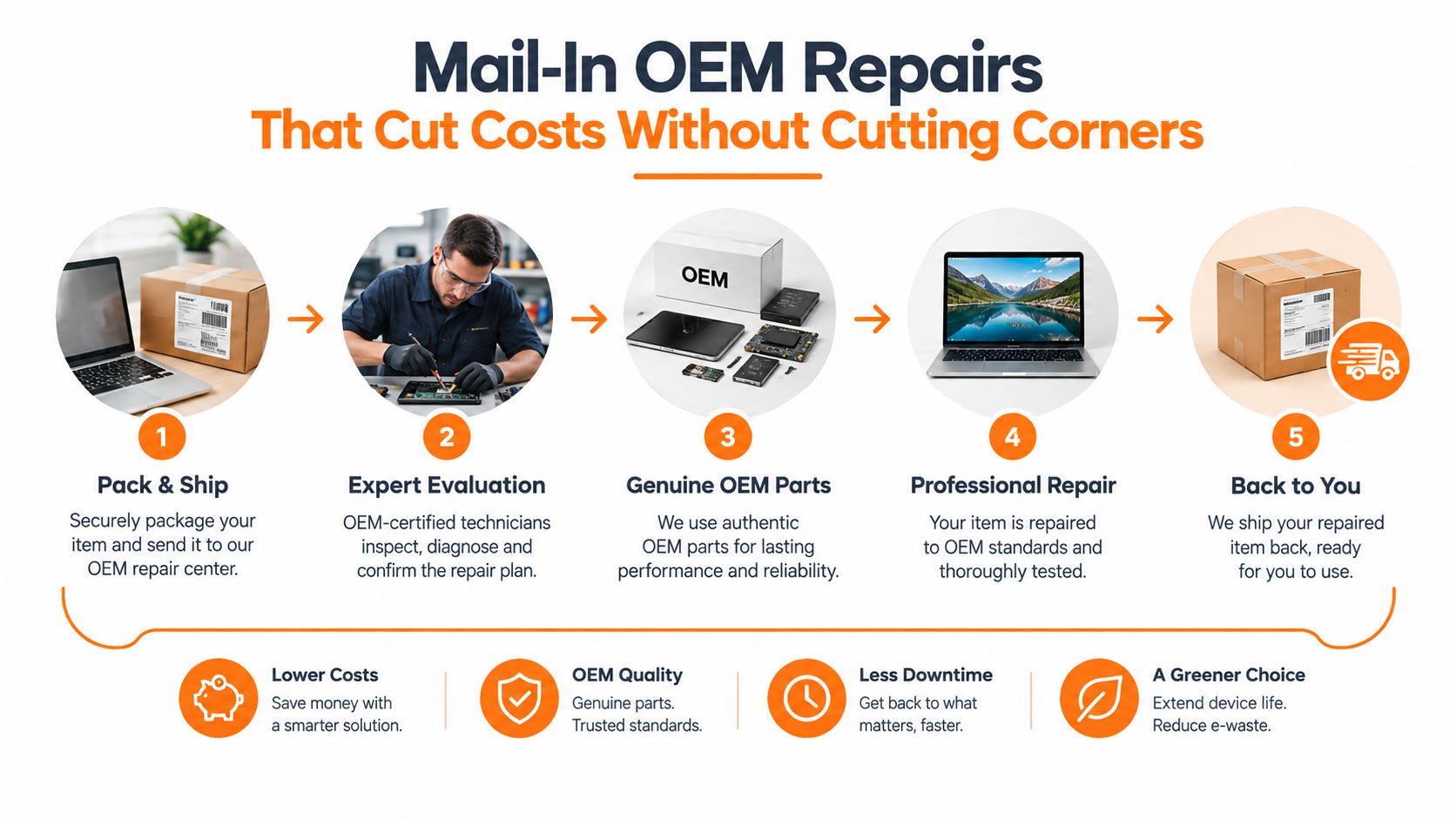
The most underused savings opportunity in collision work is restoring certain original safety components instead of automatically replacing the entire assembly. Mail-in specialists can often service removable SRS control modules, seat-belt retractors, pretensioners, buckles, occupant sensors, and selected electronic modules, while the shop handles components that stay installed in the vehicle.
Use a controlled workflow
The process should begin with diagnosis, not shipping. The repairer needs the vehicle information, fault codes, deployment history, and exact part number. The shop then removes the eligible component, packages it securely, ships it to the specialist, and reinstalls it after return.
A disciplined workflow includes:
- Confirm the fault with a diagnostic scan and visual inspection.
- Record the part number before removal.
- Ship only the removable component, not the vehicle.
- Request bench testing after service.
- Reinstall and scan the vehicle after all crash repairs are complete.
- Verify that the SRS light stays off and that no hard faults remain.
A typical mail-in service may take several business days depending on shipping and queue time. Demand written documentation, including pre-service and post-service diagnostic information, bench-test results, the work performed, and warranty terms. Reject any provider that can't explain how it handles stored crash data, hard fault codes, and final testing.
Avoid the cheap shortcut that creates a second repair
A service that only erases a visible fault without correcting the underlying issue isn't a repair. Ask whether the original OEM unit is tested on a bench, whether deployment data and hard codes are addressed, and whether the returned part is ready for reinstallation. The vehicle still needs a complete post-repair scan because a reset module can't compensate for damaged wiring, sensors, inflators, or belt hardware elsewhere in the system.
Safety Restore is one mail-in option for customer-supplied seat-belt mechanisms and SRS airbag control modules. Its published service model lists a flat $99 per item, a typical 24-hour turnaround, and a lifetime warranty, so compare those terms with the shop's replacement quote and confirm that the exact component is eligible before ordering.
The right question isn't “Can I reset this part?” It's “Can this original part be restored, tested, documented, and safely returned to service?” If the answer is yes, component repair can reduce replacement cost while preserving correct fitment and vehicle compatibility.
Negotiating the Estimate and Controlling Labor Costs
Negotiation works when you challenge the scope, not when you demand that a technician work for free. Ask the estimator to explain every operation that affects labor hours, especially removal and installation charges hidden inside broader body or paint lines.
Find duplicated work
Look closely at R&I charges, which cover remove and install operations. Trim, headliners, lamps, moldings, and interior panels can appear in multiple places on an estimate. Ask whether the same component is being charged once for access and again as part of a related replacement operation.
Blending is another frequent source of confusion. If paint extends across several panels, ask which panel receives the blend, why it's required, and whether the operation overlaps with existing paint labor. The same applies to structural pulls, measuring, corrosion protection, seam sealer, and post-repair scans.
Use this wording:
“Please show me the labor time for each operation, identify any overlap, and separate parts, body labor, paint labor, materials, and sublet charges.”
That request makes the estimate auditable without telling the shop how to perform a repair.
Compare only equivalent scopes
A competing estimate matters only when both shops include the same damage, parts quality, calibrations, corrosion protection, and warranty obligations. You can ask whether the shop will match an apples-to-apples written estimate, but don't compare a complete repair against a stripped-down quote that omits scans or safety work.
Ask for alternatives in writing:
- Parts sourcing: “Can you price a quality recycled OEM panel beside the new part?”
- Labor detail: “Which hours are repair, which are replace, and which are teardown or reassembly?”
- Materials: “What paint-material allowance and supply fees are included?”
- Supplements: “What evidence will support additional damage if teardown changes the scope?”
- Customer-supplied parts: “Will you install a verified OEM part I provide, and how would that affect warranty coverage?”
Never buy a safety component from an unknown marketplace seller just to lower the estimate. If you supply a part, verify the part number, condition, compatibility, and return policy first. A useful example of why project costs need line-by-line review appears in this guide to iron door costs, where labor and materials must be separated to make comparisons meaningful.

Schedule flexibility can help if the shop offers it, but don't delay a safety repair for a speculative discount. If the estimator pushes back, say: “I'm not asking you to remove required work. I'm asking you to document why each operation is necessary and remove duplicate labor.”
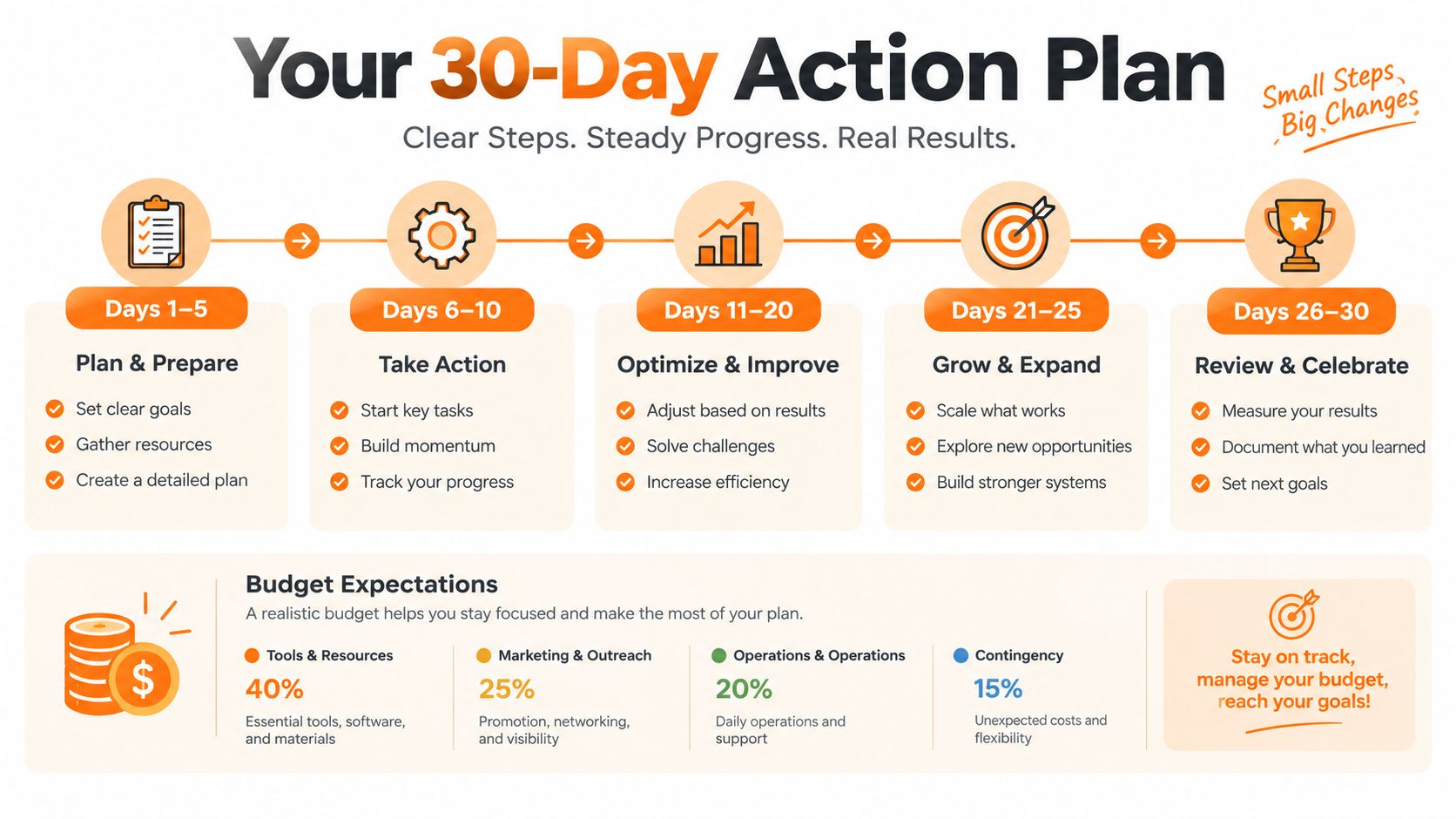
Your 30-Day Action Plan and Budget Expectations
A crash claim gets easier when every decision has a deadline. Start by putting estimates, scans, photographs, approvals, and receipts in one folder. Keep the vehicle and claim moving instead of waiting for the insurer, shop, and parts supplier to call one another.
Days 1 through 10
Days 1 to 3: Document the scene and vehicle thoroughly. Photograph each damaged area, record warning lights, collect the police and insurance claim information, and ask the shop to identify OEM part numbers for safety components and major assemblies. Do not approve replacement until the shop confirms whether a component is damaged, deployed, locked, or serviceable. That distinction is where unnecessary full-assembly costs often begin.
Days 4 to 10: Get three written estimates, then visit the shops that prepared them. Compare labor operations, parts categories, paint scope, diagnostic scans, calibration, sublet work, and warranty terms. Reject any estimate produced without a physical inspection. A low number built on missing operations is not a bargain. It is deferred cost.
Days 11 through 20
Send eligible airbags, seat belts, and SRS modules to a qualified mail-in repair provider only after diagnostic confirmation. Compare the service quote with full replacement pricing, request testing documentation, and confirm the return process. Keep shipping records with the original estimate so the insurer can follow the reasoning behind the component decision.
Do not reinstall a repaired module or belt until the underlying collision work is complete. Wiring, sensors, inflators, mounting points, and restraint hardware still require inspection. The vehicle also needs a final scan after reassembly. A repaired safety component does not compensate for an unresolved fault elsewhere in the system.
Days 21 through 30
Review the estimate line by line. Ask the shop to explain duplicated R&I operations, extended blending, unexplained supply fees, and labor that does not match the visible damage. Approve a supplement only when photographs, measurements, diagnostic evidence, or another clear reason supports the change. Poor estimate control wastes labor hours and can turn a manageable repair into an inflated bill.
Use these figures only as illustrative planning examples, not promises. A shop might quote $300 to $700 for minor bumper scuffs, $800 to $1,500 for single-panel paint and blend, $3,000 to $6,000 for moderate front-end damage with airbag deployment, or $6,000 to $12,000 or more for structural or multi-panel collision. Verify every range against the vehicle, documented damage, parts availability, calibration requirements, and hidden damage found during teardown.
Industry reporting shows why repair totals can rise quickly. Enlyte reported an 8% increase in collision repair costs from 2022 to 2023 and said the average repairable U.S. claim exceeded $4,700 in early 2023. The collision repair cost analysis from FenderBender provides that context.
Mail-in OEM-component repair gives you another comparison point. Published service prices may be around $80 to $250 per component, while new assemblies may cost $400 to $1,200. Treat those amounts as illustrative only. Confirm the exact vehicle, part, diagnosis, testing process, warranty, and shipping terms before choosing repair over replacement.
Before delivery, print this checklist:
- Photograph the completed repair in daylight.
- Confirm panel gaps, paint match, lamps, locks, and warning lights.
- Request final scan and calibration records.
- Confirm the parts installed and retain invoices.
- Check the written warranty and supplement approvals.
- Verify the rental return date and insurer payment status.
- Escalate disputed coverage, unsafe repair instructions, or claim delays to your insurer's supervisor or a qualified attorney.
For post-crash savings that avoid unsafe shortcuts, review the seat-belt and SRS module services available from Safety Restore. Compare its component-repair documentation and warranty terms with full replacement, then ask your collision shop to confirm eligibility before shipping anything.