
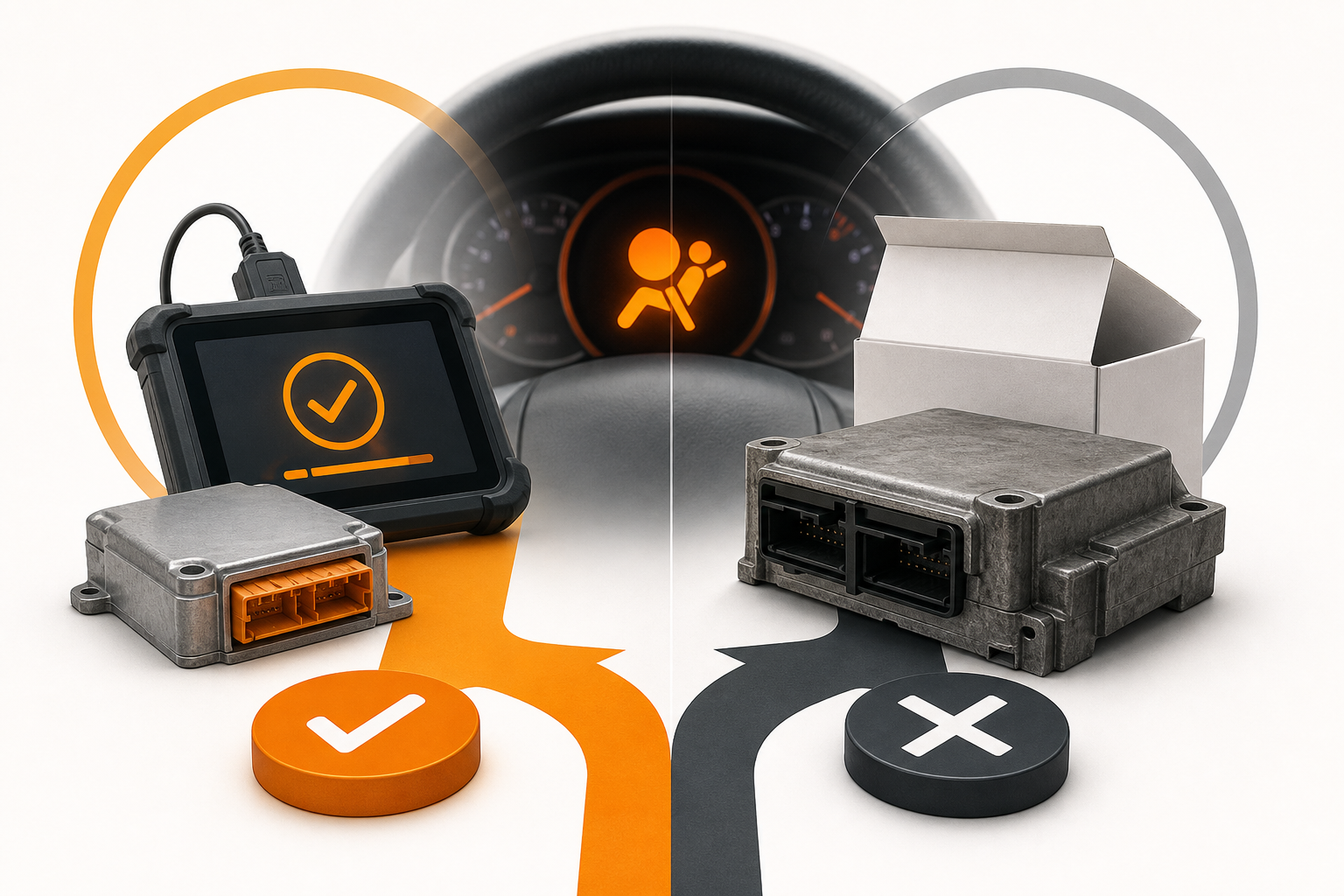
- What Is an SRS Airbag Module?
- Reset vs. Replacement: The Core Difference
- Why Dealers Push Replacement (And What It Costs You)
- How to Know Which Option You Actually Need
- The Risk of Cheap or Improper Resets
- What a Professional SRS Airbag Module Reset Looks Like
- Reset vs. Replacement: A Quick Comparison
- Common Scenarios and the Right Call
- The Bottom Line
- Frequently Asked Questions
Your airbag light is on. Maybe you were in a collision, maybe you picked up a salvage-title vehicle, or maybe the warning just appeared without any obvious cause. Whatever the situation, you’re now facing a decision most drivers have never had to think about: do you reset the SRS airbag module, or replace it entirely?
The answer matters more than it might seem. Get it wrong and you could spend far more than necessary — or end up with a safety system that fails when you actually need it.
Here’s a clear breakdown of what each option involves, when each one applies, and how to avoid the mistakes that cost people the most.
What Is an SRS Airbag Module?
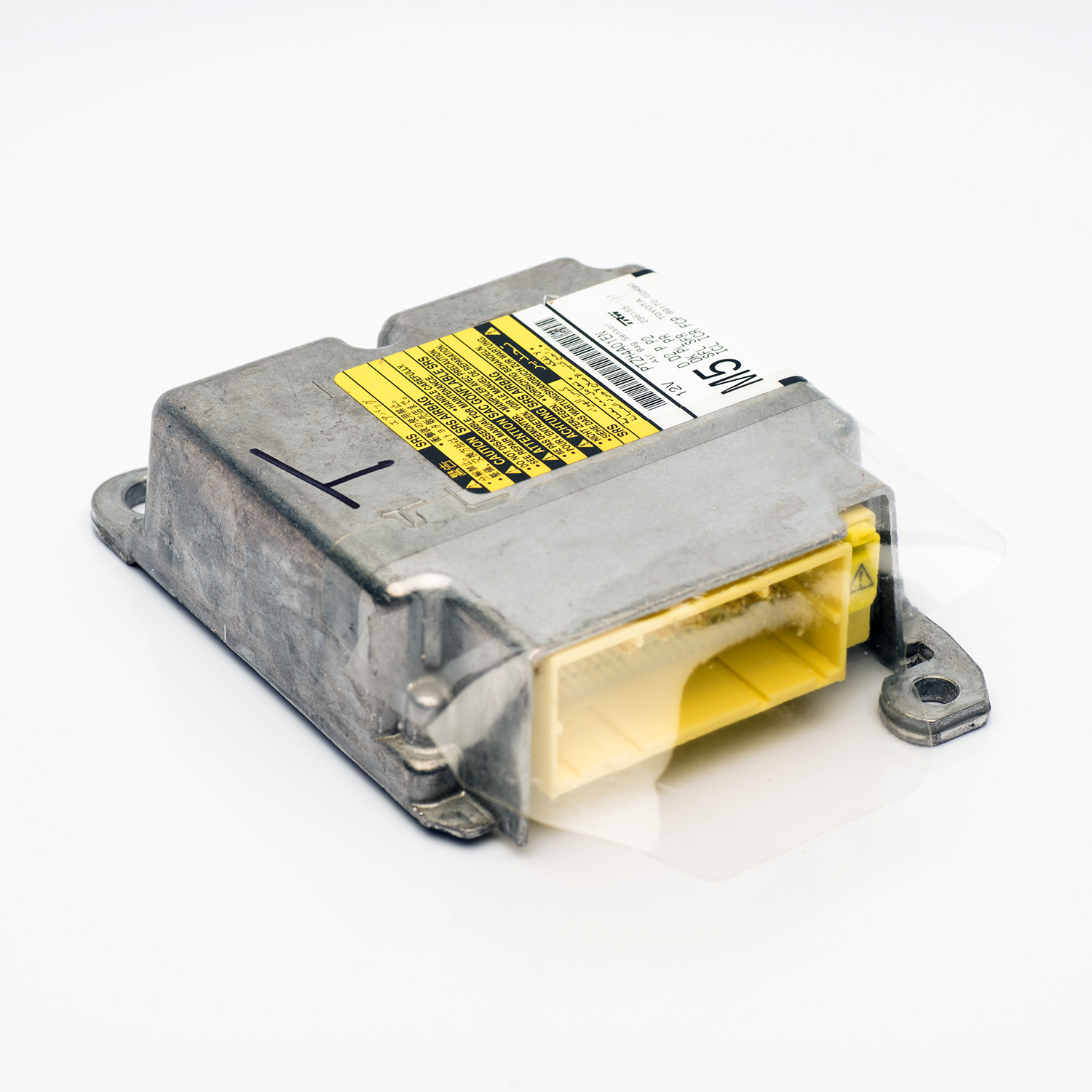
The SRS (Supplemental Restraint System) airbag module is the brain of your vehicle’s airbag system. It monitors crash sensors throughout the car, processes impact data in real time, and triggers deployment when a collision crosses the activation threshold.
After a crash where airbags deploy, the module stores fault codes and crash data — then essentially locks itself. That’s intentional. It’s designed to prevent the system from being reactivated without verified intervention.
The SRS warning light on your dashboard is the module’s signal that something isn’t right. That could be post-deployment fault codes, a wiring issue, a sensor fault, or data stored from a previous accident that was never cleared.
Reset vs. Replacement: The Core Difference
What a Reset Does
An SRS airbag module reset clears the crash data and fault codes stored in the module after a collision. A proper reset — done with OEM programming — restores the module to its original factory state. When it’s performed correctly, the module functions exactly as it did when it left the factory.
A reset is the right call when:
- Your airbags deployed but the module itself wasn’t physically damaged
- The SRS light is on due to stored crash data or fault codes from a prior accident
- You bought a salvage or rebuilt-title vehicle and the module was never cleared after the previous owner’s crash
- A scan shows airbag-related fault codes that haven’t been addressed
What a Replacement Means
Replacing the module means installing a new or remanufactured unit. This is only necessary when the module itself has been physically damaged — which is far less common than most dealers suggest.
Replacement makes sense when:
- The module sustained direct physical damage in the crash (burned, cracked, or shorted out)
- The module is confirmed defective independent of any crash data
- A proper reset was completed and the module still fails to function
Here’s what dealers rarely explain: most post-accident SRS issues are caused by stored crash data, not physical damage. The module is often completely intact. It just needs to be reset.
Why Dealers Push Replacement (And What It Costs You)
After an accident, a dealership’s default recommendation is usually to replace the module. New OEM modules from a dealer typically run $1,000 to $6,000 or more depending on the vehicle — before labor. Many also need to be programmed to your car’s VIN, which adds more cost and more time.
Replacement is a legitimate recommendation when the module is genuinely damaged. But when the module is physically intact and the issue is simply stored crash data, paying for a full replacement means paying for a part you didn’t need.
That’s exactly the gap a professional SRS airbag module reset fills. The module is reprogrammed to factory spec, fault codes are cleared, and the system is restored to full function — without the cost of a new unit.
How to Know Which Option You Actually Need
Before spending anything, get a diagnostic scan. Any shop with an OBD-II scanner capable of reading SRS codes can pull the fault data from your module.
Signs a reset is the right move:
- Crash data stored (airbag deployment event recorded)
- Hard fault codes from a previous accident
- SRS warning light on with no visible physical damage to the module
Signs replacement may be necessary:
- Module confirmed shorted or burned
- Visible physical damage to the unit
- Reset completed but module still fails to communicate with the system
In the majority of post-accident cases, the scan will show stored crash data. That means a reset is the right call.
The Risk of Cheap or Improper Resets
Not all resets are the same. A common mistake is using a generic scan tool to clear codes without actually reprogramming the module. This can look like it worked — until the SRS light comes back, or worse, the system doesn’t deploy correctly in a future collision.
The same problem applies to services that use aftermarket programming instead of OEM data. A module programmed with non-OEM data may not match your vehicle’s original deployment thresholds. That’s not just an inconvenience — it’s a safety issue.
If you’ve already paid for a reset somewhere and the light returned or the system still isn’t right, you’re not alone. It usually means the original reset wasn’t done with proper OEM programming.
What a Professional SRS Airbag Module Reset Looks Like

A properly performed reset involves:
- Receiving the physical module (mail-in services make this straightforward)
- Reading and clearing all stored crash data and fault codes
- Reprogramming the module to its original factory state using OEM software and data
- Verifying the module communicates correctly before it’s returned
The result is a module that performs identically to a new unit — at a fraction of the replacement cost.
Safety Restore handles SRS airbag module resets for all vehicle makes and models at a flat $99, using 100% OEM parts and OEM programming. Turnaround is 24 hours, and every reset is backed by a lifetime warranty. You ship the module to them, they reset it, and ship it back. No appointment, no dealer markup, no surprise fees.
Reset vs. Replacement: A Quick Comparison
| Factor | Reset | Replacement |
|---|---|---|
| When it applies | Stored crash data, fault codes, SRS light on | Physical module damage, confirmed defect |
| Typical cost (dealer) | Varies | $1,000 to $6,000+ |
| Typical cost (mail-in service) | $99 flat | N/A |
| Turnaround | 24 hours (mail-in) | Days to weeks (dealer) |
| OEM programming required | Yes | Yes |
| Lifetime warranty available | Yes (Safety Restore) | Depends on source |
Common Scenarios and the Right Call
You were in a collision and the airbags deployed. The module likely stored crash data. If there’s no physical damage to the unit, a reset is almost certainly the right option.
You bought a used or salvage-title vehicle and the SRS light is on. The previous owner’s accident data is still sitting in the module. A reset clears it and restores the system to factory condition.
Your SRS light came on without any accident. This could be a sensor fault, a wiring issue, or residual data from a minor impact. A diagnostic scan will tell you whether the module needs a reset or if the issue is somewhere else in the system.
You had a reset done and the light came back. The reset was likely incomplete or performed without OEM programming. A proper reset using OEM software should resolve it.
The Bottom Line
In most post-accident situations, an SRS airbag module reset is the right answer. Replacement is only necessary when the module itself is physically damaged — which is far less common than dealers tend to imply.
What matters most is that the reset is done correctly, with OEM programming — not a generic code clear that leaves the system in an uncertain state. That distinction is the difference between a safety system you can trust and one that might not perform when it counts.
If you’re dealing with an SRS warning light or a post-accident module, you can learn more about the reset process at safetyrestore.com.
Frequently Asked Questions
What is an SRS airbag module reset?
An SRS airbag module reset clears the crash data and fault codes stored in your vehicle’s airbag control module after a collision. A proper reset uses OEM programming to restore the module to its original factory state so the airbag system functions correctly again.
How do I know if I need a reset or a full replacement?
If your module is physically intact and the SRS warning light is on due to stored crash data or fault codes from a previous accident, a reset is typically the right option. Replacement is only necessary if the module was physically damaged in the crash or is confirmed defective after a proper reset has been performed.
Can I clear airbag codes with a regular OBD-II scanner?
A standard OBD-II scanner can read some SRS codes, but it can’t perform a full module reset. Clearing codes without reprogramming the module to factory spec isn’t the same as a proper reset and likely won’t resolve the underlying issue.
Is it safe to drive with the SRS warning light on?
Your vehicle may still be drivable, but an active SRS warning light means the airbag system isn’t operating normally. In a subsequent collision, the airbags may not deploy as intended. It’s worth having the module diagnosed and repaired before driving regularly.
How long does a mail-in SRS airbag module reset take?
Safety Restore’s standard turnaround is 24 hours from the time they receive your module. You ship it to them, they reset it using OEM programming, and ship it back.
Will a reset work on any vehicle make or model?
Yes. SRS airbag module resets are compatible with all vehicle makes and models. The programming process uses the OEM data specific to your vehicle’s module, so it applies whether you drive a domestic, European, or Asian vehicle.
What happens if the reset doesn’t fix the problem?
If a properly performed reset doesn’t resolve the issue, the module may have physical damage and require replacement. Safety Restore backs every reset with a lifetime warranty — so if the issue is with the reset itself, you’re covered.
