
Frayed Seat Belt: Is It Safe to Drive With One and How Do You Fix It?
- What Causes a Seat Belt to Fray?
- How Bad Is the Fraying? A Quick Self-Assessment
- Is It Legal to Drive With a Frayed Seat Belt?
- Can You Repair a Frayed Seat Belt, or Does It Need Full Replacement?
- Your Fix Options
- What About a Belt That’s Frayed After an Accident?
- How to Remove Your Seat Belt for Shipping
- FAQs
- Take Care of It Now
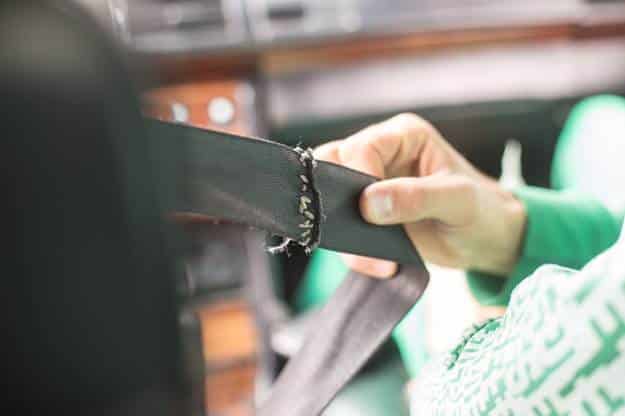
A frayed seat belt is easy to dismiss. It still clicks in, still pulls across your chest, and the car doesn’t throw a warning light. So you drive on and tell yourself you’ll deal with it later.
The problem is that fraying isn’t cosmetic damage. The webbing is what actually holds you in place during a crash. When those fibers are compromised, the belt’s ability to distribute force across your body goes with them. “Later” isn’t a safe timeline for this one.
Here’s what you need to know: what causes fraying, how to gauge how serious yours actually is, whether it’s legal to drive with a damaged belt, and what your real fix options look like.
What Causes a Seat Belt to Fray?
Seat belt webbing is tightly woven polyester — durable, but not indestructible. Several things wear it down over time.
UV exposure is one of the most common culprits. Sunlight degrades polyester gradually, and a belt that sits in direct sun through a windshield for years can weaken long before it looks visibly damaged.
Friction and routing damage happens when the belt repeatedly rubs against a sharp edge on the pillar trim, the buckle housing, or a poorly fitted retractor slot. You’ll usually see this as fraying concentrated in one specific spot rather than spread across the whole belt.
Chemical exposure from cleaning products, fuel spills, or even years of sweat breaks down the fiber structure. Bleach-based cleaners are particularly destructive and should never go anywhere near webbing.
Age and use matter too. A belt that’s been buckled and retracted tens of thousands of times over 15 or 20 years will show wear — especially on high-mileage vehicles or salvage-title cars where the maintenance history is anyone’s guess.
How Bad Is the Fraying? A Quick Self-Assessment
Not all fraying is equal. Before deciding on a fix, take a close look at what you’re actually dealing with.
Surface-level fuzz: Small fibers sticking out from the webbing surface, but no visible cuts, tears, or thinning. This is cosmetic. The belt is still structurally intact.
Edge fraying: Fibers unraveling along one or both edges of the webbing. More serious. The edges bear load in a crash, and edge damage reduces tensile strength.
Localized thinning or cuts: A section that looks thinner than the rest, or a visible cut or nick in the weave. This is a structural problem. Don’t trust this belt in a crash.
Severe fraying with visible fiber separation: Large sections visibly separating or with significant material missing. This belt needs immediate replacement. Don’t drive with it.
Run your hand along the full length of the webbing on both sides. Pay close attention near the retractor, the buckle end, and anywhere the belt contacts trim or hardware — those are the highest-wear zones.
Is It Legal to Drive With a Frayed Seat Belt?
Federal law requires seat belts to be present and functional in all seating positions. A belt with significant fraying that compromises its structural integrity doesn’t meet that standard.
State-level enforcement varies, but a vehicle inspection failure is a real possibility if an inspector spots damaged webbing. If you’re driving a salvage or rebuilt-title vehicle and need it to pass inspection, a frayed belt is exactly the kind of thing that gets flagged.
There’s also a liability angle. If you’re in an accident and the belt fails due to pre-existing damage, that matters for insurance claims and any legal proceedings that follow.
The short version: surface fuzz is unlikely to cause a legal problem. Anything beyond that is a risk worth taking seriously.
Can You Repair a Frayed Seat Belt, or Does It Need Full Replacement?
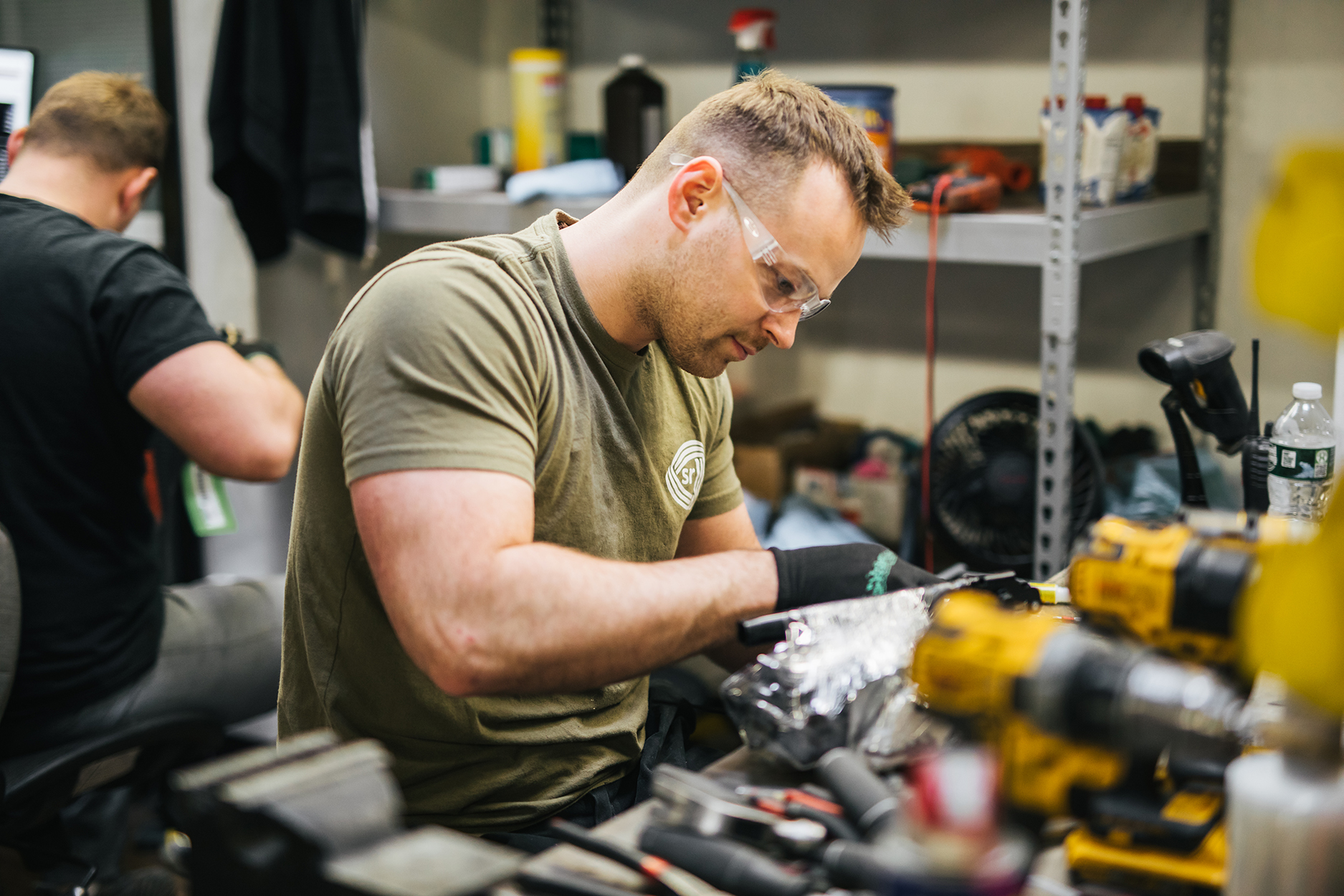
It depends on where the damage is and how bad it’s gotten.
Minor surface fraying can sometimes be managed by carefully trimming loose fibers with sharp scissors to keep them from unraveling further. That’s not a structural repair — it’s a temporary cosmetic fix that buys you time while you arrange a proper replacement.
Edge fraying, thinning, or cuts require full webbing replacement. There’s no patch, no adhesive, and no DIY fix that restores the original tensile strength of damaged webbing. Anyone telling you otherwise is wrong.
Fraying caused by a pretensioner firing is a different situation entirely. If your vehicle was in a collision and the pretensioner deployed, the belt is locked and the webbing is likely stressed even if it looks fine. That belt needs professional repair, not just webbing replacement.
Your Fix Options
Option 1: Dealership Replacement
A dealer will replace the full seat belt assembly with an OEM part, and the job will be done correctly. Expect to pay $300 to $800 or more per belt, plus labor. It’s the most expensive path by a wide margin.
Option 2: Aftermarket Webbing
Aftermarket webbing is available online, and some people attempt a DIY swap. The risk is fit and quality. Seat belt webbing has specific width, thickness, and tensile strength requirements, and aftermarket products vary widely. Without testing equipment, there’s no easy way to verify you’re getting webbing that actually meets OEM spec.
Option 3: Professional Webbing Replacement by Mail
Safety Restore replaces seat belt webbing using 100% OEM parts and ships your belt back within 24 hours. Standard webbing replacement is a flat $99.97, free return shipping is included, and every replacement is backed by a lifetime warranty.
The process is simple: remove the seat belt from your vehicle, ship it to Safety Restore, and get it back the next day ready to reinstall. No dealership appointment, no waiting weeks for a part to arrive.
Safety Restore also offers custom color webbing replacement at the same $99.97 price — red, yellow, orange, blue, green, and more. It’s a popular option on restorations and custom builds where the stock color doesn’t fit the interior.
What About a Belt That’s Frayed After an Accident?
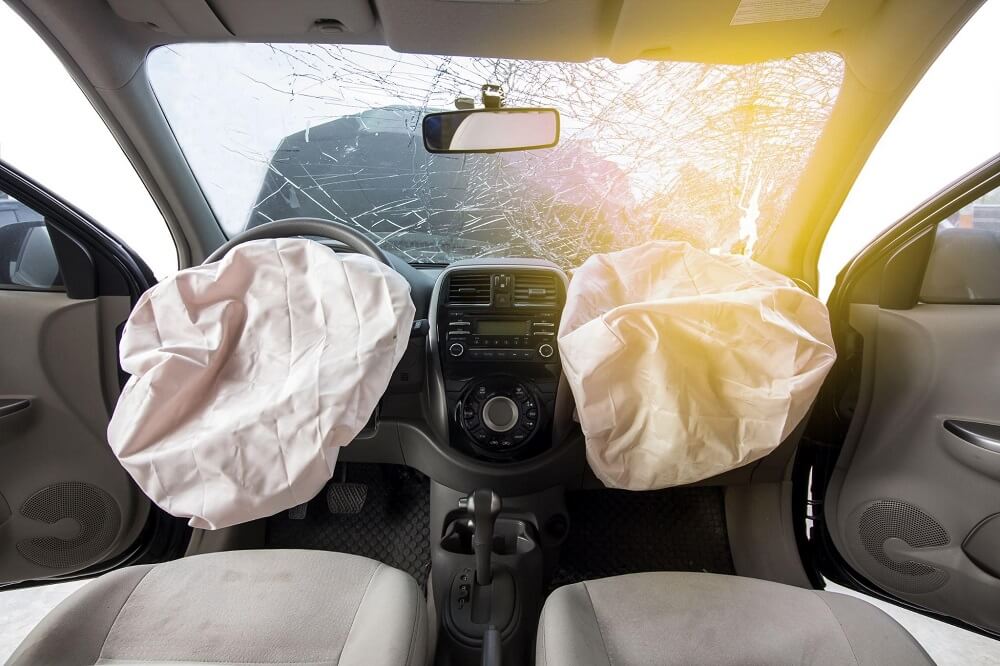
A collision changes things significantly. Even if the webbing looks fine, the pretensioner inside the retractor may have fired. A fired pretensioner locks the belt permanently — the webbing won’t retract, the belt won’t extend, and the assembly is functionally dead.
In that case, you’re not just dealing with fraying. You need a full seat belt repair that addresses the pretensioner mechanism. Safety Restore handles this with single-stage repairs at $69.97, dual-stage at $99.97, and triple-stage at $114.97 — same 24-hour turnaround, same lifetime warranty.
If you’re also dealing with airbag deployment or an SRS warning light, those need to be addressed before the vehicle is roadworthy. Safety Restore resets SRS airbag modules for $54.97, which is a fraction of what a dealer charges for the same work.
How to Remove Your Seat Belt for Shipping
Removing a seat belt for mail-in repair is simpler than most people expect. You’ll need a basic socket set and about 20 to 30 minutes.
- Locate the retractor — typically bolted to the B-pillar or C-pillar behind the interior trim panel.
- Remove the trim panel to access the retractor bolt. Most panels pop off with a trim removal tool or a flathead screwdriver wrapped in a cloth.
- Unbolt the retractor (usually a single bolt), unbolt the lower anchor point, and slide the webbing out of the pillar guide.
- Package the retractor assembly and ship it. You don’t need to send the buckle or the lower anchor hardware.
If you’re unsure about your specific vehicle, Safety Restore’s support team can walk you through it via live chat or SMS.
CALL/TXT (413) 564-1242
FAQs
Is a frayed seat belt dangerous? It depends on severity. Surface fuzz with no structural damage is low risk but worth keeping an eye on. Edge fraying, thinning, or any visible cuts reduce the belt’s load-bearing capacity and should be treated as a safety issue. Replace the webbing before driving regularly.
Can I fix a frayed seat belt myself? You can trim loose fibers to slow surface fraying, but you can’t restore structural integrity with a DIY repair. If the damage goes beyond surface fuzz, the webbing needs professional replacement with OEM-spec material.
How much does seat belt webbing replacement cost? Dealers typically charge $300 to $800 or more per belt. Safety Restore charges a flat $99.97 for standard webbing replacement, including free return shipping and a lifetime warranty.
Does fraying mean the pretensioner also needs repair? Not necessarily. Fraying from normal wear or UV exposure is a webbing issue only. If the fraying followed a collision, the pretensioner may have fired and will need separate repair. Check the belt’s retraction and extension to get a sense of where things stand.
How long does mail-in seat belt webbing replacement take? Safety Restore ships repaired belts back within 24 hours of receiving them. Factor in shipping time each way, and most customers have their belt back and reinstalled within the same week.
Will a frayed seat belt fail a vehicle inspection? Significant fraying that compromises the webbing’s integrity can result in a failure. Surface-level fuzz is less likely to be flagged, but any damage that affects the belt’s function or structure is a legitimate inspection concern.
Can I get a different color webbing when I replace a frayed belt? Yes. Safety Restore offers custom color webbing replacement at the same $99.97 price as standard replacement, with options including red, yellow, orange, blue, green, and others.
Take Care of It Now
A frayed seat belt is easy to put off because the car still drives. But it’s also one of the cheapest safety repairs you can make — especially compared to what a dealer charges for the same job.
If your webbing needs replacing, ship your seat belt to Safety Restore and get it back within 24 hours, repaired with 100% OEM parts, backed by a lifetime warranty, for $99.97 with free return shipping. Safety Restore has been in business since 2013, holds a BBB A+ rating, and has handled this repair for over 120,000 customers.
Don’t wait on this one.