- What Is Seat Belt Webbing?
- Why Webbing Fails
- Standard vs. Custom Color Webbing
- How the Replacement Process Works
- What to Check Before You Order
- Cost Compared to a Dealer
- Frequently Asked Questions
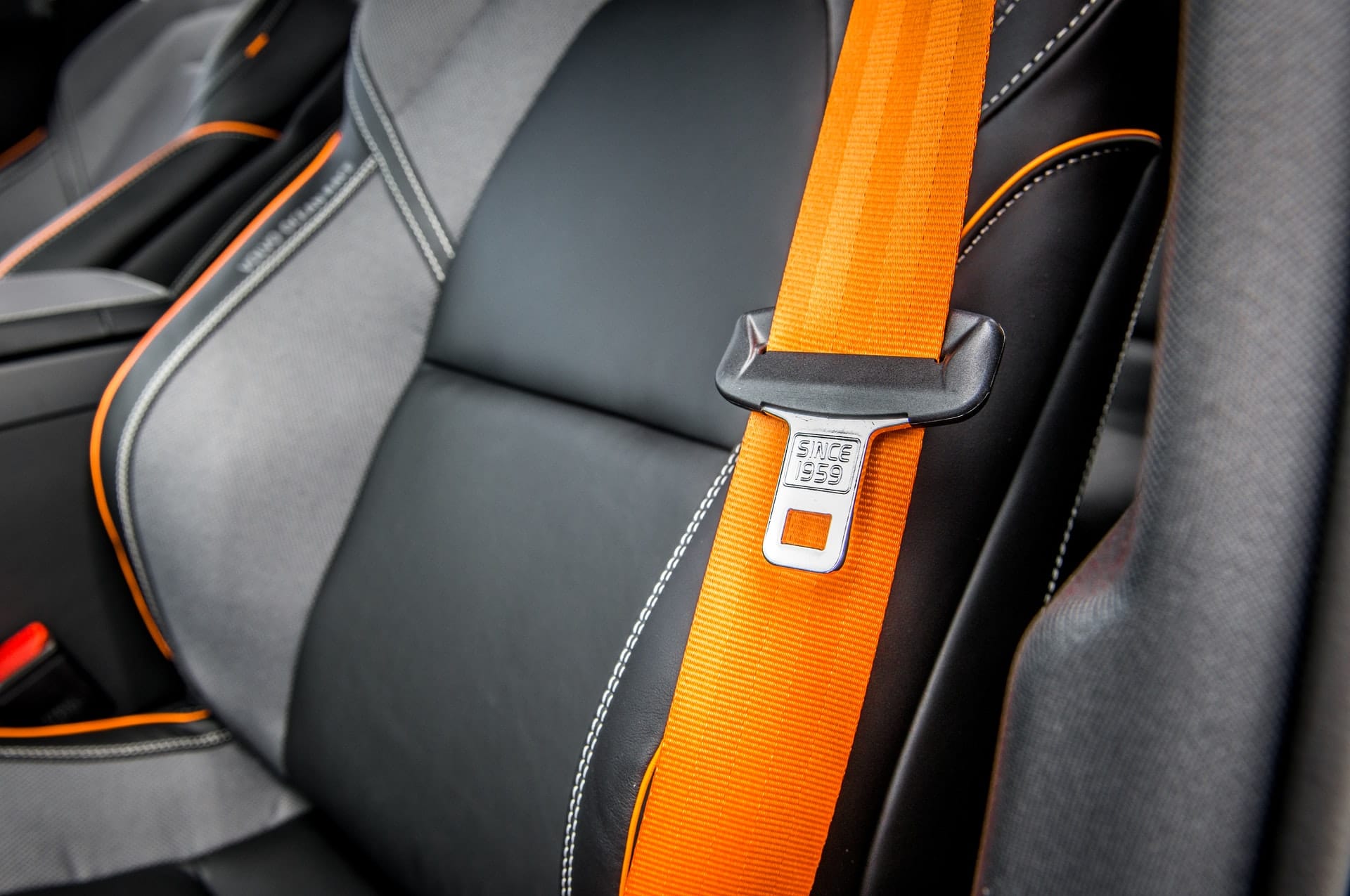
Seat belt webbing takes a beating over the life of a vehicle. Sun exposure, friction, spills, and the extreme forces of a collision all degrade it over time. When the fabric frays, discolors, stiffens, or gets cut, the belt can no longer do its job reliably. Knowing what webbing is made of, why it fails, and what your replacement options look like will help you make a smart call before you get back on the road.
What Is Seat Belt Webbing?
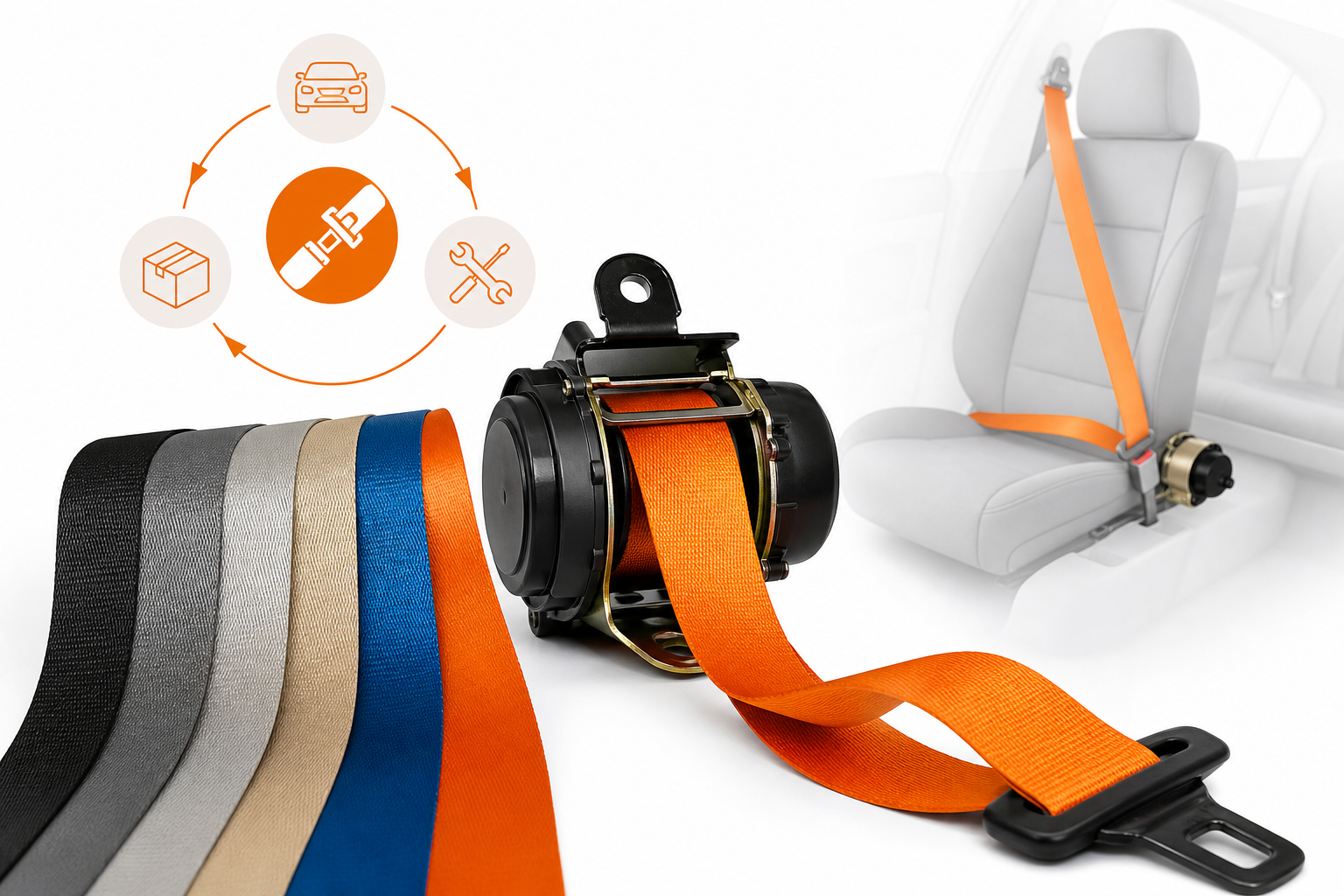
Seat belt webbing is the flat, woven strap that runs across your body in a crash to distribute force and keep you in the seat. It looks simple, but the engineering behind it is precise.
Most modern webbing is woven from polyester yarn. Polyester is the industry standard because it resists stretching under normal use, holds up to UV exposure better than nylon, and maintains consistent tensile strength across a wide temperature range. The weave pattern itself is engineered to absorb energy during a collision through controlled elongation, which reduces the peak force transferred to your chest and abdomen.
Standard automotive webbing is typically 48 millimeters wide, and weave density is tightly regulated under Federal Motor Vehicle Safety Standard 209 (FMVSS 209), which sets minimum requirements for webbing strength, elongation, and abrasion resistance.
Why Webbing Fails
Webbing doesn’t last forever, and several conditions speed up the deterioration.
Fraying and cuts. Sharp edges, cargo, or pet claws can cut or fray individual fibers. Once the structural integrity of the weave is compromised, the belt is no longer reliable in a crash.
UV degradation. Prolonged sun exposure breaks down polyester fibers at the molecular level. Webbing that has gone brittle or chalky has lost tensile strength even if it looks fine from a distance.
Stiffening and contamination. Spilled liquids, cleaning chemicals, and general grime can stiffen the webbing and cause it to retract poorly or bind in the retractor mechanism.
Post-collision locking. In a significant collision, the pretensioner fires and the webbing locks. Even if the fabric itself is undamaged, the belt won’t retract or extend normally after that event. This is a pretensioner issue rather than a webbing issue, but the two problems can occur together.
Discoloration and odor. Staining from blood, smoke, or chemical exposure may not affect strength, but it signals contamination that warrants replacement — especially if you’re restoring a salvage or rebuilt-title vehicle.
Standard vs. Custom Color Webbing
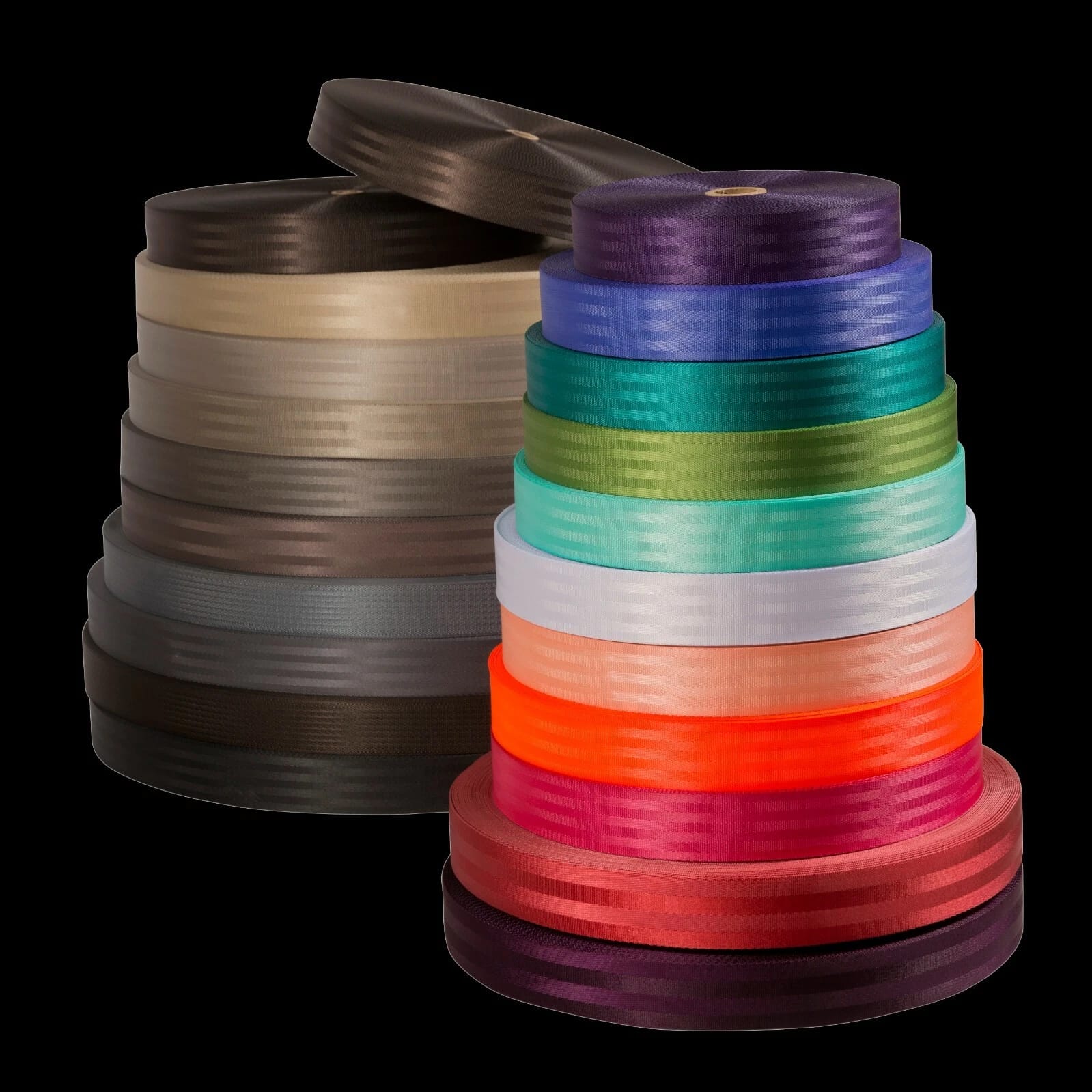
When replacing seat belt webbing, you have two paths: OEM-matched webbing or custom color webbing.
Dog Ate Your Seat Belt?
We fix dog chewed seat belts all time! No for real…

We have a dedicated page just for it:
DOG CHEWED SEAT BELT REPAIR
OEM Webbing Replacement
OEM webbing replacement means the new strap matches the original factory color and material spec for your vehicle. This is the right choice for most post-accident repairs, insurance restorations, and inspection-related fixes. The result is invisible inside the cabin, and the webbing meets the same safety standards as the original.
Custom Color Webbing Replacement
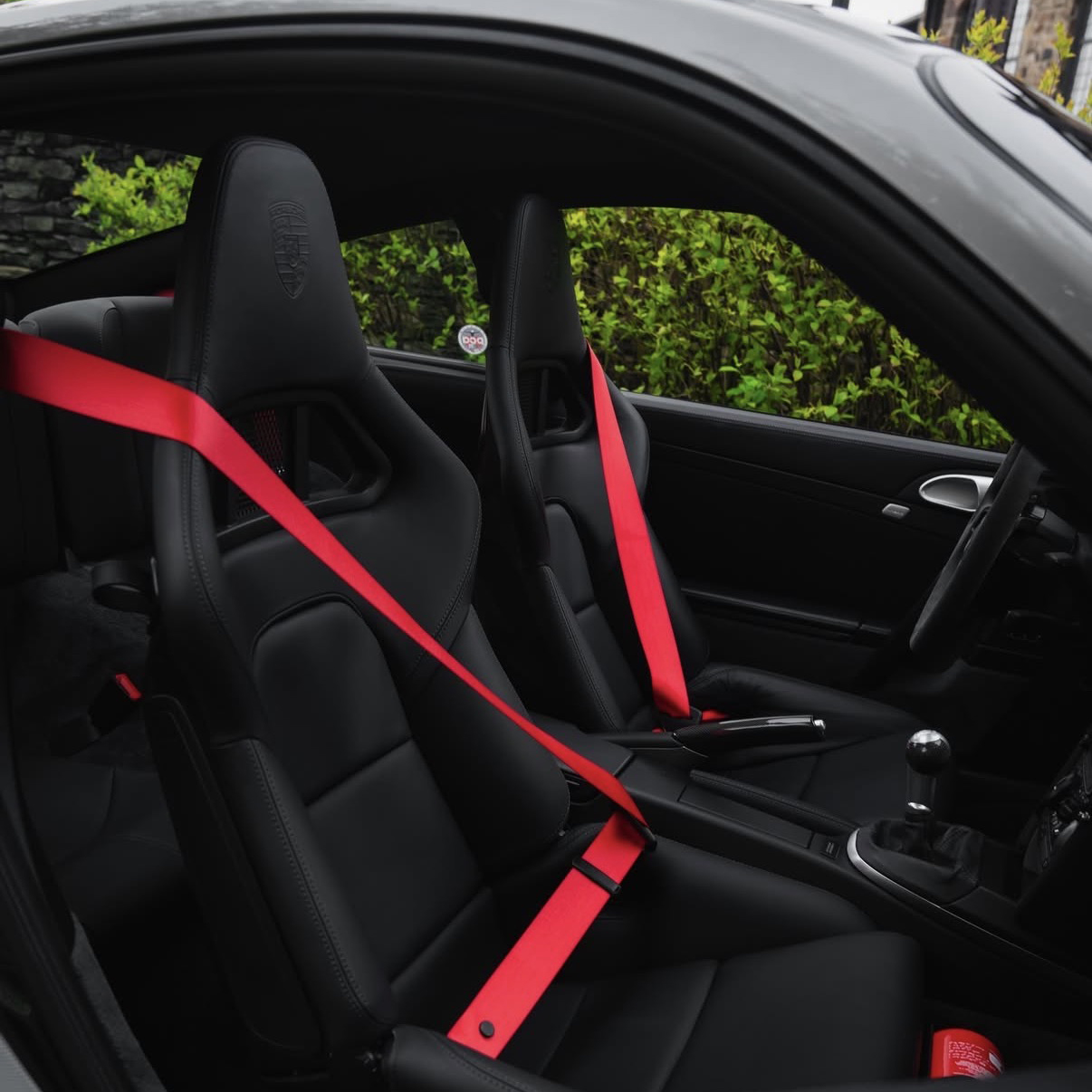
Custom color is exactly what it sounds like — you choose a color that differs from the factory original. This option is popular for restomod builds, track cars, and custom interiors where the owner wants the seat belts to be a design feature rather than background noise.
Available colors include red, yellow, orange, blue, green, and more. The webbing still meets the same strength and elongation requirements as standard webbing. The color is a deliberate aesthetic choice using properly rated material, not a cosmetic shortcut.

One thing worth checking: some jurisdictions have regulations around visible safety equipment modifications. If your vehicle goes through a state inspection, confirm that a non-OEM webbing color won’t trigger a flag before you order.
How the Replacement Process Works
Seat belt webbing replacement isn’t a straightforward DIY job for most people. The webbing is anchored inside the retractor housing — a spring-loaded mechanism that also interfaces with the pretensioner in many vehicles. Disassembling and reassembling it correctly requires specific tools and a solid understanding of the tension settings involved.
The mail-in model is the most practical option for most vehicle owners. Here’s how the process works at Safety Restore:
- Remove the seat belt assembly from your vehicle. This typically means unbolting the retractor from the B-pillar or C-pillar and disconnecting the pretensioner connector if present. Most vehicles only need basic hand tools for this step.
- Ship the assembly to Safety Restore. Package the retractor and strap together and send it in. No appointment, no driving to a shop.
- The webbing is replaced. Technicians remove the old webbing, install new OEM-spec or custom color webbing, and reassemble the retractor correctly.
- The assembly ships back to you. Turnaround is typically within 24 hours of receiving the part, and return shipping is included at no extra charge.
- Reinstall in your vehicle. Bolt the retractor back into position and reconnect any electrical connectors.
Flat-rate pricing is $99 for both standard OEM and custom color webbing replacement. Every service is backed by a lifetime warranty.
What to Check Before You Order
A few things are worth confirming before you ship your seat belt in.
Is the pretensioner also damaged? If your vehicle was in a collision, the pretensioner may have fired. A locked or blown pretensioner needs its own repair separate from webbing replacement. Safety Restore handles both services, so if you’re unsure which applies to your situation, reach out before shipping.
Is the retractor mechanism functioning? If the belt retracts and extends smoothly but the webbing itself is the problem, a straight webbing replacement is the right call. If the retractor is sluggish, jammed, or locked, that points to a pretensioner or retractor issue instead.
Are you shipping the right part? Send the entire retractor assembly, not just the strap. The webbing is anchored inside the retractor, and the technician needs the full unit to do the job correctly.
Cost Compared to a Dealer
A dealer or body shop typically charges $300 to $800 or more to replace a seat belt assembly — a price that reflects new OEM parts at retail plus labor. The webbing replacement service at Safety Restore is $99. For a repair that restores the same function, that’s a meaningful difference.
For salvage vehicle restorers or anyone working through multiple belts on a single car, that gap adds up fast.
Frequently Asked Questions
What material is seat belt webbing made from?
Most automotive seat belt webbing is woven from polyester yarn. Polyester is preferred because it resists UV degradation, maintains consistent tensile strength across temperature ranges, and meets the elongation requirements set by FMVSS 209.
Can I replace seat belt webbing myself?
Technically possible, but not recommended without experience. The webbing is anchored inside a spring-loaded retractor housing that requires careful disassembly and reassembly to maintain proper tension and retraction function. An incorrect reassembly can cause the belt to retract poorly or fail to lock in a crash.
Does custom color webbing meet safety standards?
Yes. Custom color webbing from reputable providers meets the same tensile strength and elongation requirements as standard OEM webbing. The color is a material choice, not a structural compromise.
How long does the mail-in replacement process take?
Safety Restore typically completes the service within 24 hours of receiving your part and includes free return shipping. Total turnaround depends on transit time in each direction.
Do I need to replace the webbing after every accident?
Not always. If the webbing itself is undamaged but the pretensioner fired, you need a pretensioner repair rather than a webbing replacement. If the webbing is cut, frayed, stiff, or contaminated, replacement is the right call regardless of whether an accident occurred.
What custom colors are available?
Options include red, yellow, orange, blue, green, and additional colors. Custom color webbing replacement is priced the same as standard OEM replacement at $99.97.
Is the replacement covered by a warranty?
Yes. Every seat belt webbing replacement at Safety Restore is backed by a lifetime warranty.
Worn or damaged seat belt webbing isn’t something to put off — it’s a safety-critical component, and the fix is more straightforward than most people expect. Whether you need a factory-matched replacement after an accident or a custom color for a build project, the process is simple and the cost is well below dealer pricing. Pricing, service details, and ordering information are all available at safetyrestore.com.